Data may be outdated
Last updated: 9 months ago — Click refresh to get the latest statistics.
Born in 1955 in Magrette, The Netherlands, multi-reedist Ab Baars is a unique and prolific contributor to the Dutch creative jazz scene, involved in a number of ensembles as leader and as collaborator, and also an accomplished solo performer. His inimitable sense of phrasing, fearless deployment of extended techniques, and idiosyncratic tonal/timbral approaches have earned him international attention, and none other than <a href="spotify:artist:7F2OJrkULYIuVb00V72pXT">Misha Mengelberg</a> coined the term "ab music" as a succinct descriptor for his personal style.
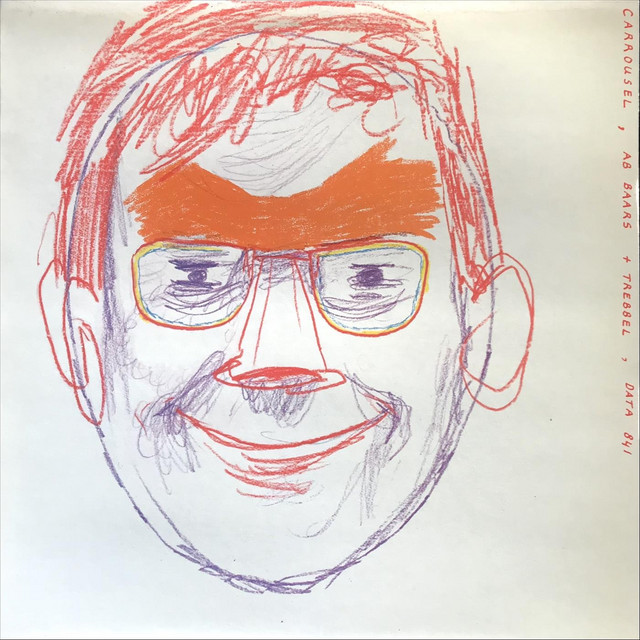
Baars' first instrument was the tenor saxophone, which he began playing in the early '70s in his hometown of Eindhoven, and by 1975 he was a member of bassist Niko Langenhuijsen's free jazz Ohm Sextet, making his debut on an eponymously titled vinyl LP by the ensemble recorded at a live date in Vlissingen during November 1977. Over the following years, Baars began studies at the Rotterdam Conservatory and became active in the Dutch improvisational and contemporary classical music scenes. His debut LP as a leader, Carrousel, was released by the <a href="spotify:search:label%3A%22Data%22">Data</a> label in 1984; the album included trio pieces (with <a href="spotify:artist:07aSp2gEeDjFFatumC8OS5">Guus Janssen</a> on piano and Mariëtte Rouppe van der Voort on alto saxophone, flute, and piccolo) as well as several solo tracks featuring the reedman on either tenor or soprano saxophone. Two years later, Baars joined pianist <a href="spotify:artist:7F2OJrkULYIuVb00V72pXT">Mengelberg</a>'s <a href="spotify:artist:1xruo2HA7soa6UckR2bWYE">ICP Orchestra</a>, a groundbreaking ensemble that has continued to bring him some of his highest international visibility. Baars made his first recorded appearance (on tenor and soprano saxophones and clarinet) with <a href="spotify:artist:1xruo2HA7soa6UckR2bWYE">ICP</a> on 1987's Two Programs: Performs Herbie Nichols and Thelonious Monk, and the reedman has appeared on all of the group's subsequent recordings extending into the 21st century.
The year 1989 was quite successful and productive for Baars: he obtained Dutch Ministry of Culture grant support for studies in Los Angeles with clarinetist John Carter; he received a Boy Edgar Prijs jazz award; and Krang, his first album comprised entirely of unaccompanied solo performances (on soprano, tenor, and baritone saxophones and clarinet), was released by the <a href="spotify:search:label%3A%22Geestgronden%22">Geestgronden</a> label, which would also issue many of his subsequent albums of this time period, including his second album of unaccompanied solos (on clarinet and tenor saxophone), 1997's Verderame. As the '90s began, Baars formed arguably his most important group as a leader, <a href="spotify:artist:2HmKOggIKrfWdeH9rRDfya">the Ab Baars Trio</a> featuring bassist <a href="spotify:artist:3WaOgG06sCYKDsxdDgw9VO">Wilbert de Joode</a> and drummer <a href="spotify:artist:6GT62YKLRz9CyVzDMr2FDE">Martin van Duynhoven</a>. The trio's debut disc, 3900 Carol Court, was named after Carter's address, and released by <a href="spotify:search:label%3A%22Geestgronden%22">Geestgronden</a> in 1992, the year of the clarinetist's death. <a href="spotify:search:label%3A%22Geestgronden%22">Geestgronden</a> would release a number of <a href="spotify:artist:2HmKOggIKrfWdeH9rRDfya">Ab Baars Trio</a> albums during the remainder of the '90s and into the new millennium, including 1995's live Sprok, 1999's A Free Step (consisting entirely of Carter compositions), and 2001's Songs (featuring interpretations of Native American music).
Baars would invite various well-known figures of the avant jazz and creative improvised music world to tour and/or record with his trio over the years, including soprano saxophonist <a href="spotify:artist:1BEsuwAkTQMG50TeHB5qny">Steve Lacy</a>, trombonist <a href="spotify:artist:6nCAbymHv2MRYV1sluCDr9">Roswell Rudd</a>, and multi-reedist <a href="spotify:artist:55Wpgt1Y1RISpita5RLxGm">Ken Vandermark</a>. In 2001, the <a href="spotify:search:label%3A%22Data%22">Data</a> label released Four, by <a href="spotify:artist:2HmKOggIKrfWdeH9rRDfya">the Ab Baars Trio</a> plus <a href="spotify:artist:6nCAbymHv2MRYV1sluCDr9">Rudd</a>, and in 2003 the <a href="spotify:search:label%3A%22Wig%22">Wig</a> imprint issued the trio's ten-year anniversary album Party at the Bimhuis, recorded live at Amsterdam's preeminent jazz venue in January of that year and featuring the group supplemented by guests violist Ig Henneman, <a href="spotify:artist:7F2OJrkULYIuVb00V72pXT">Mengelberg</a>, <a href="spotify:artist:07aSp2gEeDjFFatumC8OS5">Janssen</a>, and Rouppe van der Voort. In 2008 <a href="spotify:search:label%3A%22Wig%22">Wig</a> released Goofy June Bug by the trio plus <a href="spotify:artist:55Wpgt1Y1RISpita5RLxGm">Vandermark</a> on tenor sax and clarinet, and in 2011 <a href="spotify:search:label%3A%22Wig%22">Wig</a> repackaged the previous trio recordings 3900 Carol Court, A Free Step, Songs, and Party at the Bimhuis in the five-CD set Ab Baars Trio 20 Years: 1991-2011, which included a disc of new Baars compositions, Gawky Stride.
Much of Baars' work as a leader and collaborator during the new millennium has been released by the <a href="spotify:search:label%3A%22Wig%22">Wig</a> label, operated by Baars and violist Henneman, a partner to the reedman in life as well as music and business. These albums included Veer and Haul, a 2003 duet recording by Baars and Rouppe van der Voort; Kinda Dukish, a 2005 recording by the Ab Baars Quartet (Baars' regular trio plus trombonist <a href="spotify:artist:1amHnKAvDAIOa9PnQw2sTR">Joost Buis</a>); and 2010's Time to Do My Lions, Baars' third album of unaccompanied solos, this time performed on tenor sax, clarinet, and shakuhachi, the latter an instrument he first purchased and studied in 2005 and began including in his performances and recordings thereafter. Baars and Henneman also began a duo project after performing at Rome's Festival Controindicazioni in 1999; <a href="spotify:artist:5h0g4O3UfH01dZrZ09Sb8Z">Duo Baars-Henneman</a> have toured worldwide and released two <a href="spotify:search:label%3A%22Wig%22">Wig</a> albums, Stof (2006) and Autumn Songs (2013), and Sliptong, an album by the trio of Baars, Henneman, and pianist <a href="spotify:artist:7F2OJrkULYIuVb00V72pXT">Mengelberg</a>, arrived on <a href="spotify:search:label%3A%22Wig%22">Wig</a> in 2009. Baars has also performed and recorded with ensembles led by Henneman, including the Ig Henneman Tentet (appearing on the <a href="spotify:search:label%3A%22Wig%22">Wig</a> albums Repeat That, Repeat in 1995 and Indigo in 1998) and Ig Henneman Sextet (Cut a Caper in 2011 and Live @ the Ironworks Vancouver in 2012). Other artists with whom Baars has recorded throughout his career include <a href="spotify:artist:73PzKUbkjIQX96GYO72N2C">the Maarten Altena Nonet</a>, Cor Fuhler's Corkestra, and <a href="spotify:artist:7auVG27DEEWADoBSRpVLCM">Terrie Ex</a> of <a href="spotify:artist:5JjsLpZlE0oSu9opRGQYWm">the Ex</a>. ~ Dave Lynch, Rovi
Baars' first instrument was the tenor saxophone, which he began playing in the early '70s in his hometown of Eindhoven, and by 1975 he was a member of bassist Niko Langenhuijsen's free jazz Ohm Sextet, making his debut on an eponymously titled vinyl LP by the ensemble recorded at a live date in Vlissingen during November 1977. Over the following years, Baars began studies at the Rotterdam Conservatory and became active in the Dutch improvisational and contemporary classical music scenes. His debut LP as a leader, Carrousel, was released by the <a href="spotify:search:label%3A%22Data%22">Data</a> label in 1984; the album included trio pieces (with <a href="spotify:artist:07aSp2gEeDjFFatumC8OS5">Guus Janssen</a> on piano and Mariëtte Rouppe van der Voort on alto saxophone, flute, and piccolo) as well as several solo tracks featuring the reedman on either tenor or soprano saxophone. Two years later, Baars joined pianist <a href="spotify:artist:7F2OJrkULYIuVb00V72pXT">Mengelberg</a>'s <a href="spotify:artist:1xruo2HA7soa6UckR2bWYE">ICP Orchestra</a>, a groundbreaking ensemble that has continued to bring him some of his highest international visibility. Baars made his first recorded appearance (on tenor and soprano saxophones and clarinet) with <a href="spotify:artist:1xruo2HA7soa6UckR2bWYE">ICP</a> on 1987's Two Programs: Performs Herbie Nichols and Thelonious Monk, and the reedman has appeared on all of the group's subsequent recordings extending into the 21st century.
The year 1989 was quite successful and productive for Baars: he obtained Dutch Ministry of Culture grant support for studies in Los Angeles with clarinetist John Carter; he received a Boy Edgar Prijs jazz award; and Krang, his first album comprised entirely of unaccompanied solo performances (on soprano, tenor, and baritone saxophones and clarinet), was released by the <a href="spotify:search:label%3A%22Geestgronden%22">Geestgronden</a> label, which would also issue many of his subsequent albums of this time period, including his second album of unaccompanied solos (on clarinet and tenor saxophone), 1997's Verderame. As the '90s began, Baars formed arguably his most important group as a leader, <a href="spotify:artist:2HmKOggIKrfWdeH9rRDfya">the Ab Baars Trio</a> featuring bassist <a href="spotify:artist:3WaOgG06sCYKDsxdDgw9VO">Wilbert de Joode</a> and drummer <a href="spotify:artist:6GT62YKLRz9CyVzDMr2FDE">Martin van Duynhoven</a>. The trio's debut disc, 3900 Carol Court, was named after Carter's address, and released by <a href="spotify:search:label%3A%22Geestgronden%22">Geestgronden</a> in 1992, the year of the clarinetist's death. <a href="spotify:search:label%3A%22Geestgronden%22">Geestgronden</a> would release a number of <a href="spotify:artist:2HmKOggIKrfWdeH9rRDfya">Ab Baars Trio</a> albums during the remainder of the '90s and into the new millennium, including 1995's live Sprok, 1999's A Free Step (consisting entirely of Carter compositions), and 2001's Songs (featuring interpretations of Native American music).
Baars would invite various well-known figures of the avant jazz and creative improvised music world to tour and/or record with his trio over the years, including soprano saxophonist <a href="spotify:artist:1BEsuwAkTQMG50TeHB5qny">Steve Lacy</a>, trombonist <a href="spotify:artist:6nCAbymHv2MRYV1sluCDr9">Roswell Rudd</a>, and multi-reedist <a href="spotify:artist:55Wpgt1Y1RISpita5RLxGm">Ken Vandermark</a>. In 2001, the <a href="spotify:search:label%3A%22Data%22">Data</a> label released Four, by <a href="spotify:artist:2HmKOggIKrfWdeH9rRDfya">the Ab Baars Trio</a> plus <a href="spotify:artist:6nCAbymHv2MRYV1sluCDr9">Rudd</a>, and in 2003 the <a href="spotify:search:label%3A%22Wig%22">Wig</a> imprint issued the trio's ten-year anniversary album Party at the Bimhuis, recorded live at Amsterdam's preeminent jazz venue in January of that year and featuring the group supplemented by guests violist Ig Henneman, <a href="spotify:artist:7F2OJrkULYIuVb00V72pXT">Mengelberg</a>, <a href="spotify:artist:07aSp2gEeDjFFatumC8OS5">Janssen</a>, and Rouppe van der Voort. In 2008 <a href="spotify:search:label%3A%22Wig%22">Wig</a> released Goofy June Bug by the trio plus <a href="spotify:artist:55Wpgt1Y1RISpita5RLxGm">Vandermark</a> on tenor sax and clarinet, and in 2011 <a href="spotify:search:label%3A%22Wig%22">Wig</a> repackaged the previous trio recordings 3900 Carol Court, A Free Step, Songs, and Party at the Bimhuis in the five-CD set Ab Baars Trio 20 Years: 1991-2011, which included a disc of new Baars compositions, Gawky Stride.
Much of Baars' work as a leader and collaborator during the new millennium has been released by the <a href="spotify:search:label%3A%22Wig%22">Wig</a> label, operated by Baars and violist Henneman, a partner to the reedman in life as well as music and business. These albums included Veer and Haul, a 2003 duet recording by Baars and Rouppe van der Voort; Kinda Dukish, a 2005 recording by the Ab Baars Quartet (Baars' regular trio plus trombonist <a href="spotify:artist:1amHnKAvDAIOa9PnQw2sTR">Joost Buis</a>); and 2010's Time to Do My Lions, Baars' third album of unaccompanied solos, this time performed on tenor sax, clarinet, and shakuhachi, the latter an instrument he first purchased and studied in 2005 and began including in his performances and recordings thereafter. Baars and Henneman also began a duo project after performing at Rome's Festival Controindicazioni in 1999; <a href="spotify:artist:5h0g4O3UfH01dZrZ09Sb8Z">Duo Baars-Henneman</a> have toured worldwide and released two <a href="spotify:search:label%3A%22Wig%22">Wig</a> albums, Stof (2006) and Autumn Songs (2013), and Sliptong, an album by the trio of Baars, Henneman, and pianist <a href="spotify:artist:7F2OJrkULYIuVb00V72pXT">Mengelberg</a>, arrived on <a href="spotify:search:label%3A%22Wig%22">Wig</a> in 2009. Baars has also performed and recorded with ensembles led by Henneman, including the Ig Henneman Tentet (appearing on the <a href="spotify:search:label%3A%22Wig%22">Wig</a> albums Repeat That, Repeat in 1995 and Indigo in 1998) and Ig Henneman Sextet (Cut a Caper in 2011 and Live @ the Ironworks Vancouver in 2012). Other artists with whom Baars has recorded throughout his career include <a href="spotify:artist:73PzKUbkjIQX96GYO72N2C">the Maarten Altena Nonet</a>, Cor Fuhler's Corkestra, and <a href="spotify:artist:7auVG27DEEWADoBSRpVLCM">Terrie Ex</a> of <a href="spotify:artist:5JjsLpZlE0oSu9opRGQYWm">the Ex</a>. ~ Dave Lynch, Rovi


Related Artists
Frank Gratkowski

Urs Leimgruber
Paul Plimley

Anthony Braxton Saxophone Quartet

Daniel Levin
Lina Allemano


Chloë Sobek
Oscar Bettison


Xavier Beteta

Nina De Heney

Jean-Luc Hervé

Wilfrido Terrazas
Shih-Yang Lee
Ada Rave

Keefe Jackson

Patrick De Groote
