Data may be outdated
Last updated: 9 months ago — Click refresh to get the latest statistics.
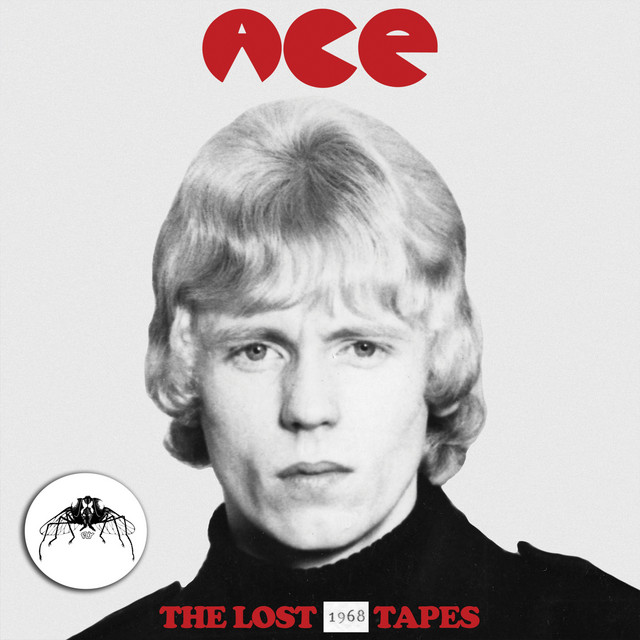
Ace Kefford was a secondary member of the first lineup of <a href="spotify:artist:2BLpGstUHxDc6vHfBEiaXm">the Move</a>, playing and recording with the band through 1968, during the most pop-oriented phase of their career. Before <a href="spotify:artist:2BLpGstUHxDc6vHfBEiaXm">the Move</a>, Kefford had played with Carl Wayne & the Vikings, featuring future <a href="spotify:artist:2BLpGstUHxDc6vHfBEiaXm">Move</a> singer Wayne and future <a href="spotify:artist:2BLpGstUHxDc6vHfBEiaXm">Move</a> drummer Bev Bevan. With <a href="spotify:artist:2BLpGstUHxDc6vHfBEiaXm">the Move</a>, Kefford played bass (although he is also credited with guitar on the album sleeve for The Best of the Move), and sang some backup vocals. He did not write any of the band's material, and had just one lead vocal, on the <a href="spotify:artist:52qIEkVQA2MzMZKtIEuWAf">Roy Wood</a> composition "Yellow Rainbow" (featured on <a href="spotify:artist:2BLpGstUHxDc6vHfBEiaXm">the Move</a>'s first album). According to Bev Bevan's liner notes for The Best of the Move, Kefford "functioned as the group's pouting glamour-man." He did write one quite <a href="spotify:artist:2BLpGstUHxDc6vHfBEiaXm">Move</a>-like song, the playfully pop-psychedelic "William Chalker's Time Machine," which was recorded on a 1968 single by the Lemon Tree.
Kefford left <a href="spotify:artist:2BLpGstUHxDc6vHfBEiaXm">the Move</a> in early 1968, after increasing instability resulting from depression and panic attacks. He recorded about an album's worth of unreleased material in mid-1968 with producer <a href="spotify:artist:46ISQ20xfCvHum4YeV08XF">Tony Visconti</a> (to become renowned for his work with <a href="spotify:artist:0oSGxfWSnnOXhD2fKuz2Gy">David Bowie</a>), but the project was abandoned, without production complete on many of the tracks, when Kefford had a breakdown. These sessions found Kefford writing much of the material and trying his hand at an assortment of late-'60s rock styles, as well as singing it in his soul-rock voice, which wasn't nearly as distinctive or capable as the vocals of, say, his old <a href="spotify:artist:2BLpGstUHxDc6vHfBEiaXm">Move</a> cohorts Carl Wayne and <a href="spotify:artist:52qIEkVQA2MzMZKtIEuWAf">Roy Wood</a>. Nine tracks from the unreleased album sessions, in their various states of (in)completion, were released in 2003 as part of the Ace Kefford CD compilation Ace the Face.
Kefford then became frontman for the short-lived Ace Kefford Stand, who did one single, "For Your Love" b/w "Gravy Booby Jam," for Atlantic in 1969. The A-side was a drawn-out, heavy, and fairly tedious cover of <a href="spotify:artist:2lxX1ivRYp26soIavdG9bX">the Yardbirds</a> classic; the flip, thrown together by the band the night before the session, was a forgettable psychedelic-progressive rock crossover effort with freaky guitar. The other members of the Ace Kefford Stand, incidentally, had been previously known as <a href="spotify:artist:4pr3EPm1pgu3ZTpi9QoXpA">Young Blood</a>, and did four singles for Pye; the Ace Kefford Stand's most illustrious member was drummer <a href="spotify:artist:6jJkOaQBQsEBBqvavgdHQT">Cozy Powell</a>. After the single, Dave McTavish of <a href="spotify:artist:0ecmmSV0mVYAi7RohMTIuT">Tintern Abbey</a> joined and the band changed their name to <a href="spotify:artist:1pA1elhVJgu7d1gVaRSFnO">Big Bertha</a>, which did one single. Its A-side, "This World's an Apple" was, according to Kefford (quoted in Record Collector) "crap"; the flipside was "Gravy Booby Jam," credited to <a href="spotify:artist:1pA1elhVJgu7d1gVaRSFnO">Big Bertha Featuring Ace Kefford</a>.
Kefford drifted in and out of music in the '70s, continuing to struggle with mental problems, at one time attempting suicide. Feelers put out to work with <a href="spotify:artist:6ZLTlhejhndI4Rh53vYhrY">Ozzy Osbourne</a> and <a href="spotify:artist:0AD4odMWVQ2wUSlgxOB5Rl">Jeff Beck</a> came to nothing, though he was briefly in the band Rockstar, who put out a 1976 single "Mummy"/"Over the Hill." Both of those sides were written by Kefford, with the A-side in particular showing a strong, early-'70s <a href="spotify:artist:0oSGxfWSnnOXhD2fKuz2Gy">David Bowie</a> influence. All of Kefford's post-<a href="spotify:artist:2BLpGstUHxDc6vHfBEiaXm">Move</a> odds and ends were compiled on the Ace the Face CD, including the unreleased 1968 album sessions; the Ace Kefford Stand single, and a few Ace Kefford Stand outtakes; <a href="spotify:artist:1pA1elhVJgu7d1gVaRSFnO">Big Bertha</a>'s "This World's an Apple"; the Rockstar single; and the Lemon Tree's "William Chalker's Time Machine" single. ~ Richie Unterberger, Rovi
Kefford left <a href="spotify:artist:2BLpGstUHxDc6vHfBEiaXm">the Move</a> in early 1968, after increasing instability resulting from depression and panic attacks. He recorded about an album's worth of unreleased material in mid-1968 with producer <a href="spotify:artist:46ISQ20xfCvHum4YeV08XF">Tony Visconti</a> (to become renowned for his work with <a href="spotify:artist:0oSGxfWSnnOXhD2fKuz2Gy">David Bowie</a>), but the project was abandoned, without production complete on many of the tracks, when Kefford had a breakdown. These sessions found Kefford writing much of the material and trying his hand at an assortment of late-'60s rock styles, as well as singing it in his soul-rock voice, which wasn't nearly as distinctive or capable as the vocals of, say, his old <a href="spotify:artist:2BLpGstUHxDc6vHfBEiaXm">Move</a> cohorts Carl Wayne and <a href="spotify:artist:52qIEkVQA2MzMZKtIEuWAf">Roy Wood</a>. Nine tracks from the unreleased album sessions, in their various states of (in)completion, were released in 2003 as part of the Ace Kefford CD compilation Ace the Face.
Kefford then became frontman for the short-lived Ace Kefford Stand, who did one single, "For Your Love" b/w "Gravy Booby Jam," for Atlantic in 1969. The A-side was a drawn-out, heavy, and fairly tedious cover of <a href="spotify:artist:2lxX1ivRYp26soIavdG9bX">the Yardbirds</a> classic; the flip, thrown together by the band the night before the session, was a forgettable psychedelic-progressive rock crossover effort with freaky guitar. The other members of the Ace Kefford Stand, incidentally, had been previously known as <a href="spotify:artist:4pr3EPm1pgu3ZTpi9QoXpA">Young Blood</a>, and did four singles for Pye; the Ace Kefford Stand's most illustrious member was drummer <a href="spotify:artist:6jJkOaQBQsEBBqvavgdHQT">Cozy Powell</a>. After the single, Dave McTavish of <a href="spotify:artist:0ecmmSV0mVYAi7RohMTIuT">Tintern Abbey</a> joined and the band changed their name to <a href="spotify:artist:1pA1elhVJgu7d1gVaRSFnO">Big Bertha</a>, which did one single. Its A-side, "This World's an Apple" was, according to Kefford (quoted in Record Collector) "crap"; the flipside was "Gravy Booby Jam," credited to <a href="spotify:artist:1pA1elhVJgu7d1gVaRSFnO">Big Bertha Featuring Ace Kefford</a>.
Kefford drifted in and out of music in the '70s, continuing to struggle with mental problems, at one time attempting suicide. Feelers put out to work with <a href="spotify:artist:6ZLTlhejhndI4Rh53vYhrY">Ozzy Osbourne</a> and <a href="spotify:artist:0AD4odMWVQ2wUSlgxOB5Rl">Jeff Beck</a> came to nothing, though he was briefly in the band Rockstar, who put out a 1976 single "Mummy"/"Over the Hill." Both of those sides were written by Kefford, with the A-side in particular showing a strong, early-'70s <a href="spotify:artist:0oSGxfWSnnOXhD2fKuz2Gy">David Bowie</a> influence. All of Kefford's post-<a href="spotify:artist:2BLpGstUHxDc6vHfBEiaXm">Move</a> odds and ends were compiled on the Ace the Face CD, including the unreleased 1968 album sessions; the Ace Kefford Stand single, and a few Ace Kefford Stand outtakes; <a href="spotify:artist:1pA1elhVJgu7d1gVaRSFnO">Big Bertha</a>'s "This World's an Apple"; the Rockstar single; and the Lemon Tree's "William Chalker's Time Machine" single. ~ Richie Unterberger, Rovi
Monthly Listeners
87
Monthly Listeners History
Track the evolution of monthly listeners over the last 28 days.
Followers
176
Followers History
Track the evolution of followers over the last 28 days.
Top Cities
4 listeners
3 listeners
Related Artists

Jolliver Arkansaw

Ron Nagle
Grinder's Switch
Ramrods '71

Eagle
Fantastic Mystics


Half A World Away

Barry Allen
Yipes

Lutha
Grobbert & Duff

Cat Mother and The All Night Newsboys

The Second Helping
The Selfs

The Raspberries

Knowbody Else
