Data may be outdated
Last updated: 9 months ago — Click refresh to get the latest statistics.
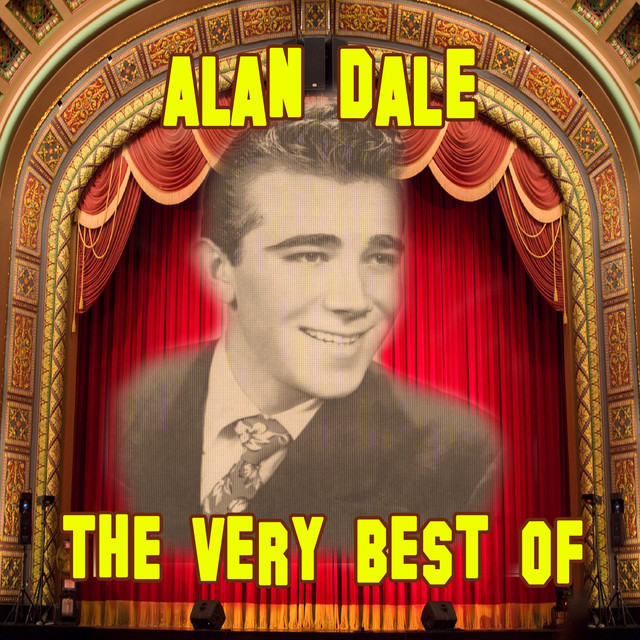
Alan Dale (born Aldo Sigismondi) was once one of America's biggest singing stars. His baritone was heard on <a href="spotify:artist:1ZKhPkCXXgtiGgALn4OYtT">Pérez Prado</a>'s million-selling 1955 hit, "Cherry Pink and Apple Blossom White," while his tune "Sweet and Gentle" introduced the cha-cha to North America. He placed second after <a href="spotify:artist:1Mxqyy3pSjf8kZZL4QVxS0">Frank Sinatra</a> in the radio poll Battle of the Baritones in 1948, and received nearly half the votes as "best male singer" in a popularity poll conducted by radio show Make Believe Ballroom. He even played a role in early rock & roll, starring in <a href="spotify:artist:1wNkMmCAKqLRipNCmJxYZ2">Alan Freed</a>'s film Don't Knock the Rock.
The son of an Italian-American theater comedian who emigrated from the Italian province of Abruzzi, Dale made his debut on his father's radio show. Leaving school at the age of 16 following an argument with a teacher, he tried his hand at a variety of jobs before considering a career in theater. Successfully auditioning for a singing job at a Coney Island Casino, he garnered seven encores with his first performance.
Although he accepted an invitation to sing with the Carmen Cavallaro Orchestra in 1944, Dale found touring intolerable. Physically ill and homesick, he tried unsuccessfully to get <a href="spotify:artist:3HdNBBi4kL2kbJUWfp179a">Cavallaro</a> to terminate their seven-year contract. His chance came when <a href="spotify:artist:3HdNBBi4kL2kbJUWfp179a">Cavallaro</a> was hired to appear in a film and the group disbanded. Returning to Brooklyn, Dale maintained a low profile. Although he appeared with saxophone player George Paxton's progressive jazz dance band for three years, he became ill when the group began playing one-night stands in early 1947.
Embarking on a solo career in the summer of 1947, Dale remained off the road, using radio and television as mediums for his music. His second solo single, "Oh Marie," sold close to a million copies. Hosting his own radio show on the Dumont network, Dale was lured away to be star of CBS Radio's musical quiz show Sing It Again in the spring of 1948, and within a few months was simultaneously hosting his own show on the Mutual Radio Network. He went on to host a television show, airing five nights a week, the following year. Paramount Pictures even sent a scout to determine if they should sign him to appear in a film.
Just when it looked as though his future was secure, Dale fainted on live television. Rushed to the hospital with a bleeding ulcer, he underwent abdominal surgery and spent much of 1951 in and out of the hospital. During his recovery, his career lost its early momentum. <a href="spotify:artist:0kLeQeOAEqHdFMUItesuij">Mitch Miller</a> had taken over production at <a href="spotify:search:label%3A%22Columbia%22">Columbia</a> and was focusing on novelty and singalong records. In Dale's absence, his television slot had been inherited by <a href="spotify:artist:5v8jlSmAQfrkTjAlpUfWtu">Perry Como</a>, and Sing It Again folded after a three-year run. Signing with the <a href="spotify:search:label%3A%22Decca%22">Decca</a> label when his contract with <a href="spotify:search:label%3A%22Columbia%22">Columbia</a> expired in November 1951, Dale aimed to recapture his earlier glory, and reunited with producer <a href="spotify:artist:1wYPhZg9lFjhOWiCXd9023">Bob Thiele</a> of <a href="spotify:search:label%3A%22Decca%22">Decca</a> subsidiary Coral, who had, along with talent agent Lou Perry and Ed Sullivan Show conductor and future music director of Sing It Again Ray Bloch, delivered such robust-voiced hits as "My Thrill (My Paloma)" and "I'm Sorry."
Dale's problems persisted, however. Leaving after a benefit concert in May 1958, he was thrown down a flight of stairs into a Plexiglas window. The October 1958 issue of Confidential Magazine claimed that he had been "black-listed." <a href="spotify:artist:1wYPhZg9lFjhOWiCXd9023">Thiele</a>, in his 1995 autobiography What a Wonderful World: A Lifetime of Recordings, suggested that Dale's staunch resistance to the Mafia's desire to become involved in his career was a possible reason for the assault.
Inexplicably kept off The Ed Sullivan Show for 11 years, Dale returned on Sunday, January 17, 1960, as a guest of <a href="spotify:artist:2F0kPpQ5mtta1ORIyO2xex">Jackie Gleason</a>, who had agreed to fill in as host after <a href="spotify:artist:6g8dqbKK5ubxkOwgyyEGu0">Sullivan</a> had suffered a bleeding ulcer during rehearsals and was rushed to the hospital. Dale continued to perform in New York in relative obscurity until he passed away in 2002, at the age of 76. ~ Craig Harris, Rovi
The son of an Italian-American theater comedian who emigrated from the Italian province of Abruzzi, Dale made his debut on his father's radio show. Leaving school at the age of 16 following an argument with a teacher, he tried his hand at a variety of jobs before considering a career in theater. Successfully auditioning for a singing job at a Coney Island Casino, he garnered seven encores with his first performance.
Although he accepted an invitation to sing with the Carmen Cavallaro Orchestra in 1944, Dale found touring intolerable. Physically ill and homesick, he tried unsuccessfully to get <a href="spotify:artist:3HdNBBi4kL2kbJUWfp179a">Cavallaro</a> to terminate their seven-year contract. His chance came when <a href="spotify:artist:3HdNBBi4kL2kbJUWfp179a">Cavallaro</a> was hired to appear in a film and the group disbanded. Returning to Brooklyn, Dale maintained a low profile. Although he appeared with saxophone player George Paxton's progressive jazz dance band for three years, he became ill when the group began playing one-night stands in early 1947.
Embarking on a solo career in the summer of 1947, Dale remained off the road, using radio and television as mediums for his music. His second solo single, "Oh Marie," sold close to a million copies. Hosting his own radio show on the Dumont network, Dale was lured away to be star of CBS Radio's musical quiz show Sing It Again in the spring of 1948, and within a few months was simultaneously hosting his own show on the Mutual Radio Network. He went on to host a television show, airing five nights a week, the following year. Paramount Pictures even sent a scout to determine if they should sign him to appear in a film.
Just when it looked as though his future was secure, Dale fainted on live television. Rushed to the hospital with a bleeding ulcer, he underwent abdominal surgery and spent much of 1951 in and out of the hospital. During his recovery, his career lost its early momentum. <a href="spotify:artist:0kLeQeOAEqHdFMUItesuij">Mitch Miller</a> had taken over production at <a href="spotify:search:label%3A%22Columbia%22">Columbia</a> and was focusing on novelty and singalong records. In Dale's absence, his television slot had been inherited by <a href="spotify:artist:5v8jlSmAQfrkTjAlpUfWtu">Perry Como</a>, and Sing It Again folded after a three-year run. Signing with the <a href="spotify:search:label%3A%22Decca%22">Decca</a> label when his contract with <a href="spotify:search:label%3A%22Columbia%22">Columbia</a> expired in November 1951, Dale aimed to recapture his earlier glory, and reunited with producer <a href="spotify:artist:1wYPhZg9lFjhOWiCXd9023">Bob Thiele</a> of <a href="spotify:search:label%3A%22Decca%22">Decca</a> subsidiary Coral, who had, along with talent agent Lou Perry and Ed Sullivan Show conductor and future music director of Sing It Again Ray Bloch, delivered such robust-voiced hits as "My Thrill (My Paloma)" and "I'm Sorry."
Dale's problems persisted, however. Leaving after a benefit concert in May 1958, he was thrown down a flight of stairs into a Plexiglas window. The October 1958 issue of Confidential Magazine claimed that he had been "black-listed." <a href="spotify:artist:1wYPhZg9lFjhOWiCXd9023">Thiele</a>, in his 1995 autobiography What a Wonderful World: A Lifetime of Recordings, suggested that Dale's staunch resistance to the Mafia's desire to become involved in his career was a possible reason for the assault.
Inexplicably kept off The Ed Sullivan Show for 11 years, Dale returned on Sunday, January 17, 1960, as a guest of <a href="spotify:artist:2F0kPpQ5mtta1ORIyO2xex">Jackie Gleason</a>, who had agreed to fill in as host after <a href="spotify:artist:6g8dqbKK5ubxkOwgyyEGu0">Sullivan</a> had suffered a bleeding ulcer during rehearsals and was rushed to the hospital. Dale continued to perform in New York in relative obscurity until he passed away in 2002, at the age of 76. ~ Craig Harris, Rovi
Monthly Listeners
126
Monthly Listeners History
Track the evolution of monthly listeners over the last 28 days.
Followers
133
Followers History
Track the evolution of followers over the last 28 days.
Top Cities




Related Artists
The Corvels
Donnie And The Dreamers

Malihini Serenaders
Billy & Lillie

Zafer Hakansoy
Ritchie & The Runarounds
Dante & The Evergreens

The Palm Beach Band Boys

Studio "B" Seven
