Data may be outdated
Last updated: 9 months ago — Click refresh to get the latest statistics.
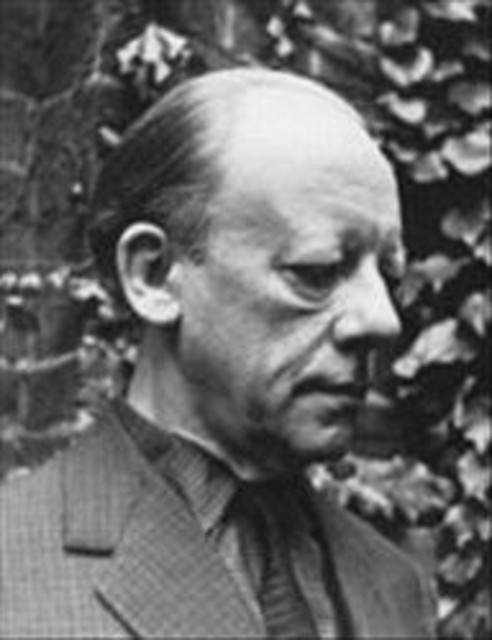
Alan Rawsthorne was born in Haslingden, Lancashire, and only considered music as a profession after abortive starts at careers in dentistry and architecture. At 19, he enrolled in the Royal Manchester College of Music, studying under Frank Merrick and Carl Fuchs, and he later studied piano under <a href="spotify:artist:6sJQ72Uhc9CmqavMpkkWpM">Egon Petri</a> in Berlin. He subsequently joined the faculty at Dartington Hall School and served as a composer for its School of Dance Mime. His first critical recognition came with the Theme and Variations for two violins, which was premiered at the 1938 London Festival of the International Society of Contemporary Music. At the next festival, held in Warsaw, Rawsthorne debuted his first major orchestral work, the Symphonic Studies, and his First Piano Concerto (which he later rescored) was premiered later that same year. The composer served in the British Army during World War II, a period in which he completed the Street Corner and Corteges overtures. With the coming of peace, Rawsthorne, now in his forties, entered the prime of his career and exclusively devoted his time to composing. Over the next 25 years, he wrote three symphonies; two concertos for violin; a second piano concerto and a cello concerto; a brace of choral works, including cantatas and songs; the song cycle Practical Cats (set to <a href="spotify:artist:3bDa6cxOSTdU4tkmFgNSpA">T.S. Eliot</a>) for speaker and orchestra; and numerous chamber works, as well as writing the music for four plays. He also wrote music for 27 movies, including such distinguished postwar productions as The Captive Heart, Saraband for Dead Lovers, The Cruel Sea, West of Zanzibar, and Lease of Life. The most obvious influences on Rawsthorne's early work were <a href="spotify:artist:3u1fWmwpwPOmMelTAo0Gb8">Hindemith</a> and <a href="spotify:artist:6RsX7qYw5KVKiOjS8BxjL5">Walton</a>, with a similarly lean, neo-Classical feel that is modernistic without being dissonant; not surprisingly, however -- given his relatively late entry into music -- his music's characteristics are all his own. From the early 1950s onward, he devoted even more energy to vocal music (even his Symphony No. 2 included a part for soprano in its last movement) and beginning in the early '60s, Rawsthorne's music embraced atonalism in a more obvious way. His music was always respected, sufficiently so that he was able to survive (with help from the film work) on a steady stream of commissioned pieces from 1946 onward, though some works were criticized on an aesthetic level for their brittle textures and, occasionally, a narrow expressive range.
Monthly Listeners
644
Monthly Listeners History
Track the evolution of monthly listeners over the last 28 days.
Followers
753
Followers History
Track the evolution of followers over the last 28 days.
Top Cities
46 listeners

15 listeners

15 listeners

14 listeners

14 listeners

Related Artists
Lee Luvisi
Josef Bohuslav Foerster

Louis Glass

Jan van Gilse

Mark O'Keeffe

Francois Kerdoncuff
Ernst Kovacic
Johanna Müller-Hermann
Jacques Hétu

Pavel Haas

San Diego Chamber Orchestra
Zdenek Jilek
Harold Shapero
Jindřich Feld

Jan Novák
Egon Wellesz
Alan Bush

Gary Gray
