
Data may be outdated
Last updated: 9 months ago — Click refresh to get the latest statistics.
Alexander Ilyinsky (aka Alexander Alexandrovich Il'yinksy) was a Russian composer and teacher of the late-Romantic era whose music was heavily influenced by the nationalist Romantics <a href="spotify:artist:34MYamymtmnsmpwbqydd7I">Borodin</a>, <a href="spotify:artist:284mnx33IWcymQEpMxyfHl">Mussorgsky</a>, and <a href="spotify:artist:2kXJ68O899XvWOBdpzlXgs">Rimsky-Korsakov</a>. Born in Tsarskoye Selo in 1859, he studied in Berlin at the Neue Akademie de Tonkunst, where his teachers included <a href="spotify:artist:20EH8n0CRZ0sxPJwdHAg0A">Woldemar Bargiel</a> for composition and Theodor Kullak for piano. He graduated from the St. Petersburg Conservatory in 1885 and joined the faculty of the music and drama school of the Moscow Philharmonic Society that same year. He became a professor 11 years later, and joined the Moscow Conservatory in 1905 as a professor of theory, history, and composition.
Ilyinsky came of age as Russian nationalist composers such as <a href="spotify:artist:284mnx33IWcymQEpMxyfHl">Mussorgsky</a> and <a href="spotify:artist:34MYamymtmnsmpwbqydd7I">Borodin</a> were entering their most mature periods of composition and the elder <a href="spotify:artist:2kXJ68O899XvWOBdpzlXgs">Rimsky-Korsakov</a> was starting to write his major operas; that his own musical sensibilities formed during this period is strongly reflected in his compositions. Ilyinsky's greatest successes as a composer all date from 1900 or later; his crowning achievement was the opera, Fountain of Bakhchisaray, based on a work by <a href="spotify:artist:3AHD71tI5fLTacyxHxDoCh">Pushkin</a>, which was premiered in Moscow in 1911. Several of his choral works dating from early in the twentieth century, including the cantatas Dragonflies and Rusalka, also saw performances, and he composed an orchestral suite, several other symphonic works, and the overture Tsar Fyodor. Ilyinsky wrote several music textbooks, most notably
A Short Guide to the Practical Teaching of Orchestration (1917), which remained in use long after his death in 1920. He was well known as a teacher in Imperial Russia's final years.
None of Ilyinsky's compositions retained popularity after his death -- not even enough to be recorded by the Soviet government-run Melodiya label) -- and none was extant in the repertory at the midpoint of the twentieth century. Through pure happenstance, however, a fragment of his Orgy of the Spirits became part of the Universal Studios music library during the mid-'30s; a minute-long musical excerpt from it was heard dozens of times throughout the background score of the 1937 jungle adventure serial Tim Tyler's Luck, and also two minutes before the end of Chapter 7 of Flash Gordon's Trip to Mars (1938). Although a composer's output or style shouldn't be evaluated by a single short fragment, that passage -- with its pounding percussion part and stirring arabesques on the clarinets and strings -- sounds almost like a "lost" Polovetsian dance from <a href="spotify:artist:34MYamymtmnsmpwbqydd7I">Borodin</a>'s Prince Igor, or orphaned pages of score from <a href="spotify:artist:2kXJ68O899XvWOBdpzlXgs">Rimsky-Korsakov</a>'s Scheherazade or <a href="spotify:artist:284mnx33IWcymQEpMxyfHl">Mussorgsky</a>'s Night on Bald Mountain. Based on its apparent late-Romantic style, sensibilities, and attributes, Ilyinsky's music -- at least Orgy of the Spirits and quite probably The Fountain of Bakhchisaray and Tsar Fyodor, as well -- ought to be prime candidates for resurrection to the repertory.
Ilyinsky came of age as Russian nationalist composers such as <a href="spotify:artist:284mnx33IWcymQEpMxyfHl">Mussorgsky</a> and <a href="spotify:artist:34MYamymtmnsmpwbqydd7I">Borodin</a> were entering their most mature periods of composition and the elder <a href="spotify:artist:2kXJ68O899XvWOBdpzlXgs">Rimsky-Korsakov</a> was starting to write his major operas; that his own musical sensibilities formed during this period is strongly reflected in his compositions. Ilyinsky's greatest successes as a composer all date from 1900 or later; his crowning achievement was the opera, Fountain of Bakhchisaray, based on a work by <a href="spotify:artist:3AHD71tI5fLTacyxHxDoCh">Pushkin</a>, which was premiered in Moscow in 1911. Several of his choral works dating from early in the twentieth century, including the cantatas Dragonflies and Rusalka, also saw performances, and he composed an orchestral suite, several other symphonic works, and the overture Tsar Fyodor. Ilyinsky wrote several music textbooks, most notably
A Short Guide to the Practical Teaching of Orchestration (1917), which remained in use long after his death in 1920. He was well known as a teacher in Imperial Russia's final years.
None of Ilyinsky's compositions retained popularity after his death -- not even enough to be recorded by the Soviet government-run Melodiya label) -- and none was extant in the repertory at the midpoint of the twentieth century. Through pure happenstance, however, a fragment of his Orgy of the Spirits became part of the Universal Studios music library during the mid-'30s; a minute-long musical excerpt from it was heard dozens of times throughout the background score of the 1937 jungle adventure serial Tim Tyler's Luck, and also two minutes before the end of Chapter 7 of Flash Gordon's Trip to Mars (1938). Although a composer's output or style shouldn't be evaluated by a single short fragment, that passage -- with its pounding percussion part and stirring arabesques on the clarinets and strings -- sounds almost like a "lost" Polovetsian dance from <a href="spotify:artist:34MYamymtmnsmpwbqydd7I">Borodin</a>'s Prince Igor, or orphaned pages of score from <a href="spotify:artist:2kXJ68O899XvWOBdpzlXgs">Rimsky-Korsakov</a>'s Scheherazade or <a href="spotify:artist:284mnx33IWcymQEpMxyfHl">Mussorgsky</a>'s Night on Bald Mountain. Based on its apparent late-Romantic style, sensibilities, and attributes, Ilyinsky's music -- at least Orgy of the Spirits and quite probably The Fountain of Bakhchisaray and Tsar Fyodor, as well -- ought to be prime candidates for resurrection to the repertory.
Monthly Listeners
4,125
Monthly Listeners History
Track the evolution of monthly listeners over the last 28 days.
Followers
64
Followers History
Track the evolution of followers over the last 28 days.
Top Cities



Related Artists
Dr. Andrew Weil & Joshua Leeds

Lisa Spector


Alearco Ambrosi
Frank Hutchens

Scumann Robert
Joel Schoenhals

Paul Paccione

Hal Freedman
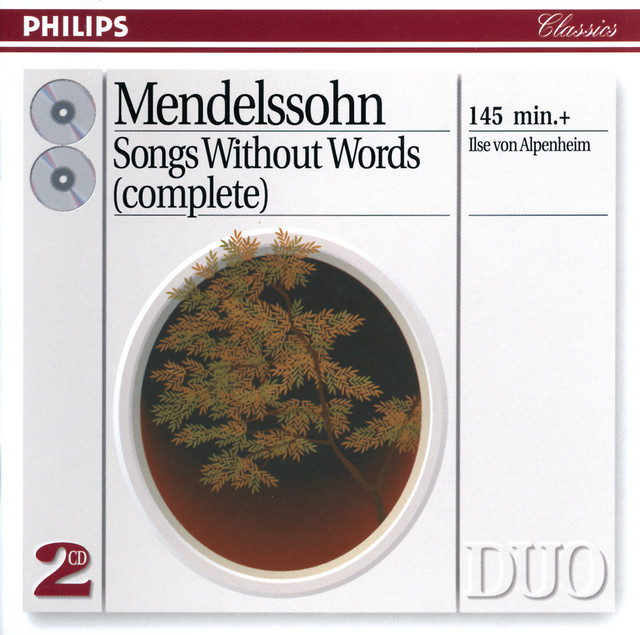
Ilse von Alpenheim
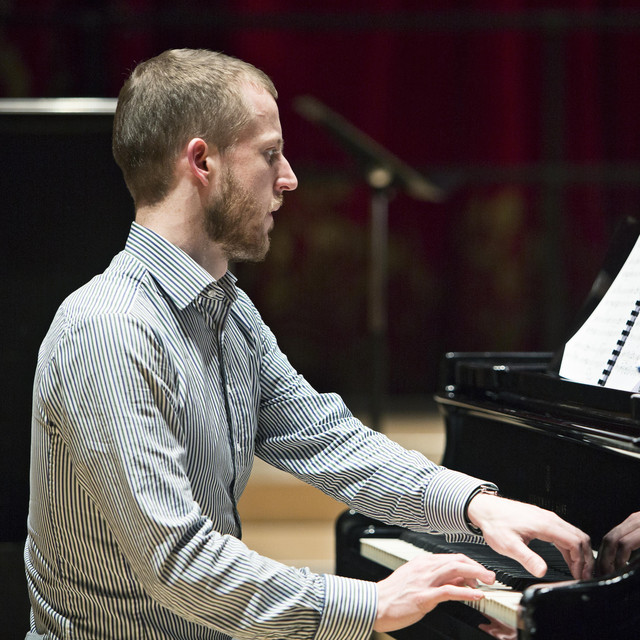
Simon Smith

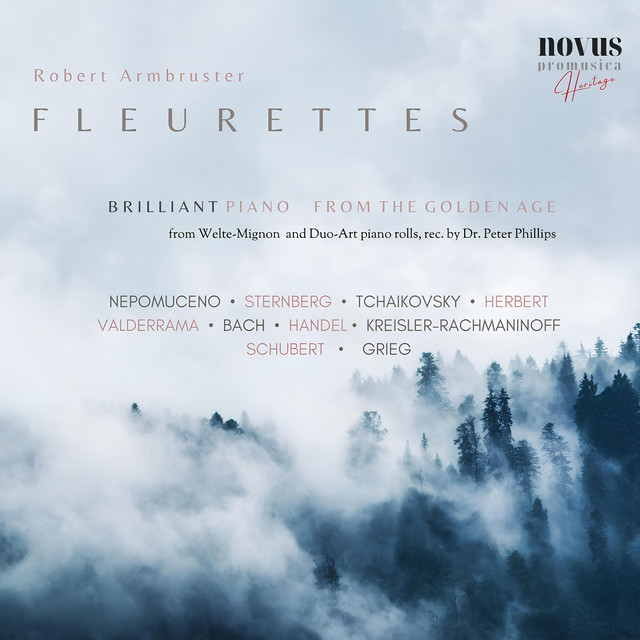
Carlos Valderrama

Christina McMaster

Viktor Stepanovych Kosenko


Tarthrezol
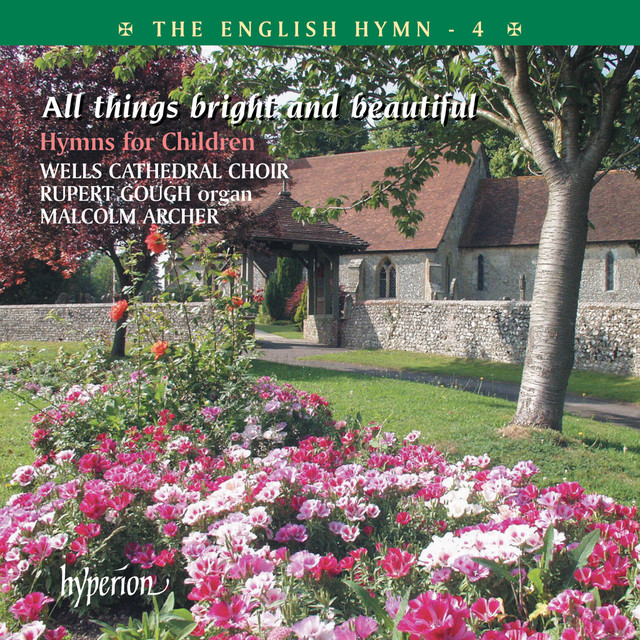
Justin Heinrich Knecht
Giuseppe Rossi

Pianophonica

Francesco Caramiello
Sergio Gallo
Sigismond Thalberg

Michael Blake

Stephen Dodgson

Monica Li

Marta Mołodyńska-Wheeler
Marco Rapetti
Tomasz Kamieniak

Harrison Sheckler
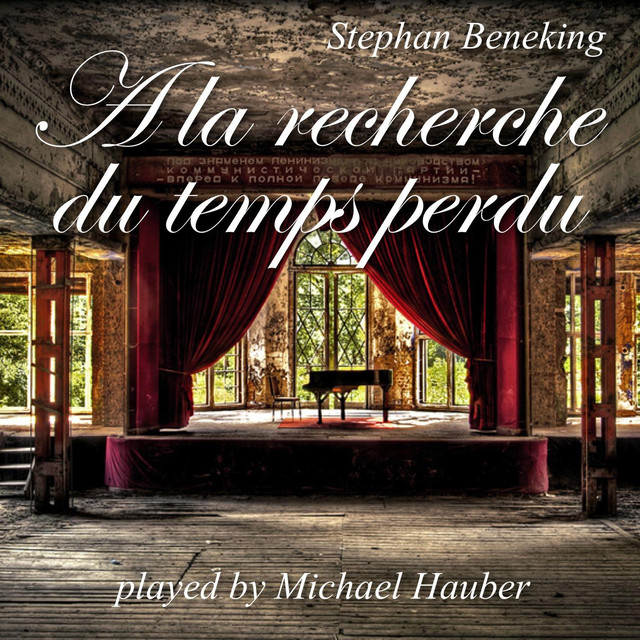
Michael Hauber

David Cooper
Genari Karganoff
