Data may be outdated
Last updated: 7 months ago — Click refresh to get the latest statistics.
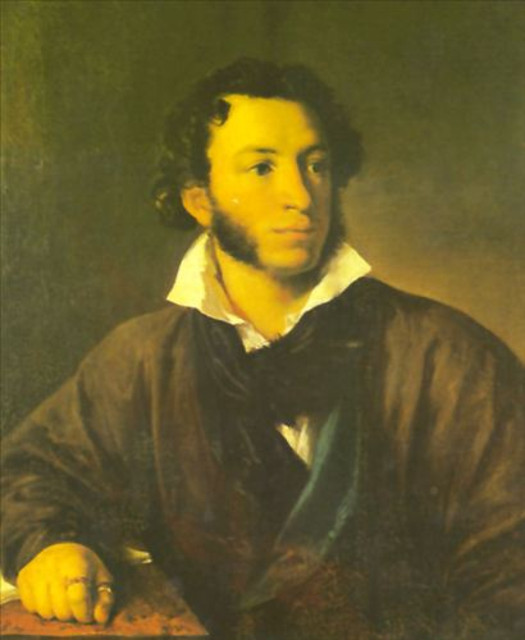
"The Russian Shakespeare" and the "father of modern Russian literature" are among the many extolments given, not undeservedly, to the great poet and dramatist Alexander Pushkin. A towering figure in the Romantic era, Pushkin was the first Russian to use common speech in his poetry and was the author of what is generally regarded as the greatest Russian literary work, the novel in verse Evgeny Onegin (1823-1831). Numerous other Pushkin works are considered supreme masterpieces, like the 1833 poem "The Bronze Horseman" and the 1830 drama "The Stone Guest." Pushkin wielded influence not only on subsequent generations of Russian writers, but on composers, as well: Evgeny Onegin was the source for <a href="spotify:artist:3MKCzCnpzw3TjUYs2v7vDA">Tchaikovsky</a>'s opera of the same name; <a href="spotify:artist:284mnx33IWcymQEpMxyfHl">Mussorgsky</a>'s Boris Godunov, <a href="spotify:artist:1GEuHbNwTRj4QPyoythtBh">Glinka</a>'s Ruslan and Lyudmila and <a href="spotify:artist:0Kekt6CKSo0m5mivKcoH51">Rachmaninov</a>'s The Miserly Knight were operas also inspired by identically titled Pushkin works.
Alexander Pushkin was born in Moscow on June 6, 1799. He received his early education from Russian and French tutors. From age 12 Pushkin studied at the Imperial Lyceum near St. Petersburg, and soon began writing his first poems. Following his 1817 graduation, Pushkin accepted a post in the Foreign Affairs Ministry in St. Petersburg. His most important early works appeared shortly: Ruslan and Lyudmila (1820), Prisoner of the Caucasus (1820-1821), The Fountain of Bakhchisaray (1823), and several others. Compelled to leave St. Petersburg in 1820 owing to his supposed radical political ideas, Pushkin moved about the country over the next few years, eventually living as an exile near Pskov. Though Tsar Nicholas I granted him his freedom in 1826, Pushkin thenceforth remained under the censors' scrutiny.
In 1831 Pushkin married the beautiful Natalya Goncharova, who would soon become a favorite celebrity at the Imperial Court. Pushkin resented the lowly post he was given there as a means for the Tsar to invite Goncharova to the palace balls. Goncharova's imprudent lifestyle sent Pushkin deeply into debt, for despite the high quality of such works as the short story "The Queen of Spades" (1834) and the novel The Captain's Daughter (1836), Pushkin's income remained relatively modest.
Exacerbating the writer's unhappy marriage and growing financial problems were swirling rumors of his wife's infidelity, underscored by an anonymous note to Pushkin informing him he was a cuckold. As a result Pushkin challenged Goncharova's alleged lover, Baron Georges d'Anthès, to a duel. In the contest that followed Pushkin was shot and died on February 10, 1837.
Alexander Pushkin was born in Moscow on June 6, 1799. He received his early education from Russian and French tutors. From age 12 Pushkin studied at the Imperial Lyceum near St. Petersburg, and soon began writing his first poems. Following his 1817 graduation, Pushkin accepted a post in the Foreign Affairs Ministry in St. Petersburg. His most important early works appeared shortly: Ruslan and Lyudmila (1820), Prisoner of the Caucasus (1820-1821), The Fountain of Bakhchisaray (1823), and several others. Compelled to leave St. Petersburg in 1820 owing to his supposed radical political ideas, Pushkin moved about the country over the next few years, eventually living as an exile near Pskov. Though Tsar Nicholas I granted him his freedom in 1826, Pushkin thenceforth remained under the censors' scrutiny.
In 1831 Pushkin married the beautiful Natalya Goncharova, who would soon become a favorite celebrity at the Imperial Court. Pushkin resented the lowly post he was given there as a means for the Tsar to invite Goncharova to the palace balls. Goncharova's imprudent lifestyle sent Pushkin deeply into debt, for despite the high quality of such works as the short story "The Queen of Spades" (1834) and the novel The Captain's Daughter (1836), Pushkin's income remained relatively modest.
Exacerbating the writer's unhappy marriage and growing financial problems were swirling rumors of his wife's infidelity, underscored by an anonymous note to Pushkin informing him he was a cuckold. As a result Pushkin challenged Goncharova's alleged lover, Baron Georges d'Anthès, to a duel. In the contest that followed Pushkin was shot and died on February 10, 1837.
Monthly Listeners
39
Monthly Listeners History
Track the evolution of monthly listeners over the last 28 days.
Followers
169
Followers History
Track the evolution of followers over the last 28 days.
Top Cities
3 listeners

Related Artists

Carlotta Ferrari

Gabrielle Ferrari

Théophile de Viau

Franck Russo

Paul Puget

Nestor Kukolnik

John Francis Larchet
Antonio Estévez - Composer

Deborah Domanski

Jennifer Parker
Roberto Rupo

John McGinn

Júlia Arnó