Data may be outdated
Last updated: 1 week ago — Click refresh to get the latest statistics.
Stordahl wrote mostly dance arrangements for the next few years, but when a young singer named <a href="spotify:artist:1Mxqyy3pSjf8kZZL4QVxS0">Frank Sinatra</a> took Jack Leonard's place, Stordahl found an even more effective niche working on romantic ballads for the emerging heartthrob. Stordahl's lovely, sensitive treatments worked marvelously with <a href="spotify:artist:1Mxqyy3pSjf8kZZL4QVxS0">Sinatra</a>'s supple, yearning voice, and when the singer cut his first four-song solo session in 1942, he hired Stordahl as the arranger and conductor. <a href="spotify:artist:1Mxqyy3pSjf8kZZL4QVxS0">Sinatra</a> left the <a href="spotify:artist:4WoGga7UeRcmjD4ufif4nG">Dorsey</a> band for a full-fledged solo career later that year, signing with Columbia and bringing Stordahl with him to serve as musical director.
<a href="spotify:artist:1Mxqyy3pSjf8kZZL4QVxS0">Sinatra</a> took the music world by storm over the next few years, projecting a warm, vulnerable intimacy that was unprecedented in American popular music. Stordahl was an unsung hero in this achievement, thanks to his excellent sense of how to frame <a href="spotify:artist:1Mxqyy3pSjf8kZZL4QVxS0">Sinatra</a>'s voice. He was among the first American arrangers to tailor his work to the strengths of a specific vocalist; which seems like an obvious thing to do in retrospect, but up until <a href="spotify:artist:1Mxqyy3pSjf8kZZL4QVxS0">Sinatra</a>, the star solo vocalist was a rare phenomenon in pop music, save for <a href="spotify:artist:6ZjFtWeHP9XN7FeKSUe80S">Bing Crosby</a>. Stordahl's work was lush but tasteful, taking advantage of better recording technology to bring out subtler, more intricate instrumental touches and quieter dynamics. His writing for strings was rich, full, and smooth, creating the perfect backdrop for <a href="spotify:artist:1Mxqyy3pSjf8kZZL4QVxS0">Sinatra</a>'s romantic longing. Essentially, <a href="spotify:artist:1Mxqyy3pSjf8kZZL4QVxS0">Sinatra</a> knew what he needed to make his persona work, and Stordahl knew exactly how to give it to him. Stordahl often assigned the swinging, up-tempo tunes to other arrangers in the <a href="spotify:artist:1Mxqyy3pSjf8kZZL4QVxS0">Sinatra</a> organization, but handled the vast majority of the ballads himself. This blueprint remained consistently successful for most of <a href="spotify:artist:1Mxqyy3pSjf8kZZL4QVxS0">Sinatra</a>'s tenure at Columbia, and certainly played a major role in his ascent to superstardom.
The prolific Stordahl wrote over 300 recorded arrangements for <a href="spotify:artist:1Mxqyy3pSjf8kZZL4QVxS0">Sinatra</a>, and more than doubled that total with his work for <a href="spotify:artist:1Mxqyy3pSjf8kZZL4QVxS0">Sinatra</a>'s assorted radio programs during the '40s. Those included stints on Your Hit Parade from 1943-1944 and 1947-1949, plus another show called Songs by Sinatra from 1945-1947. Stordahl also co-composed several successful songs for <a href="spotify:artist:1Mxqyy3pSjf8kZZL4QVxS0">Sinatra</a> and others during the latter half of the '40s, including "I Should Care" (1945), "Day by Day" (1946), "Ain'tcha Ever Comin' Back" (1947), "Night After Night" (1949), and "Meet Me at the Copa" (1950). By the early '50s, <a href="spotify:artist:1Mxqyy3pSjf8kZZL4QVxS0">Sinatra</a>'s career had taken a downturn, and conflicts with Columbia chief <a href="spotify:artist:0kLeQeOAEqHdFMUItesuij">Mitch Miller</a> over his musical direction led to his exit from the label. He caught on with Capitol and initially intended to bring Stordahl with him; in fact, Stordahl headed up his first recording session for his new label. However, sensing that <a href="spotify:artist:1Mxqyy3pSjf8kZZL4QVxS0">Sinatra</a>'s sound needed an update, Capitol pushed him to record with the up-and-coming <a href="spotify:artist:6PyGlGbMoNqkofF14K4BWb">Nelson Riddle</a>, whose ballad treatments generally built on Stordahl's foundation, albeit with a more contemporary sensibility. <a href="spotify:artist:1Mxqyy3pSjf8kZZL4QVxS0">Sinatra</a> had resisted the change at first out of loyalty to Stordahl, but when <a href="spotify:artist:6PyGlGbMoNqkofF14K4BWb">Riddle</a>'s work helped revitalize his recording career, he wound up parting ways with his longtime director.
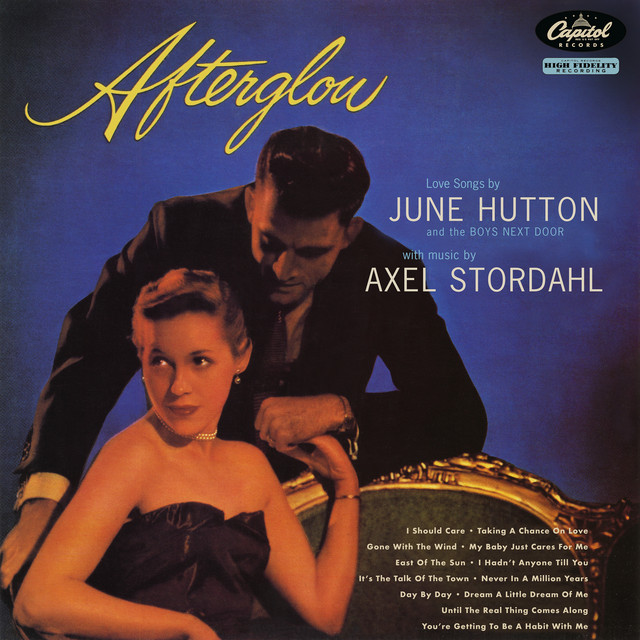
Stordahl married singer <a href="spotify:artist:1nolwXRzdKtuxpp9q0UrVW">June Hutton</a> (of <a href="spotify:artist:5o8E07TcYqIefZpDejymAd">the Pied Pipers</a>) and went on to work with singers like <a href="spotify:artist:6ZjFtWeHP9XN7FeKSUe80S">Bing Crosby</a>, <a href="spotify:artist:3ESG6pj6a0LvUKklENalT6">Doris Day</a> (backing her on the hit "Tea for Two"), <a href="spotify:artist:6bHSJldq5J4lYowHOm9OOX">Eddie Fisher</a>, <a href="spotify:artist:73xrrv4ZrlpLi1q0Q34wiK">Dinah Shore</a>, Nanette Fabray, and <a href="spotify:artist:49e4v89VmlDcFCMyDv9wQ9">Dean Martin</a>, among others. He also led several studio bands for radio and television, and was the musical director for the TV series McHale's Navy. He and <a href="spotify:artist:1nolwXRzdKtuxpp9q0UrVW">Hutton</a> recorded together for Capitol during the '50s. Toward the end of the decade, Stordahl became interested in the exotica fad, and issued several lounge albums under his own name, mostly for Decca: 1959's The Lure of the Blue Mediterranean, 1960's Jasmine and Jade (for Dot), 1961's The Magic Islands Revisited (with Gene Rains), and 1963's Guitars Around the World. Unfortunately, by this time, Stordahl had been diagnosed with cancer. As <a href="spotify:artist:1Mxqyy3pSjf8kZZL4QVxS0">Sinatra</a> prepared to leave Capitol for his own label, Reprise, he reunited with Stordahl one last time on what proved to be his final Capitol concept album, 1961's Point of No Return. Stordahl passed away on August 30, 1963, in Encino, CA. ~ Steve Huey, Rovi
Monthly Listeners
1,888
Monthly Listeners History
Track the evolution of monthly listeners over the last 28 days.
Followers
422
Followers History
Track the evolution of followers over the last 28 days.
Total Streams
1.0 billion
Total Streams History
Track the evolution of total streams over the last 28 days. This data is calculated from all tracks listed in the artist's discography.
Top Cities




Related Artists

Frank Sinatra with Tommy Dorsey and His Orchestra

Frank Sinatra, Tommy Dorsey Orchestra

Claude Thornhill And His Orchestra
Dick Jurgens & His Orchestra
Skinnay Ennis

Frank Sinatra, Tommy Dorsey Orchestra, The Pied Pipers
Stuart Foster

Gene Howard

Harry James Orchestra, Frank Sinatra


Buddy Moreno and His Orchestra
Phil Brito


Hellen Forrest

Harry James and His Orchestra, Vocals by Frank Sinatra
M. Curtis

Gloria DeHaven
Eddie Miller and His Orchestra
Bobby Sherwood And His Orchestra


Freddy Martin and His Orch., voc. Clyde Rogers