Data may be outdated
Last updated: 9 months ago — Click refresh to get the latest statistics.
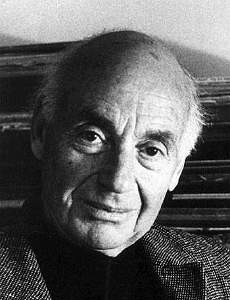
Berthold Goldschmidt was one of the many composers designated "degenerate" (entartete) by the Nazi regime in Germany. Even if he had not been a Jew, it would certainly be difficult to find a composer more different from their ideal, ultra-Romantic in sound as well as subject matter. Goldschmidt's two famous operas, Der Gewaltige Haburei (The magnificent cuckold) and Beatrice Cenci, are merciless in their exposure of human frailty and cruelty, and his Marche militaire is an equally pitiless parody of military glory. While often using discord, his works remain largely traditional in structure and style, usually featuring a vivid energy of expression.
Goldschmidt studied music first at the University of Hamburg, following that with studies at Friedrich Wilhelm University, and finally at the Berlin Hochschule for Musik, where he came under <a href="spotify:artist:7ehgiWrLMRMQkrr5tQQB2P">Franz Schreker</a>'s tutelage and won the <a href="spotify:artist:6MF58APd3YV72Ln2eVg710">Mendelssohn</a> composition prize for his Passacaglia for Orchestra, Op. 4. After his 1925 graduation, he became assistant conductor at the Darmstadt Opera and also wrote orchestral music. The next year, he became assistant conductor at the Berlin State Opera and wrote Der Gewaltige Haburei during 1929 and 1930. It was a success at its local premiere, but plans for a Berlin staging were ended when the Nazi party rose to full power. He remained in Germany, not able to conduct or publish, though still able to give lessons, but after an interrogation session with the Gestapo, Goldschmidt fled to England in 1935. There he continued to coach opera and conduct, including for the first Edinburgh Festival (substituting for an ailing <a href="spotify:artist:2CFaOiHKik5FgNGzZJ08sx">George Szell</a>), and compose, including the 1939 ballet Chronica (which was subjected to an almost <a href="spotify:artist:1JOQXgYdQV2yfrhewqx96o">Verdian</a> "adaptation" to suit political sensibilities -- the story of the rise and fall of a dictator was moved to the Renaissance) -- a 1944 symphony, and the 1948 Ballata e scherzo. He also collaborated with Deryck Cooke on the reconstruction of <a href="spotify:artist:2ANtgfhQkKpsW6EYSDqldz">Mahler</a>'s Symphony No. 10. In 1949, he began Beatrice Cenci and completed it in 1951, though it was not produced.
After the 1950s, he fell more or less out of public attention as a composer, largely due to the rise of atonalism, and he wrote relatively few pieces, concerti, and vocal works. In the 1980s, however, he came back to the limelight, composing many new pieces, including the Third and Fourth string quartets, and witnessing revivals of his stage works, including Beatrice Cenci in a 1988 concert performance. He was not a particularly prolific composer and much of his early work was lost: He had left it with a friend in Germany for safe-keeping, but the friend's house was destroyed during the war.
Goldschmidt studied music first at the University of Hamburg, following that with studies at Friedrich Wilhelm University, and finally at the Berlin Hochschule for Musik, where he came under <a href="spotify:artist:7ehgiWrLMRMQkrr5tQQB2P">Franz Schreker</a>'s tutelage and won the <a href="spotify:artist:6MF58APd3YV72Ln2eVg710">Mendelssohn</a> composition prize for his Passacaglia for Orchestra, Op. 4. After his 1925 graduation, he became assistant conductor at the Darmstadt Opera and also wrote orchestral music. The next year, he became assistant conductor at the Berlin State Opera and wrote Der Gewaltige Haburei during 1929 and 1930. It was a success at its local premiere, but plans for a Berlin staging were ended when the Nazi party rose to full power. He remained in Germany, not able to conduct or publish, though still able to give lessons, but after an interrogation session with the Gestapo, Goldschmidt fled to England in 1935. There he continued to coach opera and conduct, including for the first Edinburgh Festival (substituting for an ailing <a href="spotify:artist:2CFaOiHKik5FgNGzZJ08sx">George Szell</a>), and compose, including the 1939 ballet Chronica (which was subjected to an almost <a href="spotify:artist:1JOQXgYdQV2yfrhewqx96o">Verdian</a> "adaptation" to suit political sensibilities -- the story of the rise and fall of a dictator was moved to the Renaissance) -- a 1944 symphony, and the 1948 Ballata e scherzo. He also collaborated with Deryck Cooke on the reconstruction of <a href="spotify:artist:2ANtgfhQkKpsW6EYSDqldz">Mahler</a>'s Symphony No. 10. In 1949, he began Beatrice Cenci and completed it in 1951, though it was not produced.
After the 1950s, he fell more or less out of public attention as a composer, largely due to the rise of atonalism, and he wrote relatively few pieces, concerti, and vocal works. In the 1980s, however, he came back to the limelight, composing many new pieces, including the Third and Fourth string quartets, and witnessing revivals of his stage works, including Beatrice Cenci in a 1988 concert performance. He was not a particularly prolific composer and much of his early work was lost: He had left it with a friend in Germany for safe-keeping, but the friend's house was destroyed during the war.
Monthly Listeners
230
Monthly Listeners History
Track the evolution of monthly listeners over the last 28 days.
Followers
265
Followers History
Track the evolution of followers over the last 28 days.
Top Cities
11 listeners

8 listeners

7 listeners

6 listeners

5 listeners
Related Artists
Takashi Harada
Jean-Jacques Justafré
Steven Ansell

András Mihály
Harri Ahmas
Tristan Keuris

Alan Brind

Blair Quartet
Roger Sessions
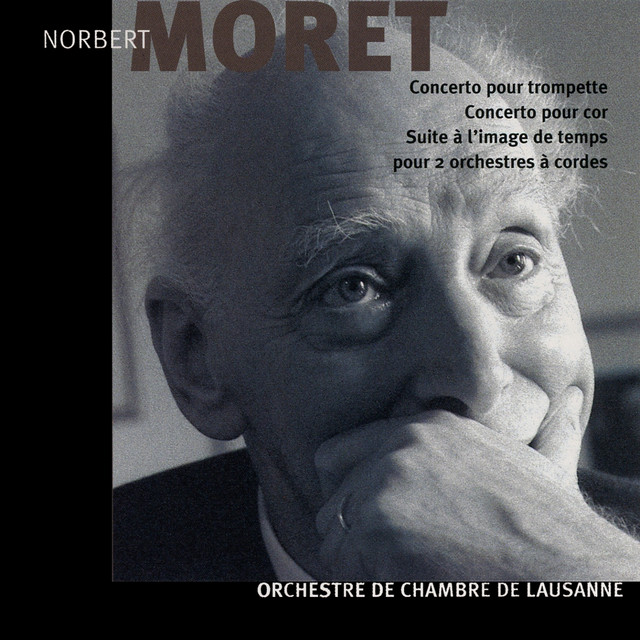
Norbert Moret
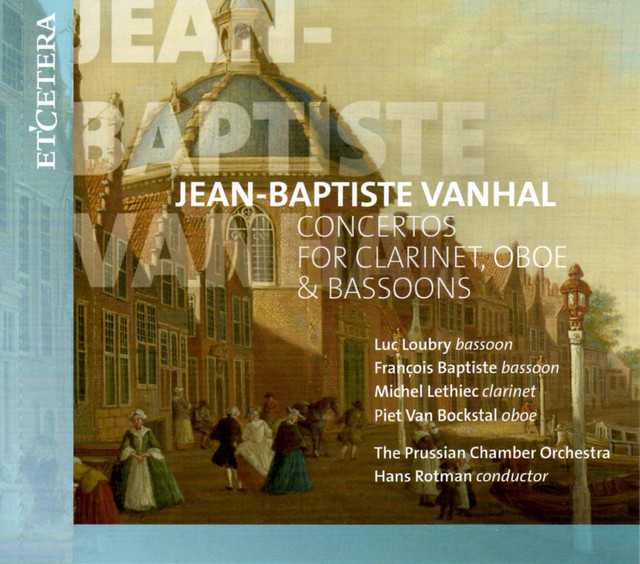
Michel Lethiec


Karsten Nagel

James Pugh

Manfred Trojahn
Jan Spronk

Ex Novo Ensemble

Pavel Haas