
Data may be outdated
Last updated: 7 months ago — Click refresh to get the latest statistics.
One of Sweden's most colorful figures, Carl Almqvist was a composer, writer, and social reformer. He graduated from the University of Uppsala in 1815 into what threatened to be a dull life as a government clerk in the department of ecclesiastical affairs. But he fell in with the neo-Romantic poet E.J. Stagnelius and became captivated by such German literary figures as <a href="spotify:artist:7wQj9SdON7gAR6M2VjpBrw">Goethe</a>, <a href="spotify:artist:0RO6COslAWRZZBGgqbG615">Hoffmann</a>, and Schlegel, as well as by Swedenborg and the Gothic movement. Almqvist soon tired of the neo-Romantic style, though, and began writing more realist poetry. Almqvist also fell under the spell of <a href="spotify:artist:0GJc9hwpZqTk1JEba6EUPA">Rousseau</a> and tried to put the Frenchman's ideals into practice by forming a community of subsistence farmers, where he stayed from 1823 to 1826. He returned to Stockholm and was eventually able to test his reformist notions as headmaster of an experimental secondary school from 1829 to 1841. Almqvist frequently found himself in trouble with the authorities. In 1822, he was forced to destroy the entire print run of his "poetical fugue" Amorina, which combined lyrics and drama, because it attacked the doctrine of free will. His novels and short stories became more and more radical, advocating universal suffrage, women's liberation, prison reform, and free love. Obviously, his 1837 ordination in the Lutheran church was a mistake in judgment; by 1841, he was forced to resign for "moral crimes." Almqvist next got work as a journalist with a liberal newspaper, but in 1851, he was accused of trying to poison a moneylender and fled to the United States. He returned to Europe in 1865, settling for what little remained of his life in Bremen. As a composer, Almqvist was self-taught, but far less a maverick than in his other endeavors. In his 1845 prose work "Monografi," he defended the beauty of melody and complained that it had been defeated by counterpoint and harmony. As a good Romantic, he advocated the right of "genius" to shape its own rules. His own music, though, was hardly innovative. His 1849 collection of 26 piano pieces, called Free Fantasies, is regarded as rather dull, although some items adopt a folk-like manner that would be common in the later works of <a href="spotify:artist:5ihY290YPGc3aY2xTyx7Gy">Grieg</a>. More highly regarded are his unaccompanied songs to his own texts, Songes, composed around 1830 and sometimes employing a folk style to better effect.
Monthly Listeners
177
Monthly Listeners History
Track the evolution of monthly listeners over the last 28 days.
Followers
77
Followers History
Track the evolution of followers over the last 28 days.
Top Cities
66 listeners

20 listeners
18 listeners
13 listeners
6 listeners

Related Artists
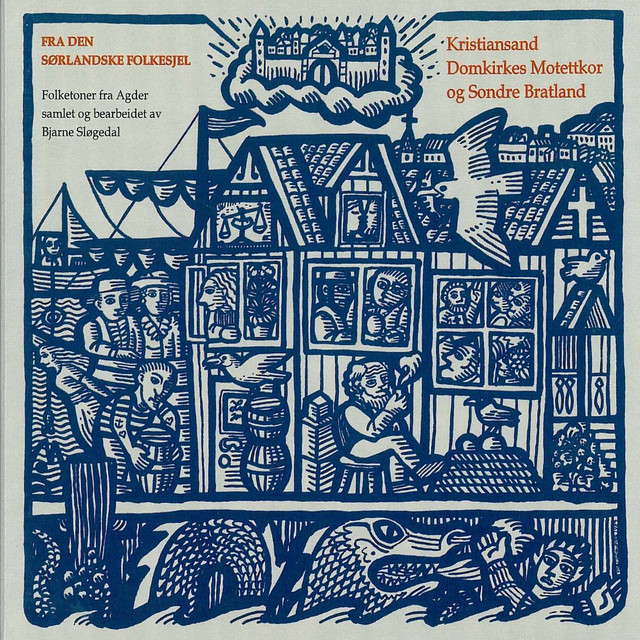
Norsk Folketone
Nils Söderström

Dan Linden
Peter Nygren
Arne Löthman
Sergie Muchin

Gothenburg Chamber Choir

Karin Boye

Kristina Stobæus
Erik Drake

Erik Gustaf Geijer

Bjarne Sløgedal
Jørgen Moe

Friedrich Mehler

Mats Eriksson

Björg Þórhallsdóttir
