Data may be outdated
Last updated: 9 months ago — Click refresh to get the latest statistics.
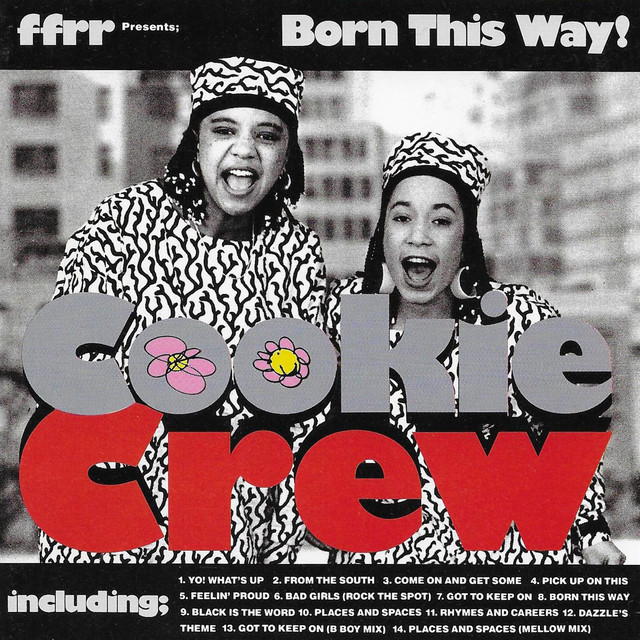
One of the first and most significant British female hip-hop acts, South London duo Cookie Crew were equally skilled at making club-oriented pop-rap and more socially conscious hardcore rap. They broke through with 1987's "Rok da House," a collaboration with <a href="spotify:artist:1mPzbhI5OxkyJnTeuKeD8q">the Beatmasters</a> which was arguably the first hip-house track, and certainly the style's first major hit. While Cookie Crew incorporated elements of house and electro into their music, they were never interested in being pigeonholed as a dance act. Their two albums, 1989's Born This Way and 1991's Fade to Black, featured production by members of <a href="spotify:artist:6gl67jXbrwnMYZNZv88MKk">Stetsasonic</a>, <a href="spotify:artist:0NnCgUxhtWt1yBtpDyvFQf">Black Sheep</a>, and <a href="spotify:artist:5cMgGlA1xGyeAB2ctYlRdZ">Gang Starr</a>, as well as collaborations with vibraphonist <a href="spotify:artist:6R9Mv0bgGE4Tqxna1q5Mrj">Roy Ayers</a> and funk legend <a href="spotify:artist:1B8AXU6gIIafpyLEpbcv1u">Edwin Starr</a>. Following a pair of 1992 singles which respectively concentrated on the duo's house and hardcore sides, Cookie Crew disbanded. Their entire discography was collected on the 2024 box set Pick Up on This: 1987-1992.
Cookie Crew consisted of MC Remedee (Debbie Pryce) and Susie Q (Susan Banfield), both children of Caribbean immigrants. Pryce was once a chef for the Ministry of Defense, and Banfield's brother Andrew was a member of R&B/pop vocal group <a href="spotify:artist:6lr9AruL30Dwl82fDODq9u">the Pasadenas</a>. As teenagers, they formed a 13-member posse called the Warm Milk & Cookie Crew. At one of their first performances in front of a crowd, they won an early 1985 rap championship, which led to further gigs as well as BBC Radio 1 sessions for John Peel and Janice Long. In 1986, Pryce and Banfield, shortening their name to just Cookie Crew, entered the studio with Paul Carter, Amanda Glanfield, and Richard Walmsley, collectively known as <a href="spotify:artist:1mPzbhI5OxkyJnTeuKeD8q">the Beatmasters</a>, who were in need of voice-over talent for advertisements. The producers then asked Cookie Crew to write rhymes for a song they were working on, and the result ended up being "Rok da House," one of the first hip-house tracks. Mark Moore of <a href="spotify:artist:2PvqyOwynRF4BveaU6IA7S">S'Express</a> played an acetate of the track at several clubs, and he took it to the <a href="spotify:search:label%3A%22Rhythm+King%22">Rhythm King</a> label, who issued it as a single in 1987. The song reached the British charts, as did Cookie Crew's "Females (Get On Up)," which also made the U.S. dance and R&B charts. As more hip-house records were released, "Rok da House" became recognized as the start of a trend, and the song remained popular in clubs. A remix appeared at the end of 1987, and it broke into the U.K. pop charts in early 1988, eventually reaching number five.
Cookie Crew signed to <a href="spotify:search:label%3A%22FFRR%22">FFRR</a> and began working with other producers, creating music which leaned closer to the duo's roots in hip-hop rather than house. 1989 full-length Born This Way featured production by <a href="spotify:artist:6gl67jXbrwnMYZNZv88MKk">Stetsasonic</a>'s <a href="spotify:artist:48DZoXDrDEGSwKqAsSVaVa">Daddy-O</a> and DBC, as well as fellow New York hip-hop veteran <a href="spotify:artist:2IsmDumTniT9BP7qyozDCC">Davy DMX</a>. Single "Got to Keep On," which sampled <a href="spotify:artist:1B8AXU6gIIafpyLEpbcv1u">Edwin Starr</a> as well as <a href="spotify:artist:0dmPX6ovclgOy8WWJaFEUU">Kraftwerk</a>, became the album's biggest hit, reaching number 17 on the U.K. pop chart and number 33 on the U.S. dance chart. <a href="spotify:artist:1B8AXU6gIIafpyLEpbcv1u">Starr</a> joined the duo when they performed the single on Top of the Pops, and Cookie Crew additionally appeared on <a href="spotify:artist:1B8AXU6gIIafpyLEpbcv1u">Starr</a>'s album U Can Have It. Cookie Crew performed gigs at home and abroad, joined by DJ Maxine, DJ Dazzle, beatboxer MC Peggy Lee, and others. They were also part of the Black Rhyme Organisation to Help Equal Rights (B.R.O.T.H.E.R.) along with other U.K. hip-hop acts like <a href="spotify:artist:4dpIakcxTgRBWsi2iIBnOD">She Rockers</a> and <a href="spotify:artist:4Y4gsuoD2EGB1WK8KN9OyO">Demon Boyz</a>. Cookie Crew's second album, 1991's Fade to Black, featured production by Dazzle and <a href="spotify:artist:48DZoXDrDEGSwKqAsSVaVa">Daddy-O</a> as well as <a href="spotify:artist:0NnCgUxhtWt1yBtpDyvFQf">Black Sheep</a>, <a href="spotify:artist:5cMgGlA1xGyeAB2ctYlRdZ">Gang Starr</a>'s <a href="spotify:artist:6GEykX11lQqp92UVOQQCC7">DJ Premier</a> and <a href="spotify:artist:6xyaria4AcxjRuJZLkWvMW">Guru</a>, <a href="spotify:artist:0GGvtc3aJtSkuYcfsiN6eC">C.J. Mackintosh</a> (<a href="spotify:artist:13jRo2FyagCX9wrKIpOt46">M|A|R|R|S</a>), and others. Additionally, <a href="spotify:artist:6R9Mv0bgGE4Tqxna1q5Mrj">Roy Ayers</a> guested on "Love Will Bring Us Together." The album was more focused on socially conscious lyrics than Cookie Crew's previous work, and wasn't as pop-oriented.
In 1992, <a href="spotify:search:label%3A%22FFRR%22">FFRR</a> released the house single "Brother Like Sister" as well as the vicious "Crew's Gone Mad," the most hardcore song the duo ever recorded. Neither made much of an impact and Cookie Crew decided to stop making music. The two continued to perform for a while longer, including a trip to Africa in 1994 for an AIDS awareness tour, where they played shows and participated in workshops in Uganda and Kenya. Pryce remained active within the music industry as an executive, while Banfield successfully pursued a career in education. In 2023, Cookie Crew received a Pioneer Award at the Artist & Manager Awards in London, recognizing their impact on British hip-hop. Pick Up on This: 1987-1992, a four-CD box set collecting both of Cookie Crew's albums and all of their singles, was released by <a href="spotify:search:label%3A%22Cherry+Pop%22">Cherry Pop</a> in 2024. ~ Paul Simpson, Rovi
Cookie Crew consisted of MC Remedee (Debbie Pryce) and Susie Q (Susan Banfield), both children of Caribbean immigrants. Pryce was once a chef for the Ministry of Defense, and Banfield's brother Andrew was a member of R&B/pop vocal group <a href="spotify:artist:6lr9AruL30Dwl82fDODq9u">the Pasadenas</a>. As teenagers, they formed a 13-member posse called the Warm Milk & Cookie Crew. At one of their first performances in front of a crowd, they won an early 1985 rap championship, which led to further gigs as well as BBC Radio 1 sessions for John Peel and Janice Long. In 1986, Pryce and Banfield, shortening their name to just Cookie Crew, entered the studio with Paul Carter, Amanda Glanfield, and Richard Walmsley, collectively known as <a href="spotify:artist:1mPzbhI5OxkyJnTeuKeD8q">the Beatmasters</a>, who were in need of voice-over talent for advertisements. The producers then asked Cookie Crew to write rhymes for a song they were working on, and the result ended up being "Rok da House," one of the first hip-house tracks. Mark Moore of <a href="spotify:artist:2PvqyOwynRF4BveaU6IA7S">S'Express</a> played an acetate of the track at several clubs, and he took it to the <a href="spotify:search:label%3A%22Rhythm+King%22">Rhythm King</a> label, who issued it as a single in 1987. The song reached the British charts, as did Cookie Crew's "Females (Get On Up)," which also made the U.S. dance and R&B charts. As more hip-house records were released, "Rok da House" became recognized as the start of a trend, and the song remained popular in clubs. A remix appeared at the end of 1987, and it broke into the U.K. pop charts in early 1988, eventually reaching number five.
Cookie Crew signed to <a href="spotify:search:label%3A%22FFRR%22">FFRR</a> and began working with other producers, creating music which leaned closer to the duo's roots in hip-hop rather than house. 1989 full-length Born This Way featured production by <a href="spotify:artist:6gl67jXbrwnMYZNZv88MKk">Stetsasonic</a>'s <a href="spotify:artist:48DZoXDrDEGSwKqAsSVaVa">Daddy-O</a> and DBC, as well as fellow New York hip-hop veteran <a href="spotify:artist:2IsmDumTniT9BP7qyozDCC">Davy DMX</a>. Single "Got to Keep On," which sampled <a href="spotify:artist:1B8AXU6gIIafpyLEpbcv1u">Edwin Starr</a> as well as <a href="spotify:artist:0dmPX6ovclgOy8WWJaFEUU">Kraftwerk</a>, became the album's biggest hit, reaching number 17 on the U.K. pop chart and number 33 on the U.S. dance chart. <a href="spotify:artist:1B8AXU6gIIafpyLEpbcv1u">Starr</a> joined the duo when they performed the single on Top of the Pops, and Cookie Crew additionally appeared on <a href="spotify:artist:1B8AXU6gIIafpyLEpbcv1u">Starr</a>'s album U Can Have It. Cookie Crew performed gigs at home and abroad, joined by DJ Maxine, DJ Dazzle, beatboxer MC Peggy Lee, and others. They were also part of the Black Rhyme Organisation to Help Equal Rights (B.R.O.T.H.E.R.) along with other U.K. hip-hop acts like <a href="spotify:artist:4dpIakcxTgRBWsi2iIBnOD">She Rockers</a> and <a href="spotify:artist:4Y4gsuoD2EGB1WK8KN9OyO">Demon Boyz</a>. Cookie Crew's second album, 1991's Fade to Black, featured production by Dazzle and <a href="spotify:artist:48DZoXDrDEGSwKqAsSVaVa">Daddy-O</a> as well as <a href="spotify:artist:0NnCgUxhtWt1yBtpDyvFQf">Black Sheep</a>, <a href="spotify:artist:5cMgGlA1xGyeAB2ctYlRdZ">Gang Starr</a>'s <a href="spotify:artist:6GEykX11lQqp92UVOQQCC7">DJ Premier</a> and <a href="spotify:artist:6xyaria4AcxjRuJZLkWvMW">Guru</a>, <a href="spotify:artist:0GGvtc3aJtSkuYcfsiN6eC">C.J. Mackintosh</a> (<a href="spotify:artist:13jRo2FyagCX9wrKIpOt46">M|A|R|R|S</a>), and others. Additionally, <a href="spotify:artist:6R9Mv0bgGE4Tqxna1q5Mrj">Roy Ayers</a> guested on "Love Will Bring Us Together." The album was more focused on socially conscious lyrics than Cookie Crew's previous work, and wasn't as pop-oriented.
In 1992, <a href="spotify:search:label%3A%22FFRR%22">FFRR</a> released the house single "Brother Like Sister" as well as the vicious "Crew's Gone Mad," the most hardcore song the duo ever recorded. Neither made much of an impact and Cookie Crew decided to stop making music. The two continued to perform for a while longer, including a trip to Africa in 1994 for an AIDS awareness tour, where they played shows and participated in workshops in Uganda and Kenya. Pryce remained active within the music industry as an executive, while Banfield successfully pursued a career in education. In 2023, Cookie Crew received a Pioneer Award at the Artist & Manager Awards in London, recognizing their impact on British hip-hop. Pick Up on This: 1987-1992, a four-CD box set collecting both of Cookie Crew's albums and all of their singles, was released by <a href="spotify:search:label%3A%22Cherry+Pop%22">Cherry Pop</a> in 2024. ~ Paul Simpson, Rovi
Monthly Listeners
1,931
Monthly Listeners History
Track the evolution of monthly listeners over the last 28 days.
Followers
1,323
Followers History
Track the evolution of followers over the last 28 days.
Top Cities
202 listeners

57 listeners
43 listeners
29 listeners

23 listeners

Related Artists


SL Troopers
Sugar Bear