Data may be outdated
Last updated: 9 months ago — Click refresh to get the latest statistics.
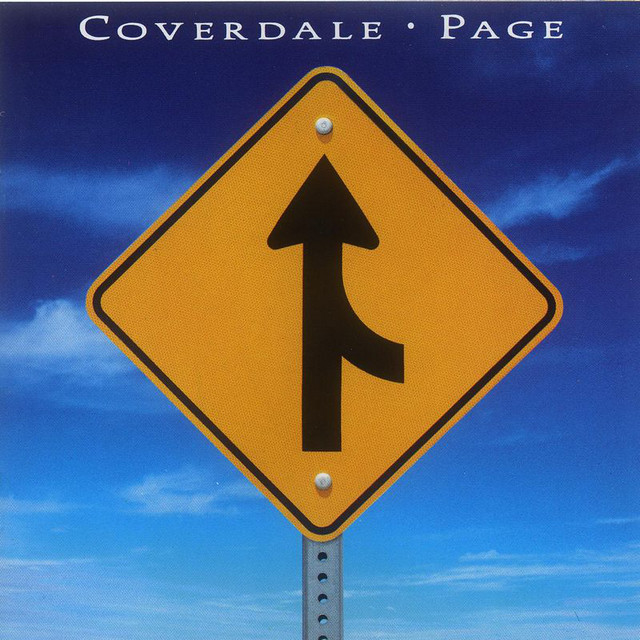
After all the accusations of <a href="spotify:artist:2t5vvfFf3UdW0pJa7bz7i1">David Coverdale</a> "ripping off" <a href="spotify:artist:36QJpDe2go2KgaRleHCDTp">Led Zeppelin</a> in his group, <a href="spotify:artist:3UbyYnvNIT5DFXU4WgiGpP">Whitesnake</a>, skeptics continued to raise their eyebrows when founding <a href="spotify:artist:36QJpDe2go2KgaRleHCDTp">Zeppelin</a> guitarist <a href="spotify:artist:55bGuHb50r5c0PeqqMeNBV">Jimmy Page</a> united with <a href="spotify:artist:2t5vvfFf3UdW0pJa7bz7i1">Coverdale</a> during the early ‘90s in the super group, Coverdale/Page. Although the collaboration was a fleeting one, it did spawn an album (which unsurprisingly, was very <a href="spotify:artist:36QJpDe2go2KgaRleHCDTp">Zep</a> derivative), and a smattering of live dates. To recap, <a href="spotify:artist:2t5vvfFf3UdW0pJa7bz7i1">Coverdale</a> first came to the attention of rock fans as a replacement for singer <a href="spotify:artist:4QCflfSOonkybNw5D7GqGk">Ian Gillan</a> in <a href="spotify:artist:568ZhdwyaiCyOGJRtNYhWf">Deep Purple</a> in 1973, before launching <a href="spotify:artist:3UbyYnvNIT5DFXU4WgiGpP">Whitesnake</a> during the late ‘70s. Over the course of quite a few bluesy hard rock albums, <a href="spotify:artist:3UbyYnvNIT5DFXU4WgiGpP">Whitesnake</a> built up a substantial following in the U.K., but failed to breakthrough in the U.S. This all changed though in the mid- to late ‘80s, when <a href="spotify:artist:2t5vvfFf3UdW0pJa7bz7i1">Coverdale</a> honed in directly on the <a href="spotify:artist:36QJpDe2go2KgaRleHCDTp">Zeppelin</a> sound with such hit albums as 1984's Slide It In, 1987's mega-seller Whitesnake, and 1989's Slip of the Tongue. By the dawn of the ‘90s, <a href="spotify:artist:2t5vvfFf3UdW0pJa7bz7i1">Coverdale</a> put the group on hold -- opting to step out of the spotlight for a brief spell. As a founding member of <a href="spotify:artist:36QJpDe2go2KgaRleHCDTp">Led Zeppelin</a> (and previously a member of <a href="spotify:artist:2lxX1ivRYp26soIavdG9bX">the Yardbirds</a>), <a href="spotify:artist:55bGuHb50r5c0PeqqMeNBV">Jimmy Page</a> became one of rock's premier guitarists and songwriters -- penning countless air guitar classics throughout the ‘60s and ‘70s. But with <a href="spotify:artist:36QJpDe2go2KgaRleHCDTp">Zeppelin's</a> split in late 1980 (due to drummer <a href="spotify:artist:6NAJM9Zc8wUQbKCzxpt6kM">John Bonham's</a> death), <a href="spotify:artist:55bGuHb50r5c0PeqqMeNBV">Page</a> spent the remainder of the decade reappearing on a sporadic basis -- including composing the motion picture soundtrack for Death Wish II, launching a brief union with former <a href="spotify:artist:2e53aHBQdCMKWqHDuyJsjC">Free</a>/<a href="spotify:artist:5AEG63ajney2BoDXi0Vb84">Bad Company</a> vocalist <a href="spotify:artist:2gaWNB3YrlTc0KRlHNqhol">Paul Rodgers</a> in the Firm, and even issuing his first official solo album, Outrider. Rumors continued to swirl about an impending <a href="spotify:artist:36QJpDe2go2KgaRleHCDTp">Led Zeppelin</a> reunion through it all, and come the early ‘90s, it appeared as though it would finally come to fruition. However, when former <a href="spotify:artist:36QJpDe2go2KgaRleHCDTp">Zep</a> singer <a href="spotify:artist:1OwarW4LEHnoep20ixRA0y">Robert Plant</a> began to have cold feet concerning the reunion, the plan was nixed. As a result, <a href="spotify:artist:55bGuHb50r5c0PeqqMeNBV">Page</a> united with <a href="spotify:artist:2t5vvfFf3UdW0pJa7bz7i1">Coverdale</a> (which some felt was <a href="spotify:artist:55bGuHb50r5c0PeqqMeNBV">Page's</a> way of "getting back" at <a href="spotify:artist:1OwarW4LEHnoep20ixRA0y">Plant</a>). The project officially began in 1991, however, no recordings were issued until 1993, when an 11- track debut, Coverdale/Page, was released. Despite alternative rock being all the rage on the charts and radio at the time, the album initially had a strong showing, peaking at number five in the U.S. (and eventually going platinum), while such tracks as "Pride and Joy" and "Shake My Tree" earned a considerable amount of rock radio airplay. Despite its early success, the album eventually sank from sight, and a proposed tour of U.S. arenas was axed. Coverdale/Page did manage to play a series of shows in Japan during December of 1993, however, with a set list that included selections from their debut recording, as well as classics from <a href="spotify:artist:3UbyYnvNIT5DFXU4WgiGpP">Whitesnake</a> ("Still of the Night," "Here I Go Again," etc.) and of course, <a href="spotify:artist:36QJpDe2go2KgaRleHCDTp">Led Zeppelin</a> ("Rock N' Roll," "Kashmir," "Black Dog," etc.). This would prove to the end of the road for Coverdale/Page, though -- as <a href="spotify:artist:55bGuHb50r5c0PeqqMeNBV">Page</a> would almost immediately go on to work once more with <a href="spotify:artist:1OwarW4LEHnoep20ixRA0y">Plant</a> (as <a href="spotify:artist:6QNTDs3QxycP09ceCHz0Uh">Page & Plant</a>, rather than a full <a href="spotify:artist:36QJpDe2go2KgaRleHCDTp">Zep</a> reunion), and <a href="spotify:artist:2t5vvfFf3UdW0pJa7bz7i1">Coverdale</a> would reappear from time to time with different <a href="spotify:artist:3UbyYnvNIT5DFXU4WgiGpP">Whitesnake</a> lineups. ~ Greg Prato, Rovi
Monthly Listeners
29,352
Monthly Listeners History
Track the evolution of monthly listeners over the last 28 days.
Followers
89,619
Followers History
Track the evolution of followers over the last 28 days.
Top Cities





Related Artists


Ian Gillian|Tony Iommi







Gillan & Glover