Data may be outdated
Last updated: 2 months ago — Click refresh to get the latest statistics.
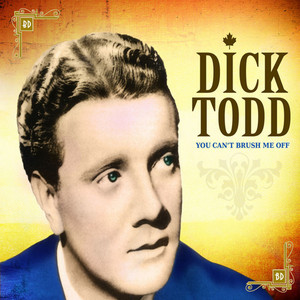
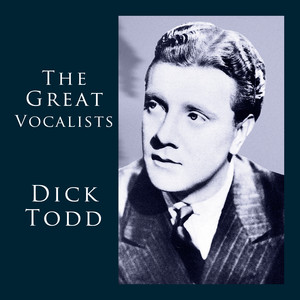
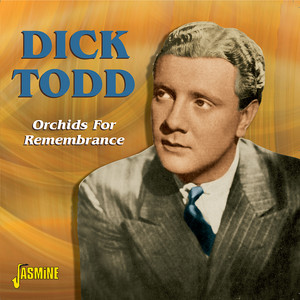
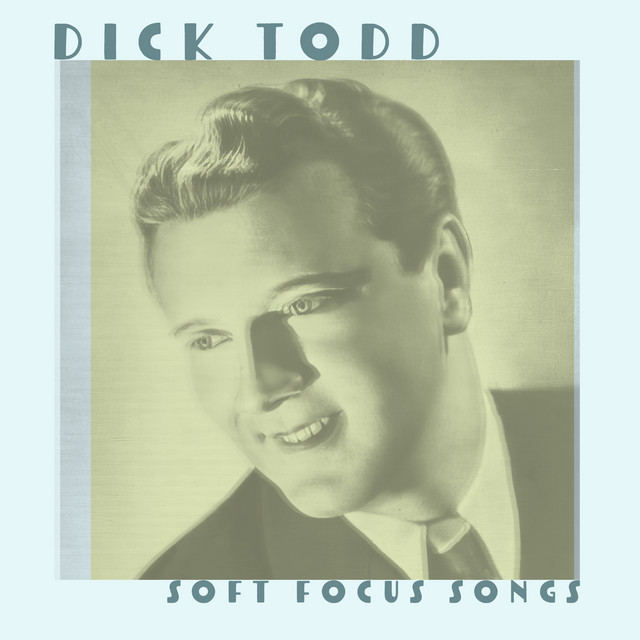
Dick Todd's story would make an excellent old-fashioned motion picture, preferably filmed in 16 mm black-and-white. Born on August 4, 1914 on a farm near Calgary, Alberta, Canada, he was the son of a retired military officer who moved the family to Montreal around 1926. Todd played the trumpet and sang, first in school and then at the Belmont Amusement Park with a small band led by George Sims. This led to steady work at a nightclub at Lake Champlain called The Meridian. After lukewarm attempts to earn degrees in agriculture and engineering, Todd directed his energies toward putting songs across over the radio and doing commercials for Maxey Baking Powder. Backed by his own quintet (including trombonist and alto saxophonist <a href="spotify:artist:2fq1DuR8WpmyHVL6PvZY4B">Murray McEachern</a>), Todd sang and blew his trumpet on cruise ships in the Caribbean during tourist season. All of this activity paid off when he found himself signing his first <a href="spotify:search:label%3A%22Victor%22">Victor</a> contract in Montreal. In 1936 he recorded several pop tunes including "I'm an Old Cowhand" and "Girl in a Bonnet of Blue." After Sims' group was taken over by Ted Large of the Five Large Brothers, Todd began performing almost exclusively in the broadcast studio backed by orchestras under the direction of Lucio Augustini and Alan McIver. It was these programs, which aired during the years 1937-1938, that enabled Dick Todd to develop a following among radio audiences in the northeastern United States.
Todd's next move was to chuck the trumpet, cross the border, and begin singing in recording and broadcast studios, churning out a steady stream of popular records under the supervision of Leonard Joy and Eli Oberstein and transmitting his voice to the masses with programs like The Home Town Show, The Magic Key (with <a href="spotify:artist:5n4K5xzvkyGTJKirueEjmG">Larry Clinton's Orchestra</a>), Old Gold's Melody & Madness (with Robert Benchley and <a href="spotify:artist:5wam12nGWDBIrLDV78TNSF">Artie Shaw's Swing Band</a>), and Brown & Williamson's Avalon Time Show (with comedian <a href="spotify:artist:0YknRjcsjkgJS26Rzgvd2t">Red Skelton</a>). He also made the first of several recordings with <a href="spotify:artist:73xrrv4ZrlpLi1q0Q34wiK">Dinah Shore</a> and sang with <a href="spotify:artist:7JkUvI3r5QGpNLsgNc2Z20">Leo Reisman's Orchestra</a> at The Strand Theater. In 1940 Dick Todd appeared in the series Showboat with Nadine Connor and Virginia Verrill, with <a href="spotify:artist:3xgNgY6JiWRpG5XN9mfJ6S">Paul LaValle</a> on the Chamber Music Society of Lower Basin Street show, and sang "When Irish Eyes Are Smiling" in a film short with <a href="spotify:artist:68tBK9r9zdViB8V73G5SA9">Richard Hayman</a>. For a little while he hosted his own program. Dick Todd's biggest hits from this period include "Blue Orchids," "Deep Purple," "To You, Sweetheart, Aloha," "All This and Heaven Too," and "The Gaucho Serenade." When it was time for Todd to serve as a Canadian citizen in the Second World War, he generously set up <a href="spotify:artist:0n4QgzHQANi25NTKG3jOo3">Ted Weems</a>' crooner <a href="spotify:artist:5v8jlSmAQfrkTjAlpUfWtu">Perry Como</a> as his replacement at <a href="spotify:search:label%3A%22Victor%22">Victor</a>.
Like most everyone who worked in show biz, Dick Todd devoted himself to entertaining the troops during wartime. Afterwards, his career began to slip into a gradual but steady decline that would end in utter obscurity and abject poverty. In 1945 he replaced <a href="spotify:artist:0txZ92f8KzKQUAoG4U7VoK">Lawrence Tibbet</a> on Your Hit Parade and shared the microphone with Joan Edwards, but was given the boot in January 1946 to make way for <a href="spotify:artist:5cBHm2CXrbncYIDzrxF4Vi">Johnny Mercer</a>. Not to be deterred, Todd signed on with the Larry Sunbrook Circus, barking endless streams of blarney as Master of Ceremonies and singing while riding a horse (a skill he'd developed growing up in Alberta). He spent a lot of time appearing in night clubs, and did manage to make more records. One of these, a 1949 recording of "Daddy's Little Girl," achieved something like hit status. Throughout the '50s his popularity continued to fade and he returned to circus work in 1955 but only as a roustabout. Every once in a while he cut a few singles for <a href="spotify:search:label%3A%22Decca%22">Decca</a>. His last known recordings, made in 1968, included "Big Wheel Cannonball," "Pennsylvania Turnpike," and "I Love You." Two disorders that brought him down were chronic alcoholism and debilitating arthritis. He was last seen working as a stagehand among the ropes behind the scenes at The Ed Sullivan Show at the Coliseum and at Studio 50 in New York. The circumstances, date, and location of his death have never been established. ~ arwulf arwulf, Rovi
Monthly Listeners
1,022
Monthly Listeners History
Track the evolution of monthly listeners over the last 28 days.
Followers
247
Followers History
Track the evolution of followers over the last 28 days.
Total Streams
146,042
Total Streams History
Track the evolution of total streams over the last 28 days. This data is calculated from all tracks listed in the artist's discography.
Top Cities




Related Artists

Eddie Duchin

Chick Henderson
Alan Kane

Issy Bonn
The Three Reasons
Swing & Sway With Sammy Kaye With Don Cornell
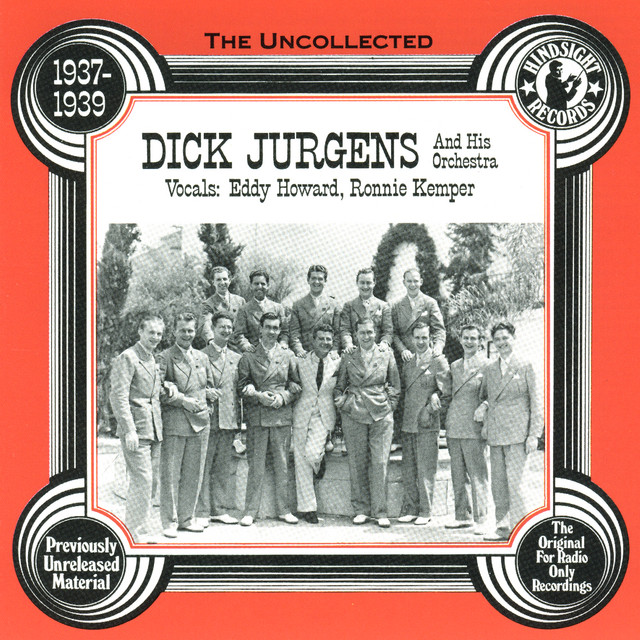
Dick Jurgens & His Orchestra
Joe Ferrie
Wendy Clare
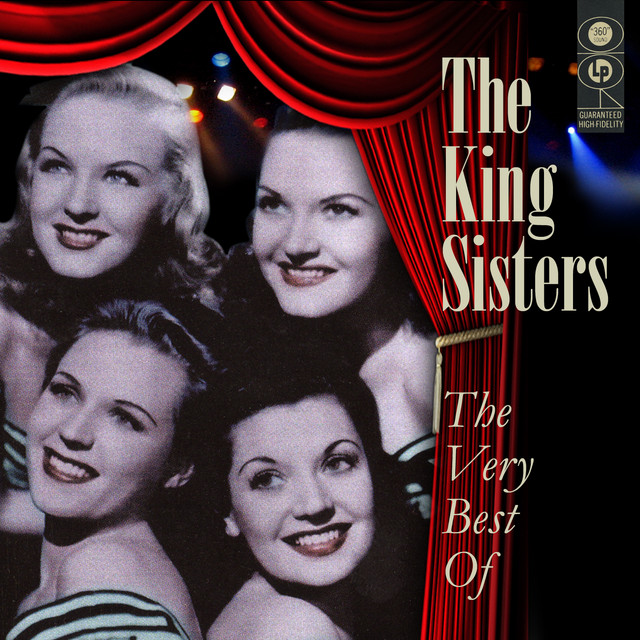

Carroll Gibbons And The Savoy Hotel Orpheans
Oscar Rabin & His Band
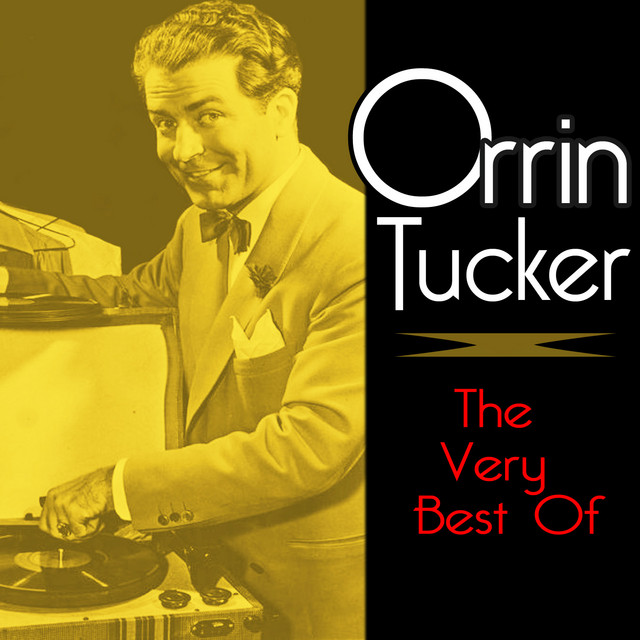

Brian Lawrence
Freddy Martin and His Orch., voc. Clyde Rogers


Carrol Gibbons
Johnny Drake
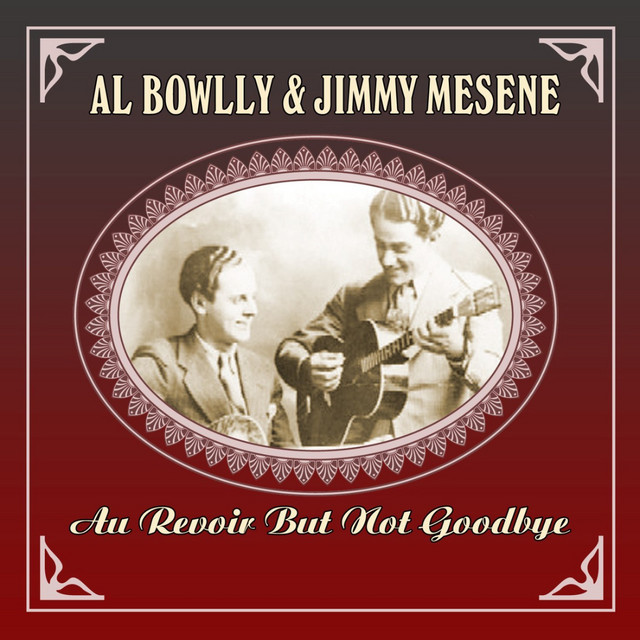
Jimmy Mesene

Geraldo and The Savoy Hotel Orchestra

Benny Lee


Vaughn Monroe and His Orchestra

Syd Lipton And His Grosvenor House Band

Tommy Tucker And His Orchestra
Four Vagabonds with Patti Clayton

Ray Herbeck and His Music With Romance

Charlie Kunz & The Casani Club Orchestra
Brian Lawrance & His Lansdowne Orchestra
Eve Becke