
Data may be outdated
Last updated: 9 months ago — Click refresh to get the latest statistics.
For more than half a century, English saxophonist, bandleader, composer, and arranger Don Rendell was a leading light in British jazz circles, and proved exceptionally influential among modernists and subsequent generations of players. While he played with a who’s-who of British jazz musicians from the late 1940s onward, and led his own bands from 1955 until 2002, it was the quintet he co-led with trumpeter/composer <a href="spotify:artist:5P8t9oD6tPmWdQQ1FfulHR">Ian Carr</a> -- they released five albums between 1965 and 1969 -- that established him as a bona fide legend. Rendell's instantly recognizable tone was influenced by players ranging from <a href="spotify:artist:05E3NBxNMdnrPtxF9oraJm">Lester Young</a> to <a href="spotify:artist:2hGh5VOeeqimQFxqXvfCUf">John Coltrane</a>. Though he was always expressive, his unconventional, clouded tone was rooted in blues modes, and was deliberately thinner and drier; his sound on his horns continued to evolve until he quit playing in 2010 as his health began to fail. Rendell's earliest recordings were with Oscar Rabin & His Orchestra in 1949; in the '50s he worked with <a href="spotify:artist:5rh1uyGjIfTG8QXbZUKdxe">Tony Crombie</a> and <a href="spotify:artist:4v8G8fM1P0Nrn9nZZW0ziT">Ted Heath</a>, toured Europe with <a href="spotify:artist:27hSR8e34ZM5vj5fUFixyb">Stan Kenton</a> and <a href="spotify:artist:2KSxJY1WxGGVYSmoM0N54P">Woody Herman's Anglo-American Herd</a>, and led a group accompanying <a href="spotify:artist:1YzCsTRb22dQkh9lghPIrp">Billie Holiday</a> when she toured the U.K. 1958's Playtime established him as a bandleader. In 1961, he signed a deal with <a href="spotify:search:label%3A%22Jazzland%22">Jazzland</a> and cut the influential sextet outing Roarin' with <a href="spotify:artist:1im4Wcx1u8qxzbRtlRDbnC">Graham Bond</a> on alto. The Don Rendell-Ian Carr Quintet formed and signed with <a href="spotify:search:label%3A%22Columbia%22">Columbia</a>, releasing Shades of Blue in 1965, the first of five group albums that have since been reissued and are among the most treasured in the annals of British jazz; these were the most successful recordings of his career. After the quintet split, Rendell continued working with a host of younger players including <a href="spotify:artist:5USolWK9HbWLfMFQIMWIIN">Neil Ardley</a> and <a href="spotify:artist:05GSCSTkwnHANf3ykSvMgt">Barbara Thompson</a>, and became an educator at a series of revered institutions. He continued to record as a leader and as a sideman, with artists ranging from <a href="spotify:artist:7BevvFNyB69FsRX8xa44FF">Joe Harriott</a> and <a href="spotify:artist:7gqcwz0qPBs1wCaoD70WfP">Amancio d'Silva</a> to <a href="spotify:artist:05GSCSTkwnHANf3ykSvMgt">Thompson</a>, and led his own quintet until 2002 when he reunited for an album with <a href="spotify:artist:5P8t9oD6tPmWdQQ1FfulHR">Carr</a> and <a href="spotify:artist:4PhAlUNgaOyCTAUrHLJKOR">Garrick</a>. He taught, wrote instructional books, and continued to play in clubs until 2010.
Rendell was born in 1926 in Plymouth, but grew up in London, the son of musician parents. He initially studied piano and clarinet and switched to alto saxophone at 15 -- his shift to tenor occurred after 18. His earliest professional engagements were with big bands, first on U.S. bases for the U.S.O. in 1944, and then with Oscar Rabin and others. In 1950 he became a member of the Johnny Dankworth Seven, remaining until 1953. He knocked around playing clubs as a soloist before releasing his first two EPS as a leader and the album Recontre a Paris, co-led by <a href="spotify:artist:7b7KvDXQB2IrXx4Kw9cd8Z">Bobby Jaspar</a>, all in 1955. Economics were such that Rendell, despite the critical acclaim shown him by jazz magazines at home and in Europe, needed his sideman and touring gigs to make ends meet. He worked with <a href="spotify:artist:4v8G8fM1P0Nrn9nZZW0ziT">Ted Heath</a>, <a href="spotify:artist:0OKfA2HedFEpbaGrV3LSPP">Tony Kinsey</a>, and others before delivering his debut full-length Playtime with a sextet in 1958, featuring <a href="spotify:artist:3uLQrgJzdS08S8fWc7evTX">Bert Courtley</a> on trumpet and fellow saxophonist <a href="spotify:artist:7kEPAhVsUSSsyMjN2jBxuB">Ronnie Ross</a>. In early 1961, he signed with <a href="spotify:search:label%3A%22Jazzland%22">Jazzland</a> and released Roarin' by the New Don Rendell Quintet; startlingly, it featured only one Rendell composition with the remainder written by saxophonist <a href="spotify:artist:1im4Wcx1u8qxzbRtlRDbnC">Bond</a>, pianist <a href="spotify:artist:1qFiyaIpmdGIQ9ghJcqrNW">John Burch</a>, <a href="spotify:artist:4PDpGtF16XpqvXxsrFwQnN">Thelonious Monk</a>, and <a href="spotify:artist:2SZ1e7QHN5jon9tpSpQl44">Duke Pearson</a>.
Rendell met <a href="spotify:artist:5P8t9oD6tPmWdQQ1FfulHR">Carr</a> after the trumpeter moved to London from Glasgow, Scotland in 1962. Both were under the sway of <a href="spotify:artist:47odibUtrN3lnWx0p0pk2P">Ornette Coleman</a> and <a href="spotify:artist:2hGh5VOeeqimQFxqXvfCUf">John Coltrane</a>, and obsessed with penning their own tunes in order to establish a unique identity apart from their American counterparts. They joined forces in 1963 and began woodshedding and playing club gigs. After an A&R man heard them playing, they were signed to a multi-album deal with <a href="spotify:search:label%3A%22Columbia%22">Columbia</a> and cut Shades of Blue at the famed Lansdowne Studios in 1964. The lineup with Trevor Tompkins on drums and Dave Green on bass was the only one of their albums to feature pianist Colin Purbrook. All seven tunes were penned by bandmembers, and the album, issued in 1965, won positive notice from Melody Maker and other publications. Pianist <a href="spotify:artist:4PhAlUNgaOyCTAUrHLJKOR">Michael Garrick</a> played on the band's most acclaimed offering, Dusk Fire, issued in 1966. Rendell wrote four of the set's seven cuts while <a href="spotify:artist:4PhAlUNgaOyCTAUrHLJKOR">Garrick</a> wrote two and penned another with <a href="spotify:artist:5P8t9oD6tPmWdQQ1FfulHR">Carr</a>. This set drew real acclaim internationally. Even Downbeat, on the other side of the Atlantic, praised it, giving it four stars. The group spent the better part of a year touring the U.K. and Europe before releasing Phase III in 1968. Once more, the three frontline players in the quintet penned all the tunes and won their second consecutive (of three consecutive) Band of the Year accolades from Melody Maker. Their final studio offering was the defiantly angular post-bop set Change Is, issued the same year and followed by Live before <a href="spotify:artist:5P8t9oD6tPmWdQQ1FfulHR">Carr</a> left (amicably) to form his own very successful jazz-rock fusion ensemble <a href="spotify:artist:3SwIVQwDvadSKIlIq8biB6">Nucleus</a>.
Rendell took to playing sessionman on seminal British recordings such as <a href="spotify:artist:7gqcwz0qPBs1wCaoD70WfP">Amancio D'Silva</a>'s Integration, <a href="spotify:artist:4PhAlUNgaOyCTAUrHLJKOR">Garrick</a>'s A Jazz Cantata (For Martin Luther King), and <a href="spotify:artist:4XJ0Z7EaY8Vj9T4rev8uMG">Stan Tracey</a>'s Passion Flower and The Latin-American Caper. Rendell and <a href="spotify:artist:5P8t9oD6tPmWdQQ1FfulHR">Carr</a> reunited as sidemen on <a href="spotify:artist:5USolWK9HbWLfMFQIMWIIN">Neil Ardley</a>'s 1970 offering Greek Variations & Other Aegean Exercises. Rendell enjoyed playing with younger musicians and held down the saxophone chair (tenor and soprano) on subsequent <a href="spotify:artist:4PhAlUNgaOyCTAUrHLJKOR">Garrick</a> albums such as The Heart Is a Lotus (with <a href="spotify:artist:0CRQWqvYVd26x1RHVzzBy5">Norma Winstone</a>) and as a member of Garrick's Fairground. He continued to work with <a href="spotify:artist:5USolWK9HbWLfMFQIMWIIN">Ardley</a>, too, appearing in an important role on 1972's A Symphony of Amaranths. Rendell formed a piano-less quintet with <a href="spotify:artist:1sEIyMxpg5JJAh16UqdbkX">Tomkins</a>, vibraphonist/flutist Peter Shade, bassist Jack Thorncroft, and saxophonist Stan Robinson. The group issued the acclaimed and charting Space Walk on <a href="spotify:search:label%3A%22Columbia%22">Columbia</a> in 1972. After more work with Garrick's Fairground, Rendell reunited with Johnny Dankworth for 1973's Lifeline, and Dankworth's orchestra for 1974's Movies 'N' Me. Arguably, his most significant sideman gig of the '70s was on <a href="spotify:artist:4PhAlUNgaOyCTAUrHLJKOR">Garrick</a>'s now-landmark modal masterpiece Troppo in 1974, which featured four of the saxophonist's quintet members as well as <a href="spotify:artist:0CRQWqvYVd26x1RHVzzBy5">Winstone</a> and <a href="spotify:artist:5jWWlTT6XmQzZJtCZKDTSw">Henry Lowther</a>. In addition, he held down the tenor role on <a href="spotify:artist:7gqcwz0qPBs1wCaoD70WfP">D'Silva</a>'s fine offering Konkan Dance. In 1976, the Don Rendell Five Featuring Barbara Thompson issued Just Music on <a href="spotify:search:label%3A%22Spotlite%22">Spotlite</a>, showcasing <a href="spotify:artist:05GSCSTkwnHANf3ykSvMgt">Thompson</a> on the saxophone. The group began touring and playing European festivals while winning acclaim at home for their meld of post-bop and angular modalism. Rendell kept his session work up, appearing on the album A Lover and His Lass by <a href="spotify:artist:7GUNyLdzdGxR828EyGvM7k">Cleo Laine</a> & the Johnny Dankworth Seven in 1976, but in 1978, he issued a double-A-side 12" with the Don Rendell Five (with <a href="spotify:artist:05GSCSTkwnHANf3ykSvMgt">Thompson</a> now a full member) of "Roundabouts and Swings" b/w "Blues for Adolphe Sax." The following year the saxist issued his ambitious live nonet project, Earth Music, performed at that year's Greenwich Festival. While it resonated with older fans, it was lost amid the British music press' attention to punk and post-punk.
By the '80s, Rendell was more often off the scene than on, playing occasional session work but mostly pursing his vocation as an educator. Under his own name, Time Presence appeared in 1988 on his DR label. In 1991, he toured Europe with <a href="spotify:artist:1nUb2VIRkIq9Qwmg1XdI1T">Jutta Hipp</a> and released If I Should Lose You with Don Rendell's Big Eight and the quintet offering What Am I Here For in 1993. He worked with <a href="spotify:artist:4PhAlUNgaOyCTAUrHLJKOR">Garrick</a> again on Parting Is Such in 1995. Over the course of the early years of the 21st century, Rendell worked primarily as an educator at the Royal Academy, Goldsmiths, and at the Guildhall School. He also authored several books of saxophone and composition instructional materials and played as a sideman on club gigs, particularly after <a href="spotify:search:label%3A%22BGO%22">BGO</a> reissued the entire Don Rendell-Ian Carr Quintet catalog, and DJ <a href="spotify:artist:4fH73bVIwM24QrBqjTrhAA">Gilles Peterson</a> featured him on Impressed 2, spreading the Rendell gospel to yet another new generation of players. <a href="spotify:artist:4PhAlUNgaOyCTAUrHLJKOR">Garrick</a>, <a href="spotify:artist:5P8t9oD6tPmWdQQ1FfulHR">Carr</a>, and Rendell collaborated on Reunion for <a href="spotify:search:label%3A%22Spotlite%22">Spotlite</a> in 2001, which proved the saxophonist's final recording session.
Rendell died in 2015 after a short illness. In 2018, <a href="spotify:search:label%3A%22Jazzman+Records%22">Jazzman Records</a> re issued the Don Rendell-Ian Carr Quintet recordings in a deluxe vinyl-only box set titled Complete Lansdowne Recordings: 1965-1969. The label's Gerald Short did two decades' worth of research and negotiation to license and reissue the albums. He had been hemmed in along the way by missing original documentation and <a href="spotify:search:label%3A%22Universal%22">Universal</a>'s takeover of <a href="spotify:search:label%3A%22EMI%22">EMI</a>. All albums were remastered from the original analog tapes at Abbey Road studios and pressed on high-quality vinyl presented in exact replica sleeves. The box set also included a booklet containing liner notes by BBC Radio 3 presenter and Jazzwise writer Alyn Shipton, along with previously unseen photos and interviews with Green and <a href="spotify:artist:1sEIyMxpg5JJAh16UqdbkX">Tomkins</a>. The set sold out its preorder and had to be repressed before it was even released. ~ Thom Jurek, Rovi
Rendell was born in 1926 in Plymouth, but grew up in London, the son of musician parents. He initially studied piano and clarinet and switched to alto saxophone at 15 -- his shift to tenor occurred after 18. His earliest professional engagements were with big bands, first on U.S. bases for the U.S.O. in 1944, and then with Oscar Rabin and others. In 1950 he became a member of the Johnny Dankworth Seven, remaining until 1953. He knocked around playing clubs as a soloist before releasing his first two EPS as a leader and the album Recontre a Paris, co-led by <a href="spotify:artist:7b7KvDXQB2IrXx4Kw9cd8Z">Bobby Jaspar</a>, all in 1955. Economics were such that Rendell, despite the critical acclaim shown him by jazz magazines at home and in Europe, needed his sideman and touring gigs to make ends meet. He worked with <a href="spotify:artist:4v8G8fM1P0Nrn9nZZW0ziT">Ted Heath</a>, <a href="spotify:artist:0OKfA2HedFEpbaGrV3LSPP">Tony Kinsey</a>, and others before delivering his debut full-length Playtime with a sextet in 1958, featuring <a href="spotify:artist:3uLQrgJzdS08S8fWc7evTX">Bert Courtley</a> on trumpet and fellow saxophonist <a href="spotify:artist:7kEPAhVsUSSsyMjN2jBxuB">Ronnie Ross</a>. In early 1961, he signed with <a href="spotify:search:label%3A%22Jazzland%22">Jazzland</a> and released Roarin' by the New Don Rendell Quintet; startlingly, it featured only one Rendell composition with the remainder written by saxophonist <a href="spotify:artist:1im4Wcx1u8qxzbRtlRDbnC">Bond</a>, pianist <a href="spotify:artist:1qFiyaIpmdGIQ9ghJcqrNW">John Burch</a>, <a href="spotify:artist:4PDpGtF16XpqvXxsrFwQnN">Thelonious Monk</a>, and <a href="spotify:artist:2SZ1e7QHN5jon9tpSpQl44">Duke Pearson</a>.
Rendell met <a href="spotify:artist:5P8t9oD6tPmWdQQ1FfulHR">Carr</a> after the trumpeter moved to London from Glasgow, Scotland in 1962. Both were under the sway of <a href="spotify:artist:47odibUtrN3lnWx0p0pk2P">Ornette Coleman</a> and <a href="spotify:artist:2hGh5VOeeqimQFxqXvfCUf">John Coltrane</a>, and obsessed with penning their own tunes in order to establish a unique identity apart from their American counterparts. They joined forces in 1963 and began woodshedding and playing club gigs. After an A&R man heard them playing, they were signed to a multi-album deal with <a href="spotify:search:label%3A%22Columbia%22">Columbia</a> and cut Shades of Blue at the famed Lansdowne Studios in 1964. The lineup with Trevor Tompkins on drums and Dave Green on bass was the only one of their albums to feature pianist Colin Purbrook. All seven tunes were penned by bandmembers, and the album, issued in 1965, won positive notice from Melody Maker and other publications. Pianist <a href="spotify:artist:4PhAlUNgaOyCTAUrHLJKOR">Michael Garrick</a> played on the band's most acclaimed offering, Dusk Fire, issued in 1966. Rendell wrote four of the set's seven cuts while <a href="spotify:artist:4PhAlUNgaOyCTAUrHLJKOR">Garrick</a> wrote two and penned another with <a href="spotify:artist:5P8t9oD6tPmWdQQ1FfulHR">Carr</a>. This set drew real acclaim internationally. Even Downbeat, on the other side of the Atlantic, praised it, giving it four stars. The group spent the better part of a year touring the U.K. and Europe before releasing Phase III in 1968. Once more, the three frontline players in the quintet penned all the tunes and won their second consecutive (of three consecutive) Band of the Year accolades from Melody Maker. Their final studio offering was the defiantly angular post-bop set Change Is, issued the same year and followed by Live before <a href="spotify:artist:5P8t9oD6tPmWdQQ1FfulHR">Carr</a> left (amicably) to form his own very successful jazz-rock fusion ensemble <a href="spotify:artist:3SwIVQwDvadSKIlIq8biB6">Nucleus</a>.
Rendell took to playing sessionman on seminal British recordings such as <a href="spotify:artist:7gqcwz0qPBs1wCaoD70WfP">Amancio D'Silva</a>'s Integration, <a href="spotify:artist:4PhAlUNgaOyCTAUrHLJKOR">Garrick</a>'s A Jazz Cantata (For Martin Luther King), and <a href="spotify:artist:4XJ0Z7EaY8Vj9T4rev8uMG">Stan Tracey</a>'s Passion Flower and The Latin-American Caper. Rendell and <a href="spotify:artist:5P8t9oD6tPmWdQQ1FfulHR">Carr</a> reunited as sidemen on <a href="spotify:artist:5USolWK9HbWLfMFQIMWIIN">Neil Ardley</a>'s 1970 offering Greek Variations & Other Aegean Exercises. Rendell enjoyed playing with younger musicians and held down the saxophone chair (tenor and soprano) on subsequent <a href="spotify:artist:4PhAlUNgaOyCTAUrHLJKOR">Garrick</a> albums such as The Heart Is a Lotus (with <a href="spotify:artist:0CRQWqvYVd26x1RHVzzBy5">Norma Winstone</a>) and as a member of Garrick's Fairground. He continued to work with <a href="spotify:artist:5USolWK9HbWLfMFQIMWIIN">Ardley</a>, too, appearing in an important role on 1972's A Symphony of Amaranths. Rendell formed a piano-less quintet with <a href="spotify:artist:1sEIyMxpg5JJAh16UqdbkX">Tomkins</a>, vibraphonist/flutist Peter Shade, bassist Jack Thorncroft, and saxophonist Stan Robinson. The group issued the acclaimed and charting Space Walk on <a href="spotify:search:label%3A%22Columbia%22">Columbia</a> in 1972. After more work with Garrick's Fairground, Rendell reunited with Johnny Dankworth for 1973's Lifeline, and Dankworth's orchestra for 1974's Movies 'N' Me. Arguably, his most significant sideman gig of the '70s was on <a href="spotify:artist:4PhAlUNgaOyCTAUrHLJKOR">Garrick</a>'s now-landmark modal masterpiece Troppo in 1974, which featured four of the saxophonist's quintet members as well as <a href="spotify:artist:0CRQWqvYVd26x1RHVzzBy5">Winstone</a> and <a href="spotify:artist:5jWWlTT6XmQzZJtCZKDTSw">Henry Lowther</a>. In addition, he held down the tenor role on <a href="spotify:artist:7gqcwz0qPBs1wCaoD70WfP">D'Silva</a>'s fine offering Konkan Dance. In 1976, the Don Rendell Five Featuring Barbara Thompson issued Just Music on <a href="spotify:search:label%3A%22Spotlite%22">Spotlite</a>, showcasing <a href="spotify:artist:05GSCSTkwnHANf3ykSvMgt">Thompson</a> on the saxophone. The group began touring and playing European festivals while winning acclaim at home for their meld of post-bop and angular modalism. Rendell kept his session work up, appearing on the album A Lover and His Lass by <a href="spotify:artist:7GUNyLdzdGxR828EyGvM7k">Cleo Laine</a> & the Johnny Dankworth Seven in 1976, but in 1978, he issued a double-A-side 12" with the Don Rendell Five (with <a href="spotify:artist:05GSCSTkwnHANf3ykSvMgt">Thompson</a> now a full member) of "Roundabouts and Swings" b/w "Blues for Adolphe Sax." The following year the saxist issued his ambitious live nonet project, Earth Music, performed at that year's Greenwich Festival. While it resonated with older fans, it was lost amid the British music press' attention to punk and post-punk.
By the '80s, Rendell was more often off the scene than on, playing occasional session work but mostly pursing his vocation as an educator. Under his own name, Time Presence appeared in 1988 on his DR label. In 1991, he toured Europe with <a href="spotify:artist:1nUb2VIRkIq9Qwmg1XdI1T">Jutta Hipp</a> and released If I Should Lose You with Don Rendell's Big Eight and the quintet offering What Am I Here For in 1993. He worked with <a href="spotify:artist:4PhAlUNgaOyCTAUrHLJKOR">Garrick</a> again on Parting Is Such in 1995. Over the course of the early years of the 21st century, Rendell worked primarily as an educator at the Royal Academy, Goldsmiths, and at the Guildhall School. He also authored several books of saxophone and composition instructional materials and played as a sideman on club gigs, particularly after <a href="spotify:search:label%3A%22BGO%22">BGO</a> reissued the entire Don Rendell-Ian Carr Quintet catalog, and DJ <a href="spotify:artist:4fH73bVIwM24QrBqjTrhAA">Gilles Peterson</a> featured him on Impressed 2, spreading the Rendell gospel to yet another new generation of players. <a href="spotify:artist:4PhAlUNgaOyCTAUrHLJKOR">Garrick</a>, <a href="spotify:artist:5P8t9oD6tPmWdQQ1FfulHR">Carr</a>, and Rendell collaborated on Reunion for <a href="spotify:search:label%3A%22Spotlite%22">Spotlite</a> in 2001, which proved the saxophonist's final recording session.
Rendell died in 2015 after a short illness. In 2018, <a href="spotify:search:label%3A%22Jazzman+Records%22">Jazzman Records</a> re issued the Don Rendell-Ian Carr Quintet recordings in a deluxe vinyl-only box set titled Complete Lansdowne Recordings: 1965-1969. The label's Gerald Short did two decades' worth of research and negotiation to license and reissue the albums. He had been hemmed in along the way by missing original documentation and <a href="spotify:search:label%3A%22Universal%22">Universal</a>'s takeover of <a href="spotify:search:label%3A%22EMI%22">EMI</a>. All albums were remastered from the original analog tapes at Abbey Road studios and pressed on high-quality vinyl presented in exact replica sleeves. The box set also included a booklet containing liner notes by BBC Radio 3 presenter and Jazzwise writer Alyn Shipton, along with previously unseen photos and interviews with Green and <a href="spotify:artist:1sEIyMxpg5JJAh16UqdbkX">Tomkins</a>. The set sold out its preorder and had to be repressed before it was even released. ~ Thom Jurek, Rovi
Monthly Listeners
996
Monthly Listeners History
Track the evolution of monthly listeners over the last 28 days.
Followers
576
Followers History
Track the evolution of followers over the last 28 days.
Top Cities




Related Artists
Don Rendell / Henry Russell

中根佑紀
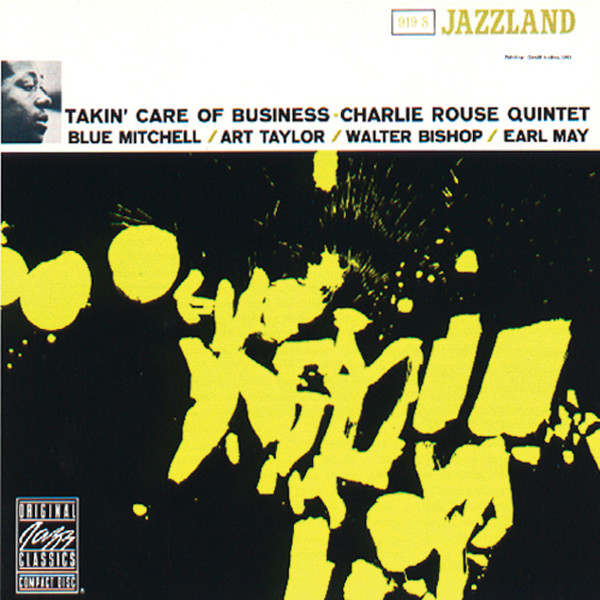
Charlie Rouse Quintet

Giorgio Gaslini Quartet

Eddie "Lockjaw" Davis Big Band
Modern Jazz Gang

Barney Wilen Quartet
The Dave Bailey Quintet

Michael Licari
Webster Young

MICHEL SARDABY TRIO
Michael Carubia
Doug Martin Quartet

Milt Jackson & Coleman Hawkins

Fred Katz

Alessandro Cerino
Freddie Redd Quartet

Cecilia Smith

ZOOT SIMS
Ira Sullivan
Tony Fruscella
Walter Bishop Jr.
Max Brüel

Frank Wess Quartet


Clora Bryant

