Data may be outdated
Last updated: 9 months ago — Click refresh to get the latest statistics.
Although outside Germany Gerd Zacher was primarily known as an organist, within Germany Zacher was highly regarded as both an organ player and a composer and elder statesman of the German avant-garde.
Born into a poor family, Zacher moved around a lot and as a result, he was not able to begin piano lessons until the age of 11; his first organ lesson was not until he reached the age of 16. Entering the Nordwestdeutschen Musikakademie in Detmold in 1948, Zacher studied composition with <a href="spotify:artist:0H6vVZb8qqsSyfYkPNDyha">Günter Bialas</a>. Beginning in 1953 Zacher studied piano with ex-<a href="spotify:artist:7xH3VOMwOjnqGu7NERNUx1">Ferruccio Busoni</a> student Theodor Kaufman before taking his degree in 1954. After working in a Lutheran church in Santiago de Chile for a few years, Zacher settled into a post at the Lutherkirche in Hamburg-Wellingsbütte, which he kept until 1970. During this time Zacher built up a reputation for interpreting works that had been suppressed during the period of National Socialism and for presenting avant-garde concerts of music by <a href="spotify:artist:1Z3fF5lZdCM0ZHugkGoH8s">John Cage</a>, <a href="spotify:artist:1zb5zmIuX2lTbzcn7YeQlg">György Ligeti</a>, <a href="spotify:artist:0IdJUMh8xVuehu7qlMcDth">Mauricio Kagel</a>, <a href="spotify:artist:6CS9O2pE67oq44GZuBEBuD">Olivier Messiaen</a>, Juan Allende-Blin, and others. In 1970, Zacher relocated his base of operations to the Folkwang-Hochschüle in Essen, where he remained as Evangelical music director until his retirement in 1991. Zacher's recording career began with <a href="spotify:search:label%3A%22Wergo%22">Wergo</a> in 1962, and Zacher first became widely known on records through his interpretations of <a href="spotify:artist:1zb5zmIuX2lTbzcn7YeQlg">György Ligeti</a>'s organ music as used by director Stanley Kubrick in his film 2001: A Space Odyssey. Zacher was prominently featured on the two American 2001 soundtrack albums, and in their wake, practically all of Zacher's <a href="spotify:search:label%3A%22Wergo%22">Wergo</a> recordings were issued on the short-lived <a href="spotify:search:label%3A%22Heliodor%22">Heliodor</a> label in the United States. By 1970, Zacher was practically synonymous with avant-garde organ music worldwide.
In 1968, Zacher made a recording of <a href="spotify:artist:5aIqB5nVVvmFsvSdExz408">Johann Sebastian Bach</a>'s Die Kunst der Fuge that played a key role in finally establishing the organ as <a href="spotify:artist:5aIqB5nVVvmFsvSdExz408">Bach</a>'s intended instrument in this work. Zacher's scholarly work on behalf of <a href="spotify:artist:5aIqB5nVVvmFsvSdExz408">J.S. Bach</a> was widely praised, as was his advocacy for other composers of <a href="spotify:artist:5aIqB5nVVvmFsvSdExz408">Bach</a>'s time, such as <a href="spotify:artist:0YuQmKNAObna6VBbIpp1VY">Johann Mattheson</a>. Although Zacher was a composer since childhood, he counted as his official Opus 1 his first work utilizing the twelve-tone system, Kantate Prière pour aller au Paradis avec les ânes nach dem Gedicht von Francis Jammes (1951). Zacher was a pioneer in the use of graphic notation and developed techniques in pipe organ playing that involve pressing the keys only partly downward and/or temporarily altering the mechanism of the instrument.
Born into a poor family, Zacher moved around a lot and as a result, he was not able to begin piano lessons until the age of 11; his first organ lesson was not until he reached the age of 16. Entering the Nordwestdeutschen Musikakademie in Detmold in 1948, Zacher studied composition with <a href="spotify:artist:0H6vVZb8qqsSyfYkPNDyha">Günter Bialas</a>. Beginning in 1953 Zacher studied piano with ex-<a href="spotify:artist:7xH3VOMwOjnqGu7NERNUx1">Ferruccio Busoni</a> student Theodor Kaufman before taking his degree in 1954. After working in a Lutheran church in Santiago de Chile for a few years, Zacher settled into a post at the Lutherkirche in Hamburg-Wellingsbütte, which he kept until 1970. During this time Zacher built up a reputation for interpreting works that had been suppressed during the period of National Socialism and for presenting avant-garde concerts of music by <a href="spotify:artist:1Z3fF5lZdCM0ZHugkGoH8s">John Cage</a>, <a href="spotify:artist:1zb5zmIuX2lTbzcn7YeQlg">György Ligeti</a>, <a href="spotify:artist:0IdJUMh8xVuehu7qlMcDth">Mauricio Kagel</a>, <a href="spotify:artist:6CS9O2pE67oq44GZuBEBuD">Olivier Messiaen</a>, Juan Allende-Blin, and others. In 1970, Zacher relocated his base of operations to the Folkwang-Hochschüle in Essen, where he remained as Evangelical music director until his retirement in 1991. Zacher's recording career began with <a href="spotify:search:label%3A%22Wergo%22">Wergo</a> in 1962, and Zacher first became widely known on records through his interpretations of <a href="spotify:artist:1zb5zmIuX2lTbzcn7YeQlg">György Ligeti</a>'s organ music as used by director Stanley Kubrick in his film 2001: A Space Odyssey. Zacher was prominently featured on the two American 2001 soundtrack albums, and in their wake, practically all of Zacher's <a href="spotify:search:label%3A%22Wergo%22">Wergo</a> recordings were issued on the short-lived <a href="spotify:search:label%3A%22Heliodor%22">Heliodor</a> label in the United States. By 1970, Zacher was practically synonymous with avant-garde organ music worldwide.
In 1968, Zacher made a recording of <a href="spotify:artist:5aIqB5nVVvmFsvSdExz408">Johann Sebastian Bach</a>'s Die Kunst der Fuge that played a key role in finally establishing the organ as <a href="spotify:artist:5aIqB5nVVvmFsvSdExz408">Bach</a>'s intended instrument in this work. Zacher's scholarly work on behalf of <a href="spotify:artist:5aIqB5nVVvmFsvSdExz408">J.S. Bach</a> was widely praised, as was his advocacy for other composers of <a href="spotify:artist:5aIqB5nVVvmFsvSdExz408">Bach</a>'s time, such as <a href="spotify:artist:0YuQmKNAObna6VBbIpp1VY">Johann Mattheson</a>. Although Zacher was a composer since childhood, he counted as his official Opus 1 his first work utilizing the twelve-tone system, Kantate Prière pour aller au Paradis avec les ânes nach dem Gedicht von Francis Jammes (1951). Zacher was a pioneer in the use of graphic notation and developed techniques in pipe organ playing that involve pressing the keys only partly downward and/or temporarily altering the mechanism of the instrument.
Monthly Listeners
322
Monthly Listeners History
Track the evolution of monthly listeners over the last 28 days.
Followers
124
Followers History
Track the evolution of followers over the last 28 days.
Top Cities
9 listeners

8 listeners

6 listeners

5 listeners

5 listeners

Related Artists
Kairos Quartett
Christoph Grund

Zsigmond Szathmary
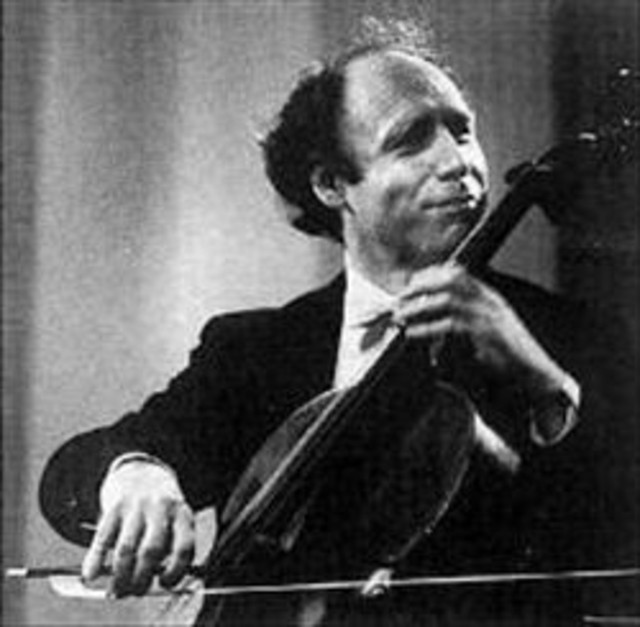
Siegfried Palm

ST-X Ensemble
Henri Pousseur
JAMES AVERY
Ernesto Molinari

Gary Verkade

Philip Adams
Christian Dierstein

Daniel Grossmann

Timur Mynbaev