Data may be outdated
Last updated: 8 months ago — Click refresh to get the latest statistics.
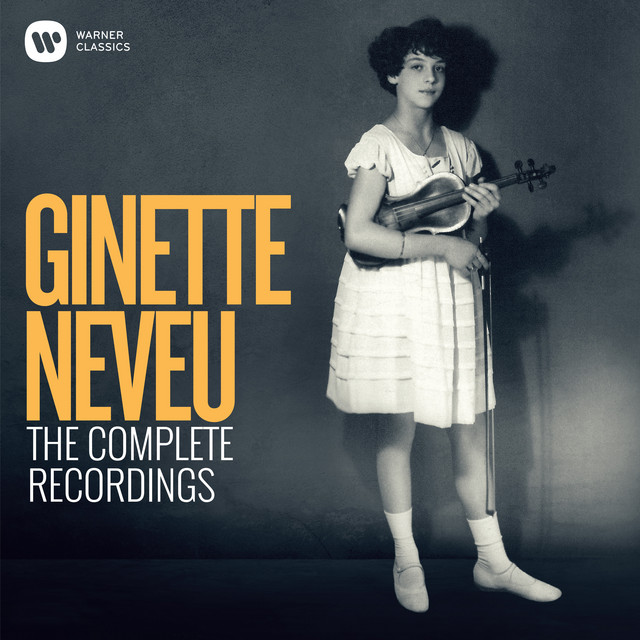
Ginette Neveu was, for 14 years, one of the most promising musicians of the twentieth century, a violin virtuoso who dazzled audiences in her native France with her performances, and listeners around the world with her recordings. She is remembered today for the promise of her few recordings, and the tragedy of her early death in an airplane crash.
Neveu's musical abilities manifested themselves very early in her life, and she achieved fame as an infant prodigy. Her formal debut took place at age seven and a half, with a performance of <a href="spotify:artist:0521x50ZcNqqT1fKMJg5c5">Bruch</a>'s G minor Violin Concerto in Paris. She quickly began winning prizes in competition, and took lessons from <a href="spotify:artist:7KKscZTeDLz1g0QthWCMQV">Georges Enescu</a>, before entering the Paris Conservatory at age 11, where she earned the top student prize at the end of her first eight months there. It was her winning of the 1935 prize in the Wieniawski Competition at age 16, against a field of 180 competitors that included a 27-year-old <a href="spotify:artist:7o2OjTu0Ls0xiWl3RzjdVp">David Oistrakh</a>, that assured her international career, doubly so in the wake of the American and Russian debuts that followed. The outbreak of World War II interrupted her work and career, but in 1946 Neveu seemed ready to resume where she had left off in 1940, with performances in England, North and South America, and later Australia.
Neveu seemed poised for greatness, particularly after her triumphant appearance at Britain's Edinburgh Festival in 1949. On October 29, 1949, Neveu and her brother boarded a plane for a trip to America and a new tour. The plane crashed in the Azores, with no survivors.
Neveu made her earliest recordings before the war in Berlin, but her adult recording career didn't begin until 1945 at EMI Records in London. Accompanied by the newly founded Philharmonia Orchestra conducted by <a href="spotify:artist:6zgla7izAy39uJS1BlWCno">Walter Susskind</a>, she recorded the <a href="spotify:artist:7jzR5qj8vFnSu5JHaXgFEr">Sibelius</a> Violin Concerto in D minor on November 21, 1945. Her performance, squeezed in on an off-day between concerts, was so intense that her neck and chin were bleeding at the end of the day-long recording session. In August of the following year, she set down the <a href="spotify:artist:5wTAi7QkpP6kp8a54lmTOq">Brahms</a> Violin Concerto in D Major with the Philharmonia conducted by Issay Dobrowen. Her other major recordings, available on a 1990 EMI compact disc, include works by <a href="spotify:artist:4dadMoMQOTGa96FlnhEzCi">Chausson</a>, <a href="spotify:artist:1Uff91EOsvd99rtAupatMP">Debussy</a>, <a href="spotify:artist:17hR0sYHpx7VYTMRfFUOmY">Ravel</a>, and <a href="spotify:artist:6pAwHPeExeUbMd5w7Iny6D">Richard Strauss</a>. She also left behind a collection of small-scale violin pieces, and in 1996 a compact disc of her live performances from radio appearances was also released.
Neveu's musical abilities manifested themselves very early in her life, and she achieved fame as an infant prodigy. Her formal debut took place at age seven and a half, with a performance of <a href="spotify:artist:0521x50ZcNqqT1fKMJg5c5">Bruch</a>'s G minor Violin Concerto in Paris. She quickly began winning prizes in competition, and took lessons from <a href="spotify:artist:7KKscZTeDLz1g0QthWCMQV">Georges Enescu</a>, before entering the Paris Conservatory at age 11, where she earned the top student prize at the end of her first eight months there. It was her winning of the 1935 prize in the Wieniawski Competition at age 16, against a field of 180 competitors that included a 27-year-old <a href="spotify:artist:7o2OjTu0Ls0xiWl3RzjdVp">David Oistrakh</a>, that assured her international career, doubly so in the wake of the American and Russian debuts that followed. The outbreak of World War II interrupted her work and career, but in 1946 Neveu seemed ready to resume where she had left off in 1940, with performances in England, North and South America, and later Australia.
Neveu seemed poised for greatness, particularly after her triumphant appearance at Britain's Edinburgh Festival in 1949. On October 29, 1949, Neveu and her brother boarded a plane for a trip to America and a new tour. The plane crashed in the Azores, with no survivors.
Neveu made her earliest recordings before the war in Berlin, but her adult recording career didn't begin until 1945 at EMI Records in London. Accompanied by the newly founded Philharmonia Orchestra conducted by <a href="spotify:artist:6zgla7izAy39uJS1BlWCno">Walter Susskind</a>, she recorded the <a href="spotify:artist:7jzR5qj8vFnSu5JHaXgFEr">Sibelius</a> Violin Concerto in D minor on November 21, 1945. Her performance, squeezed in on an off-day between concerts, was so intense that her neck and chin were bleeding at the end of the day-long recording session. In August of the following year, she set down the <a href="spotify:artist:5wTAi7QkpP6kp8a54lmTOq">Brahms</a> Violin Concerto in D Major with the Philharmonia conducted by Issay Dobrowen. Her other major recordings, available on a 1990 EMI compact disc, include works by <a href="spotify:artist:4dadMoMQOTGa96FlnhEzCi">Chausson</a>, <a href="spotify:artist:1Uff91EOsvd99rtAupatMP">Debussy</a>, <a href="spotify:artist:17hR0sYHpx7VYTMRfFUOmY">Ravel</a>, and <a href="spotify:artist:6pAwHPeExeUbMd5w7Iny6D">Richard Strauss</a>. She also left behind a collection of small-scale violin pieces, and in 1996 a compact disc of her live performances from radio appearances was also released.
Monthly Listeners
729
Monthly Listeners History
Track the evolution of monthly listeners over the last 28 days.
Followers
3,012
Followers History
Track the evolution of followers over the last 28 days.
Top Cities
20 listeners

16 listeners
15 listeners
13 listeners

10 listeners

Related Artists

Bronislaw Huberman
Svetlin Roussev
József Balog
Michael Rabin
Philippe Koch
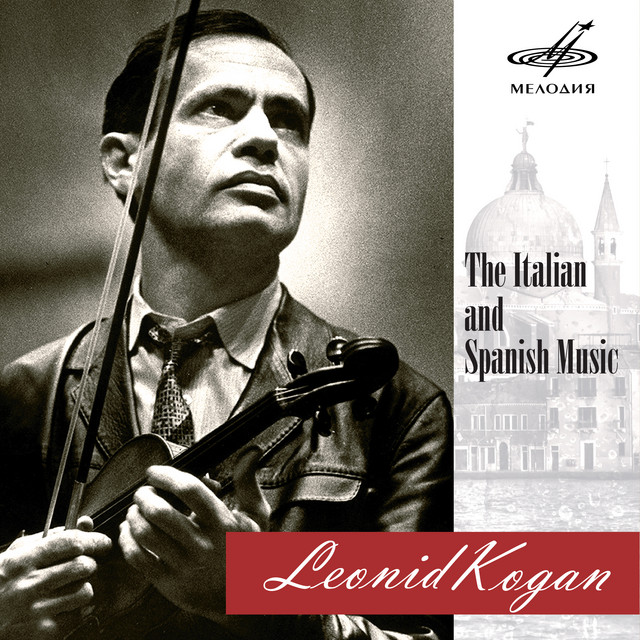
Andrei Mytnik

Emmanuel Bay
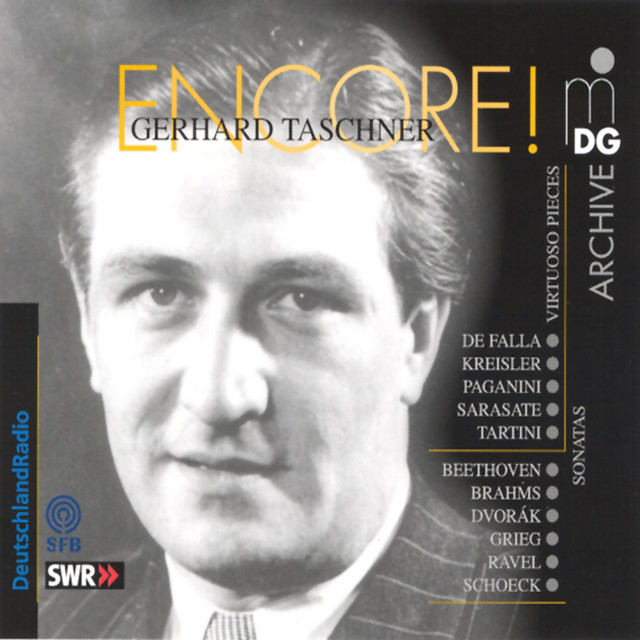
Gerhard Taschner

Susan Tomes


Toscha Seidel

Jascha Nemtsov

Albert Sammons

Leonid Hambro
Leopold Auer

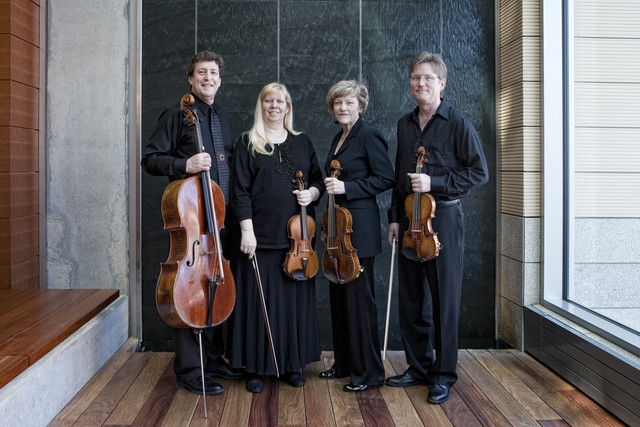
Pro Arte Quartet

