Data may be outdated
Last updated: 8 months ago — Click refresh to get the latest statistics.
Virtually a serf, Stich ran away and escaped across the border into Austria (along with four friends) to get out of Count Thun's service. He adopted his Italian name to keep his true identity secret. He started touring in 1768, with a permanent position from 1769 to 1774 at the court of Mainz, which evidently permitted him also to tour since his presence in various places in Europe and England during that period is a matter of record. Punto was in Paris in 1778 and while there, met the visiting <a href="spotify:artist:4NJhFmfw43RLBLjQvxDuRS">Wolfgang Mozart</a>, who wrote his Sinfonia Concertante for winds and orchestra with him in mind for the horn part. Punto specialized in the lower horn, playing a silver horn made by Lucian-Joseph Raoux of Paris. Commentators of the time accounted him the greatest horn player of his age and this opinion was also expressed by <a href="spotify:artist:4NJhFmfw43RLBLjQvxDuRS">Mozart</a> and Beethoven. There are those who rank him as the greatest horn player of all time and he was a master of the practice of playing multi-phonics, or more than one note at a time from the horn, even extending to full chords. Commentators referred to his tone as possessing a silvery, bright quality.
During 1781 and 1782, Punto was a member of the orchestra of the Prince Archbishop of Würzburg. In 1782, he went back to Paris in the service of the Count of Artois, the later Charles X. He had, however, left the establishment of this Bourbon aristocrat and was on tour again when the French Revolution took place, so evidently he was not suspect when he returned to Revolutionary Paris, for he held the position of violinist/conductor at the Théâtre des Variétés Amusantes from 1789 through 1799, right through the Reign of Terror. He toured Germany and Austria in 1799 and 1800 and in Vienna, he met Beethoven, who wrote his Horn Sonata, Op. 17, for him and they played the premiere together on April 18, 1800. His tour extended to Prague the next year and he and Czech composer J.I. Dussek toured in 1802. After a short visit to Paris, Punto returned to Prague in 1803, where he died after a five-month illness. He had a large funeral at which <a href="spotify:artist:4NJhFmfw43RLBLjQvxDuRS">Mozart</a>'s Requiem was played.
As a composer, he wrote 11 concertos for horn and several other works with horn, as well as some other instrumental chamber music. One work once attributed to him is <a href="spotify:artist:3oI1VmAa821ogGTGIcb3qN">Rosetti</a>'s horn concerto in E. He also published pedagogical works, a book of daily exercises for horn, and updatings of older horn methods. His music is accomplished, though not particularly distinguished, but possesses effective instrumental writing, particularly in the horn parts.
Monthly Listeners
1,604
Monthly Listeners History
Track the evolution of monthly listeners over the last 28 days.
Followers
310
Followers History
Track the evolution of followers over the last 28 days.
Total Streams
342,583
Total Streams History
Track the evolution of total streams over the last 28 days. This data is calculated from all tracks listed in the artist's discography.
Top Cities


Related Artists

Johann Christian Cannabich

János Szebenyi
Neubrandenburger Philharmonie
Thomas Friedli

Giuseppe Ferlendis
Europa Symphony Soloists

Peter von Winter
Bruno Meier
František Xaver Pokorný
Pavel Vranicky

Johann Georg Lickl
Florian Leopold Gassmann
Frantisek Antonin Rössler-Rosetti

Josef Starzer
Herman Jeurissen
Polish Chamber Philharmonic
Ensemble Vox Aurae

Stuttgart Pro Musica Orchestra
Antoni Habel
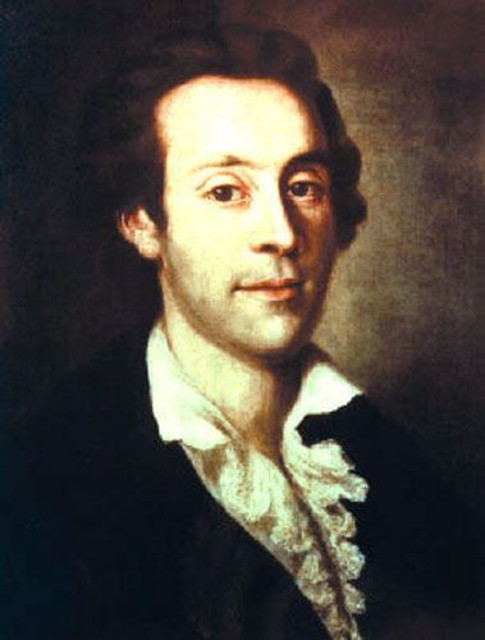
Antonio Rosetti
Johannes Moesus
Luigi Gatti
David Blum
Sandra Arnold
Josef Fiala
Adalbert Gyrowetz
Anton Wranitzky
Kenneth Moore
Juan Carlos Rybin


Collegium Musicum Pragense

Federigo Fiorillo
Theodor von Schacht
Georg Druschetzky
Rainer Küchl
Bläserensemble Sabine Meyer

František Xaver Dušek

Johann Christoph Vogel
Popular Tracks
56 tracks

Concerto for French Horn and Orchestra No. 5 in F-Sharp Major, Op. 52: I. Allegro moderato
Feb 12, 2010
49,950
streams
Concerto for French Horn and Orchestra No. 5 in F-Sharp Major, Op. 52: III. Rondo en-chasse
Feb 12, 2010
40,649
streams


