Data may be outdated
Last updated: 9 months ago — Click refresh to get the latest statistics.
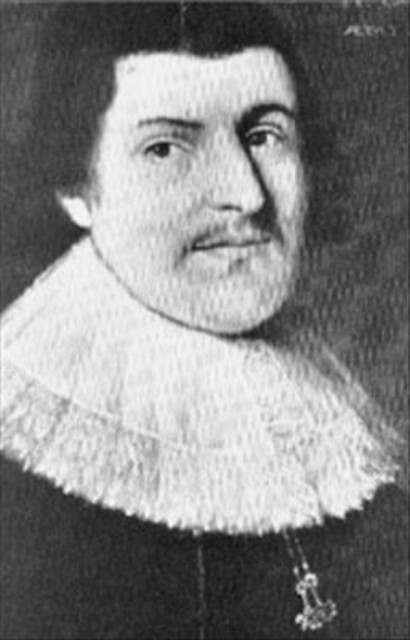
Henry Lawes is remembered, if at all, as the elder brother of now famous <a href="spotify:artist:0Gxz996oqVXdiI7GGdR15B">William Lawes</a> and the composer for Milton's Comus. Readers of English poetry may recall the several fond tributes to Henry Lawes scattered through the works of Milton, Herrick, Carew, Waller, and a number of lesser poets, yet during his life it was Lawes' name and reputation as the composer to their verses that presented an attractive cover for their work. And when <a href="spotify:artist:7H9atz4eK2ZD8tKLfI2jV0">Ezra Pound</a>, in a climactic moment of The Pisan Cantos, indicts the refrain "Lawes and <a href="spotify:artist:56acEsy0S3HwoxVXpzR4qE">Jenkyns</a> guard thy rest/Dolmetsch ever be thy guest," it is Henry Lawes who is invoked, along with his fellow composer to the courts of both Charles I and Charles II, <a href="spotify:artist:56acEsy0S3HwoxVXpzR4qE">John Jenkins</a>. Henry Lawes composed well over 400 songs to become the most celebrated lyric composer of his age: his relative neglect represents an important large gap in the knowledge of seventeenth century English music. Henry Lawes was born in Dinton, Wiltshire, in 1596, the year <a href="spotify:artist:0xZ9fVp0OnYjYPeX9Z3c8x">Shakespeare</a>'s King John, The Merchant of Venice, and Part I of Henry IV were first staged. Lawes' early life is a matter of conjecture -- he may have been a chorister at Salisbury Cathedral, he may have studied music with <a href="spotify:artist:7MZUNuIEq1aHaztS0x5M4C">Coprario</a>, he may have befriended Milton around 1630. John Egerton, Earl of Bridgwater, may have become his patron as early as 1615, but by 1620 Lawes was moving in court circles. Firm dating begins with his becoming a "pistoler" of the Chapel Royal January 1, 1626, and Gentleman the following November 3. January 6, 1631, he joined Charles I's cadre of musicians "for the lutes and voices," by which time his reputation at large would have been made by manuscript circulation of his voluminous production of songs. He may have been instrumental in the commissioning of Milton to write Comus, a masque privately performed by Lawes and the Bridgwater children at Ludlow Castle September 29, 1634, to celebrate the Earl's elevation to Lord President of the Council of Wales, and from the music of which only five settings by Lawes survive. The Civil War claimed <a href="spotify:artist:0Gxz996oqVXdiI7GGdR15B">William Lawes</a> at the Battle of Chester in 1645, but Henry seems to have thrived during the Commonwealth as music teacher to remaining Loyalists. With the Restoration, Lawes resumed his former posts, and his anthem Zadok the priest was sung at Charles II's coronation, April 23, 1661.
Monthly Listeners
3,376
Monthly Listeners History
Track the evolution of monthly listeners over the last 28 days.
Followers
377
Followers History
Track the evolution of followers over the last 28 days.
Top Cities
153 listeners

139 listeners

80 listeners
45 listeners

38 listeners
Related Artists

Samuel Sebastian Wesley

Charles Harrison
Charles Hylton Stewart
Matthew Camidge
William Croft
Henry Williams Baker
Samuel Wesley
Andrew Arthur
Richard Woodward

Johann Stadlmayr
Magdala
Paul Morgan
Edward Cutler

Saint Clement's Choir, Philadelphia

William Williams
George Martin
Edward Bairstow

Christopher Gower
Thomas Attwood Walmisley

Alex Patterson

Ian Ball
Exeter Cathedral Choir
Ivor Atkins
Brian Runnett

Christopher Dearnley

John Stainer
Joseph Corfe

Ronny Krippner