Data may be outdated
Last updated: 9 months ago — Click refresh to get the latest statistics.
Rock & roll has always been populated by fringe figures, cult artists who managed to develop a fanatical following because of their outsized quirks, but few cult rockers have ever been quite as weird, or beloved, as <a href="spotify:artist:5PFSmueeFLrjYXqn3agenn">Ian Dury</a>. As the leader of the underappreciated and ill-fated pub rockers <a href="spotify:artist:3I97dteSoWkFBMy7C2TGSH">Kilburn & the High Roads</a>, <a href="spotify:artist:5PFSmueeFLrjYXqn3agenn">Dury</a> cut a striking figure -- he remained handicapped from a childhood bout with polio, yet stalked the stage with dynamic charisma, spitting out music hall numbers and rockers in his thick Cockney accent. <a href="spotify:artist:5PFSmueeFLrjYXqn3agenn">Dury</a> was 28 at the time he formed <a href="spotify:artist:3I97dteSoWkFBMy7C2TGSH">Kilburn</a>, and once they disbanded, conventional wisdom would have suggested that he was far too old to become a pop star, but conventional wisdom never played much of a role in <a href="spotify:artist:5PFSmueeFLrjYXqn3agenn">Dury's</a> career. Signing with the fledgling indie label <a href="spotify:search:label%3A%22Stiff%22">Stiff</a> in 1978, <a href="spotify:artist:5PFSmueeFLrjYXqn3agenn">Dury</a> developed a strange fusion of music hall, punk rock, and disco that brought him to stardom in his native England. Driven by a warped sense of humor and a pulsating beat, singles like "Hit Me with Your Rhythm Stick," "Sex & Drugs & Rock & Roll," and "Reasons to Be Cheerful, Pt. 3" became Top Ten hits in the U.K., yet <a href="spotify:artist:5PFSmueeFLrjYXqn3agenn">Dury's</a> most distinctive qualities -- his dry wit and wordplay, thick Cockney accent, and fascination with music hall -- kept him from gaining popularity outside of England. After his second album, <a href="spotify:artist:5PFSmueeFLrjYXqn3agenn">Dury's</a> style became formulaic, and he faded away in the early '80s, turning to an acting career instead.
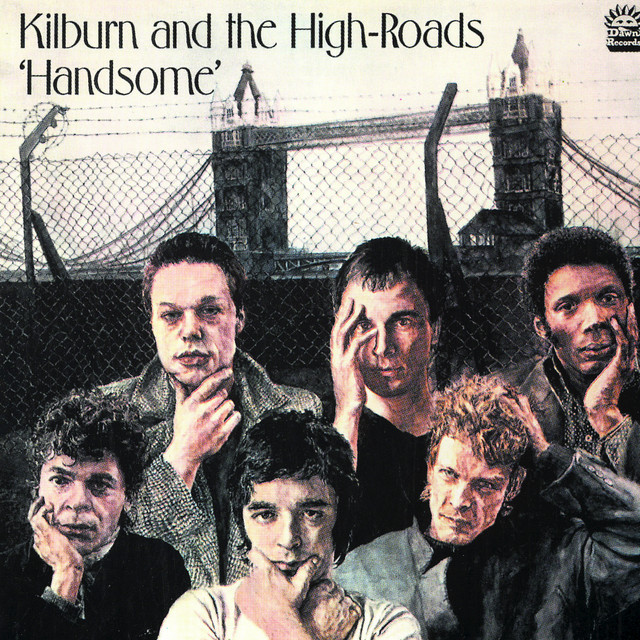
At the age of seven, <a href="spotify:artist:5PFSmueeFLrjYXqn3agenn">Ian Dury</a> was stricken with polio. After spending two years in hospital, he attended a school for the physically handicapped. Following high school, he attended to the Royal College of Art, and after his graduation, he taught painting at the Canterbury Art College. In 1970, when he was 28 years old, <a href="spotify:artist:5PFSmueeFLrjYXqn3agenn">Dury</a> formed his first band, <a href="spotify:artist:3I97dteSoWkFBMy7C2TGSH">Kilburn & the High Roads</a>. The <a href="spotify:artist:3I97dteSoWkFBMy7C2TGSH">Kilburns</a> played simple,'50s rock & roll, occasionally making a detour into jazz. Over the next three years, they became a fixture on England's pub rock circuit. By 1973, their following was large enough that <a href="spotify:artist:5PFSmueeFLrjYXqn3agenn">Dury</a> could quit his teaching job. Several British critics became dedicated fans, and one of them, Charlie Gillett, became their manager. Gillett helped the band sign to the Warner subsidiary <a href="spotify:search:label%3A%22Raft%22">Raft</a>, and the group recorded an album for the label in 1974. Warner refused to release the album, and after some struggling, the <a href="spotify:artist:3I97dteSoWkFBMy7C2TGSH">Kilburns</a> broke away from <a href="spotify:search:label%3A%22Raft%22">Raft</a> and signed with the Pye subsidiary <a href="spotify:search:label%3A%22Dawn%22">Dawn</a> in 1975. <a href="spotify:search:label%3A%22Dawn%22">Dawn</a> released Handsome in 1975, but by that point, the pub rock scene was in decline, and the album was ignored. <a href="spotify:artist:3I97dteSoWkFBMy7C2TGSH">Kilburn & the High Roads</a> disbanded by the end of the year.
Following the dissolution of the <a href="spotify:artist:3I97dteSoWkFBMy7C2TGSH">Kilburns</a>, <a href="spotify:artist:5PFSmueeFLrjYXqn3agenn">Dury</a> continued to work with the band's pianist/guitarist, <a href="spotify:artist:3TV7tssuSl8x7ARqsTvIyM">Chaz Jankel</a>. By 1977, <a href="spotify:artist:5PFSmueeFLrjYXqn3agenn">Dury</a> had secured a contract with <a href="spotify:search:label%3A%22Stiff+Records%22">Stiff Records</a>, and he recorded his debut with <a href="spotify:artist:3TV7tssuSl8x7ARqsTvIyM">Jankel</a> and a variety of pub rock veterans -- including former <a href="spotify:artist:3I97dteSoWkFBMy7C2TGSH">Kilburn</a> Davey Payne -- and session musicians. <a href="spotify:search:label%3A%22Stiff%22">Stiff</a> had <a href="spotify:artist:5PFSmueeFLrjYXqn3agenn">Dury</a> play the 1977 package tour Live Stiffs in order to support his debut album New Boots and Panties!!, so he and <a href="spotify:artist:3TV7tssuSl8x7ARqsTvIyM">Jankel</a> assembled the Blockheads, recruiting guitarist John Turnbull, pianist Mickey Gallagher, bassist <a href="spotify:artist:6VAgIcGEQTpAOh7ZVXZG4a">Norman Watt Roy</a>, and drummer Charley Charles. Dury & the Blockheads became a very popular act shortly after the Live Stiffs tour, and New Boots and Panties!! became a major hit, staying on the U.K. charts for nearly two years; it would eventually sell over a million copies worldwide. The album's first single, "What a Waste," reached the British Top Ten, while the subsequent non-LP single "Hit Me with Your Rhythm Stick" climbed all the way to number one.
<a href="spotify:artist:5PFSmueeFLrjYXqn3agenn">Ian Dury</a> had unexpectedly become a superstar in Britain, and American record companies were suddenly very interested in him. Arista won the rights to distribute <a href="spotify:artist:5PFSmueeFLrjYXqn3agenn">Dury's</a> <a href="spotify:search:label%3A%22Stiff%22">Stiff</a> recordings in the U.S., but despite overwhelmingly positive reviews, New Boots and Panties!! stiffed in America, and the label instantly dropped him. Despite his poor U.S. sales, <a href="spotify:artist:5PFSmueeFLrjYXqn3agenn">Dury</a> was still riding high in his homeland, with his second album, Do It Yourself, entering the U.K. charts upon its summer release in 1979. <a href="spotify:artist:5PFSmueeFLrjYXqn3agenn">Dury</a> supported the acclaimed album, which saw him delving deeply into disco, with an extensive tour capped off by the release of the single "Reasons to Be Cheerful, Pt. 3," which climbed to number three. Once the tour was completed, <a href="spotify:artist:3TV7tssuSl8x7ARqsTvIyM">Jankel</a> left the band and <a href="spotify:artist:5PFSmueeFLrjYXqn3agenn">Dury</a> replaced him with <a href="spotify:artist:4cxBvDLaAh1LkoPyeRZsaS">Wilko Johnson</a>, former lead guitarist for <a href="spotify:artist:25IRTisJjqI6JlkyCVMBsV">Dr. Feelgood</a>. With <a href="spotify:artist:4cxBvDLaAh1LkoPyeRZsaS">Johnson</a>, <a href="spotify:artist:5PFSmueeFLrjYXqn3agenn">Dury</a> released his last <a href="spotify:search:label%3A%22Stiff%22">Stiff</a> album, Laughter, which received mixed reviews but respectable sales upon its 1980 release. The following year, he signed with <a href="spotify:search:label%3A%22Polydor+Records%22">Polydor Records</a> and reunited with <a href="spotify:artist:3TV7tssuSl8x7ARqsTvIyM">Jankel</a>. The pair flew to the Bahamas to record his <a href="spotify:search:label%3A%22Polydor%22">Polydor</a> debut with reggae superstars <a href="spotify:artist:2Ub1N1tF1AK2NkWvw87oP8">Sly Dunbar</a> and <a href="spotify:artist:1co5N5ZN9iygsdYdo04CqC">Robbie Shakespeare</a>. The resulting album, Lord Upminster, received mixed reviews and poor sales upon its 1981 release; the album was notable for the inclusion of the single "Spasticus Autisticus," a song <a href="spotify:artist:5PFSmueeFLrjYXqn3agenn">Dury</a> wrote for the United Nations Year of the Disabled, but was rejected.
Following the failure of Lord Upminster, <a href="spotify:artist:5PFSmueeFLrjYXqn3agenn">Dury</a> quietly backed away from a recording career and began to concentrate on acting; 1984's 4000 Weeks Holiday, an album recorded with his new band the Music Students, was his last major record of the '80s. He appeared in several plays and television shows, as well as the Peter Greenaway film The Cook, the Thief, His Wife and Her Lover and Roman Polanski's movie Pirates. He also began to write jingles for British commercials. In 1989, he wrote the musical Apples with Mickey Gallagher, and he also appeared in the stage production of the play. <a href="spotify:artist:5PFSmueeFLrjYXqn3agenn">Dury</a> returned to recording in 1992 with The Bus Driver's Prayer and Other Stories.
In May 1998, <a href="spotify:artist:5PFSmueeFLrjYXqn3agenn">Dury</a> announced that he had been diagnosed with colon cancer in 1995 and that the disease had spread to his liver. He decided to release the information the weekend of his 56th birthday, in hopes of offering encouragement for others battling the disease. For the next year, he battled the disease while keeping a public profile -- in the fall of 1999, he was inducted into Q magazine's songwriting hall of fame, and he appeared at the ceremony. Sadly, it was his last public appearance. <a href="spotify:artist:5PFSmueeFLrjYXqn3agenn">Dury</a> succumbed to cancer on March 27, 2000. He left behind a truly unique, individual body of work. ~ Stephen Thomas Erlewine, Rovi
At the age of seven, <a href="spotify:artist:5PFSmueeFLrjYXqn3agenn">Ian Dury</a> was stricken with polio. After spending two years in hospital, he attended a school for the physically handicapped. Following high school, he attended to the Royal College of Art, and after his graduation, he taught painting at the Canterbury Art College. In 1970, when he was 28 years old, <a href="spotify:artist:5PFSmueeFLrjYXqn3agenn">Dury</a> formed his first band, <a href="spotify:artist:3I97dteSoWkFBMy7C2TGSH">Kilburn & the High Roads</a>. The <a href="spotify:artist:3I97dteSoWkFBMy7C2TGSH">Kilburns</a> played simple,'50s rock & roll, occasionally making a detour into jazz. Over the next three years, they became a fixture on England's pub rock circuit. By 1973, their following was large enough that <a href="spotify:artist:5PFSmueeFLrjYXqn3agenn">Dury</a> could quit his teaching job. Several British critics became dedicated fans, and one of them, Charlie Gillett, became their manager. Gillett helped the band sign to the Warner subsidiary <a href="spotify:search:label%3A%22Raft%22">Raft</a>, and the group recorded an album for the label in 1974. Warner refused to release the album, and after some struggling, the <a href="spotify:artist:3I97dteSoWkFBMy7C2TGSH">Kilburns</a> broke away from <a href="spotify:search:label%3A%22Raft%22">Raft</a> and signed with the Pye subsidiary <a href="spotify:search:label%3A%22Dawn%22">Dawn</a> in 1975. <a href="spotify:search:label%3A%22Dawn%22">Dawn</a> released Handsome in 1975, but by that point, the pub rock scene was in decline, and the album was ignored. <a href="spotify:artist:3I97dteSoWkFBMy7C2TGSH">Kilburn & the High Roads</a> disbanded by the end of the year.
Following the dissolution of the <a href="spotify:artist:3I97dteSoWkFBMy7C2TGSH">Kilburns</a>, <a href="spotify:artist:5PFSmueeFLrjYXqn3agenn">Dury</a> continued to work with the band's pianist/guitarist, <a href="spotify:artist:3TV7tssuSl8x7ARqsTvIyM">Chaz Jankel</a>. By 1977, <a href="spotify:artist:5PFSmueeFLrjYXqn3agenn">Dury</a> had secured a contract with <a href="spotify:search:label%3A%22Stiff+Records%22">Stiff Records</a>, and he recorded his debut with <a href="spotify:artist:3TV7tssuSl8x7ARqsTvIyM">Jankel</a> and a variety of pub rock veterans -- including former <a href="spotify:artist:3I97dteSoWkFBMy7C2TGSH">Kilburn</a> Davey Payne -- and session musicians. <a href="spotify:search:label%3A%22Stiff%22">Stiff</a> had <a href="spotify:artist:5PFSmueeFLrjYXqn3agenn">Dury</a> play the 1977 package tour Live Stiffs in order to support his debut album New Boots and Panties!!, so he and <a href="spotify:artist:3TV7tssuSl8x7ARqsTvIyM">Jankel</a> assembled the Blockheads, recruiting guitarist John Turnbull, pianist Mickey Gallagher, bassist <a href="spotify:artist:6VAgIcGEQTpAOh7ZVXZG4a">Norman Watt Roy</a>, and drummer Charley Charles. Dury & the Blockheads became a very popular act shortly after the Live Stiffs tour, and New Boots and Panties!! became a major hit, staying on the U.K. charts for nearly two years; it would eventually sell over a million copies worldwide. The album's first single, "What a Waste," reached the British Top Ten, while the subsequent non-LP single "Hit Me with Your Rhythm Stick" climbed all the way to number one.
<a href="spotify:artist:5PFSmueeFLrjYXqn3agenn">Ian Dury</a> had unexpectedly become a superstar in Britain, and American record companies were suddenly very interested in him. Arista won the rights to distribute <a href="spotify:artist:5PFSmueeFLrjYXqn3agenn">Dury's</a> <a href="spotify:search:label%3A%22Stiff%22">Stiff</a> recordings in the U.S., but despite overwhelmingly positive reviews, New Boots and Panties!! stiffed in America, and the label instantly dropped him. Despite his poor U.S. sales, <a href="spotify:artist:5PFSmueeFLrjYXqn3agenn">Dury</a> was still riding high in his homeland, with his second album, Do It Yourself, entering the U.K. charts upon its summer release in 1979. <a href="spotify:artist:5PFSmueeFLrjYXqn3agenn">Dury</a> supported the acclaimed album, which saw him delving deeply into disco, with an extensive tour capped off by the release of the single "Reasons to Be Cheerful, Pt. 3," which climbed to number three. Once the tour was completed, <a href="spotify:artist:3TV7tssuSl8x7ARqsTvIyM">Jankel</a> left the band and <a href="spotify:artist:5PFSmueeFLrjYXqn3agenn">Dury</a> replaced him with <a href="spotify:artist:4cxBvDLaAh1LkoPyeRZsaS">Wilko Johnson</a>, former lead guitarist for <a href="spotify:artist:25IRTisJjqI6JlkyCVMBsV">Dr. Feelgood</a>. With <a href="spotify:artist:4cxBvDLaAh1LkoPyeRZsaS">Johnson</a>, <a href="spotify:artist:5PFSmueeFLrjYXqn3agenn">Dury</a> released his last <a href="spotify:search:label%3A%22Stiff%22">Stiff</a> album, Laughter, which received mixed reviews but respectable sales upon its 1980 release. The following year, he signed with <a href="spotify:search:label%3A%22Polydor+Records%22">Polydor Records</a> and reunited with <a href="spotify:artist:3TV7tssuSl8x7ARqsTvIyM">Jankel</a>. The pair flew to the Bahamas to record his <a href="spotify:search:label%3A%22Polydor%22">Polydor</a> debut with reggae superstars <a href="spotify:artist:2Ub1N1tF1AK2NkWvw87oP8">Sly Dunbar</a> and <a href="spotify:artist:1co5N5ZN9iygsdYdo04CqC">Robbie Shakespeare</a>. The resulting album, Lord Upminster, received mixed reviews and poor sales upon its 1981 release; the album was notable for the inclusion of the single "Spasticus Autisticus," a song <a href="spotify:artist:5PFSmueeFLrjYXqn3agenn">Dury</a> wrote for the United Nations Year of the Disabled, but was rejected.
Following the failure of Lord Upminster, <a href="spotify:artist:5PFSmueeFLrjYXqn3agenn">Dury</a> quietly backed away from a recording career and began to concentrate on acting; 1984's 4000 Weeks Holiday, an album recorded with his new band the Music Students, was his last major record of the '80s. He appeared in several plays and television shows, as well as the Peter Greenaway film The Cook, the Thief, His Wife and Her Lover and Roman Polanski's movie Pirates. He also began to write jingles for British commercials. In 1989, he wrote the musical Apples with Mickey Gallagher, and he also appeared in the stage production of the play. <a href="spotify:artist:5PFSmueeFLrjYXqn3agenn">Dury</a> returned to recording in 1992 with The Bus Driver's Prayer and Other Stories.
In May 1998, <a href="spotify:artist:5PFSmueeFLrjYXqn3agenn">Dury</a> announced that he had been diagnosed with colon cancer in 1995 and that the disease had spread to his liver. He decided to release the information the weekend of his 56th birthday, in hopes of offering encouragement for others battling the disease. For the next year, he battled the disease while keeping a public profile -- in the fall of 1999, he was inducted into Q magazine's songwriting hall of fame, and he appeared at the ceremony. Sadly, it was his last public appearance. <a href="spotify:artist:5PFSmueeFLrjYXqn3agenn">Dury</a> succumbed to cancer on March 27, 2000. He left behind a truly unique, individual body of work. ~ Stephen Thomas Erlewine, Rovi
Monthly Listeners
310
Monthly Listeners History
Track the evolution of monthly listeners over the last 28 days.
Followers
35,966
Followers History
Track the evolution of followers over the last 28 days.
Top Cities



Related Artists
The Phil Jones Experience

The Newz

Clive Langer And The Boxes
The Buddy Odor Stop

Blue Ox Babes

Doll By Doll
3D

det Gurgles!

The Broughtons
Humphrey Ocean & The Hardy Annuals
Mumps

Yachts

Little Bo Bitch

T o u c h
A Raincoat

Mike Weller