Data may be outdated
Last updated: 9 months ago — Click refresh to get the latest statistics.
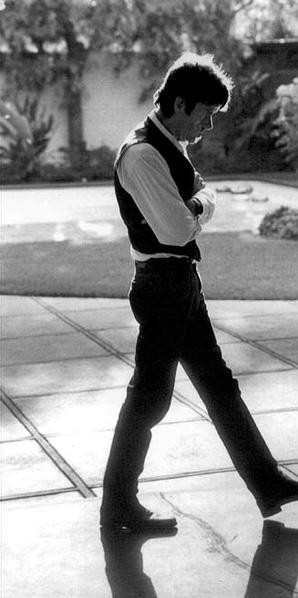
Although his name is familiar mainly to specialists, James Tenney has been a highly influential figure in American music, particularly in promoting various strands of twentieth century avant-garde, from <a href="spotify:artist:73s17iW5LTtXRMVoofi9sU">Ives</a> forward. He has also been a prolific composer, writing extensively for various unusual instrumental combinations (some involving electric guitar, gamelan, percussion, or tape delay), and he was a leading figure in the electro-acoustic movement of the 1960s, also creating some important early computer compositions.
Tenney's interest in computers, acoustics, psychoacoustics, and music cognition is not surprising considering he studied engineering at the University of Denver from 1952 to 1954. Only after that did he devote himself full-time to music, studying piano with Eduard Steuermann at Juilliard and composition with Lionel Nowak at Bennington College (from which he received his bachelor's degree in 1958). After this came studies at the University of Illinois (where he got his master's in 1961); mentors there were <a href="spotify:artist:0Yr7zP75bmerOrOs29Z9dx">Kenneth Gaburo</a> in composition and <a href="spotify:artist:0omZcKDW135PuuBtAiMMLL">Lejaren Hiller</a> in information theory and electronic music. Tenney also worked for a while with such maverick figures as <a href="spotify:artist:1iNl8IPt07m90D9KU31GrK">Harry Partch</a>, <a href="spotify:artist:6IXC5tnl1tMnV3noIdHlfM">Carl Ruggles</a>, and <a href="spotify:artist:0enRaCZSvIUa2nVC7I4roi">Edgard Varèse</a>.
The 1960s found Tenney conducting research at the Bell Laboratories (1961-1964), Yale (1964-1966), and the Brooklyn Polytechnic Institute (1966-1970), where he deeply explored the early possibilities of electronic music. Later years saw him teaching at the California Institute of the Arts (1970-1975), the University of California at Santa Cruz (1975-1976), and finally at Toronto's York University (from 1976).
During the 1960s and '70s, Tenney collaborated with live musicians even while he worked with electronics. He co-founded and directed the Tone Roads Ensemble, which from 1963 to 1970 was a significant force in the <a href="spotify:artist:73s17iW5LTtXRMVoofi9sU">Ives</a> revival. He also performed with the ensembles of early minimalists <a href="spotify:artist:1aVONoJ0EM97BB26etc1vo">Steve Reich</a> and <a href="spotify:artist:69lxxQvsfAIoQbB20bEPFC">Philip Glass</a> while fostering relationships with such figures as Stan Brakhage, <a href="spotify:artist:1Z3fF5lZdCM0ZHugkGoH8s">John Cage</a>, <a href="spotify:artist:3Vmj59eAzsbiISxcCBHRCM">Morton Feldman</a>, and <a href="spotify:artist:0E59YXvsFNUv8QXhwUQMMm">Max Neuhaus</a>.
In later decades, Tenney became more influential as a theorist than as a composer or performer. His approach to form stems from his understanding of the phenomenological bases of music perception. He has also investigated "harmonic space," his term for experimental intonation. His best-known publication is A History of Consonance and Dissonance (1988).
Tenney's interest in computers, acoustics, psychoacoustics, and music cognition is not surprising considering he studied engineering at the University of Denver from 1952 to 1954. Only after that did he devote himself full-time to music, studying piano with Eduard Steuermann at Juilliard and composition with Lionel Nowak at Bennington College (from which he received his bachelor's degree in 1958). After this came studies at the University of Illinois (where he got his master's in 1961); mentors there were <a href="spotify:artist:0Yr7zP75bmerOrOs29Z9dx">Kenneth Gaburo</a> in composition and <a href="spotify:artist:0omZcKDW135PuuBtAiMMLL">Lejaren Hiller</a> in information theory and electronic music. Tenney also worked for a while with such maverick figures as <a href="spotify:artist:1iNl8IPt07m90D9KU31GrK">Harry Partch</a>, <a href="spotify:artist:6IXC5tnl1tMnV3noIdHlfM">Carl Ruggles</a>, and <a href="spotify:artist:0enRaCZSvIUa2nVC7I4roi">Edgard Varèse</a>.
The 1960s found Tenney conducting research at the Bell Laboratories (1961-1964), Yale (1964-1966), and the Brooklyn Polytechnic Institute (1966-1970), where he deeply explored the early possibilities of electronic music. Later years saw him teaching at the California Institute of the Arts (1970-1975), the University of California at Santa Cruz (1975-1976), and finally at Toronto's York University (from 1976).
During the 1960s and '70s, Tenney collaborated with live musicians even while he worked with electronics. He co-founded and directed the Tone Roads Ensemble, which from 1963 to 1970 was a significant force in the <a href="spotify:artist:73s17iW5LTtXRMVoofi9sU">Ives</a> revival. He also performed with the ensembles of early minimalists <a href="spotify:artist:1aVONoJ0EM97BB26etc1vo">Steve Reich</a> and <a href="spotify:artist:69lxxQvsfAIoQbB20bEPFC">Philip Glass</a> while fostering relationships with such figures as Stan Brakhage, <a href="spotify:artist:1Z3fF5lZdCM0ZHugkGoH8s">John Cage</a>, <a href="spotify:artist:3Vmj59eAzsbiISxcCBHRCM">Morton Feldman</a>, and <a href="spotify:artist:0E59YXvsFNUv8QXhwUQMMm">Max Neuhaus</a>.
In later decades, Tenney became more influential as a theorist than as a composer or performer. His approach to form stems from his understanding of the phenomenological bases of music perception. He has also investigated "harmonic space," his term for experimental intonation. His best-known publication is A History of Consonance and Dissonance (1988).
Monthly Listeners
707
Monthly Listeners History
Track the evolution of monthly listeners over the last 28 days.
Followers
3,139
Followers History
Track the evolution of followers over the last 28 days.
Top Cities
28 listeners

18 listeners

14 listeners

12 listeners

11 listeners
Related Artists

Nils Vigeland
Linda Catlin Smith
Laurence Crane
Francesco Filidei

Hildegard Kleeb
Roland Dahinden

Jean-Claude Risset

Maria de Alvear

Joseph Byrd

Larry Polansky
Peter Ablinger

Michele Marelli

Justin DeHart
