Data may be outdated
Last updated: 7 months ago — Click refresh to get the latest statistics.
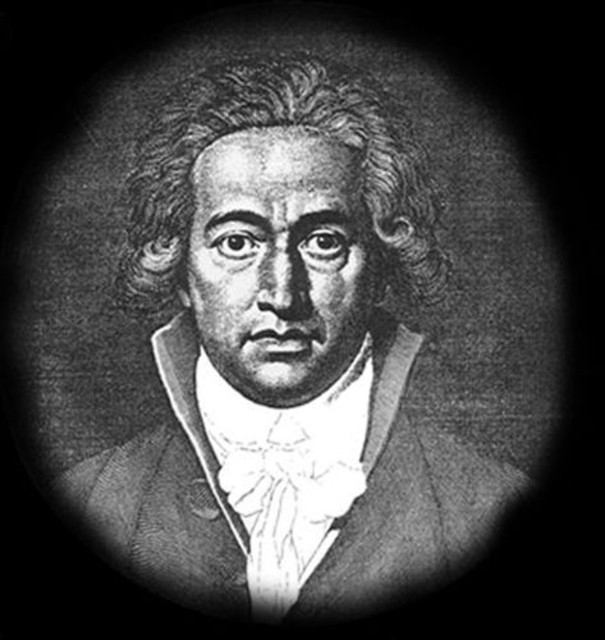
Goethe, like <a href="spotify:artist:0xZ9fVp0OnYjYPeX9Z3c8x">Shakespeare</a> and Dante, is among the few writers who define the Western tradition. Known to most reader as a peerless lyric poet and the author of such masterpieces as Faust and The Sorrows of Young Werther, Goethe, a true universal genius, excelled as a philosopher, scientist, and critic.
An older contemporary of <a href="spotify:artist:4NJhFmfw43RLBLjQvxDuRS">Mozart</a>, Goethe was born in Frankfurt, in 1749. Moving to Leipzig, in 1765, to study law, Goethe immersed himself in art, poetry, music, history, and German folk tradition.
His immense poetic talent and intellectual brilliance manifesting themselves in his youth, Goethe wrote poetry and embarked on his lifelong project of investigating plant physiology. With the publication of his Werther (1774), an extraordinary account of tragic love, Goethe became a European sensation, as the novel literally captivated readers throughout Europe, even prompting some to emulate the unfortunate protagonist by committing suicide. In 1775, Goethe joined the court of Saxe-Weimar, settling there for good, and accepting several positions and honors in the small German state, including the post of prime minister. An Italian sojourn, from 1786 to 1788, was a life-altering experience, as the poet passionately embraced Italian culture and its classical sources. Works from this period include his Roman Elegies,
Egmont, and Iphigenie auf Tauris. Goethe was initially entranced by the French Revolution; however, limiting his enthusiasm to the professed humanism of some of revolutionary ideals, he condemned the revolution's violence; furthermore, adhering to his ideal of humanism, Goethe distanced himself from the Romantic glorification of nationhood. What makes Goethe a truly timeless and universal artist is his desire to understand the human individual as such, and not as a entity defined by any social group.This desire inspired his bildungsroman Wilhelm Meister, the first volume of which appeared in 1796. Another work reflecting Goethe's struggle to comprehend the unique human mystery is his monumental drama Faust, based on the medieval legend of a scholar he sells his soul to the devil in exchange for absolute knowledge, in which Goethe presented, in poetic form, his conception of human destiny as a tragic quest for absolute knowledge and ultimate salvation. Published in its entirety after the poet's death (Part I appeared in 1808), Faust, to which Goethe devoted his entire life as a writer, is a story, enriched by the poet's tremendous erudition, of humankind's relentless search for spiritual meaning.
A keen student of physics, whose research included color theory and acoustics, Goethe had a lifelong interest in music. Although he sometimes failed to appreciate the greatest music of his time, preferring <a href="spotify:artist:3OQDR5VyyHPURZ2fyE8CDa">Zelter</a> to Beethoven and <a href="spotify:artist:2p0UyoPfYfI76PCStuXfOP">Schubert</a>, Goethe exerted a profound influence on the German lied, as he clearly understood the deeply intimate connection between lyric poetry and music. Realizing the extraordinary richness and musicality of Goethe's poetry, great composers, including <a href="spotify:artist:2p0UyoPfYfI76PCStuXfOP">Schubert</a> and <a href="spotify:artist:5wTAi7QkpP6kp8a54lmTOq">Brahms</a>, found true inspiration in his poems. For example, in his ballad Der Erlkönig (The Erlking), inspired by Goethe's haunting poem, <a href="spotify:artist:2p0UyoPfYfI76PCStuXfOP">Schubert</a> masterfully reinforces, with frantic triplets in the piano accompaniment, the poetic description of the heartless demonic force in relentless pursuit of a father and his child in the dead of the night. Goethe's Faust, which also explores the power of demonic forces, found its musical incarnation, after the poet's death, in such works as <a href="spotify:artist:1385hLNbrnbCJGokfH2ac2">Liszt</a>'s Faust Symphony and <a href="spotify:artist:11T8SOX82xraocZzUXzkvM">Berlioz</a>' La damnation de Faust. According to Goethe, however, the ideal Faust composer would have been <a href="spotify:artist:4NJhFmfw43RLBLjQvxDuRS">Mozart</a>. Goethe, who died in 1832, may have misunderstood his younger contemporaries Beethoven and <a href="spotify:artist:2p0UyoPfYfI76PCStuXfOP">Schubert</a>, but his assessment of <a href="spotify:artist:4NJhFmfw43RLBLjQvxDuRS">Mozart</a>'s genius was profound and prophetic, for he discerned the demonic quality in <a href="spotify:artist:4NJhFmfw43RLBLjQvxDuRS">Mozart</a>'s music that only future commentators would understand.
An older contemporary of <a href="spotify:artist:4NJhFmfw43RLBLjQvxDuRS">Mozart</a>, Goethe was born in Frankfurt, in 1749. Moving to Leipzig, in 1765, to study law, Goethe immersed himself in art, poetry, music, history, and German folk tradition.
His immense poetic talent and intellectual brilliance manifesting themselves in his youth, Goethe wrote poetry and embarked on his lifelong project of investigating plant physiology. With the publication of his Werther (1774), an extraordinary account of tragic love, Goethe became a European sensation, as the novel literally captivated readers throughout Europe, even prompting some to emulate the unfortunate protagonist by committing suicide. In 1775, Goethe joined the court of Saxe-Weimar, settling there for good, and accepting several positions and honors in the small German state, including the post of prime minister. An Italian sojourn, from 1786 to 1788, was a life-altering experience, as the poet passionately embraced Italian culture and its classical sources. Works from this period include his Roman Elegies,
Egmont, and Iphigenie auf Tauris. Goethe was initially entranced by the French Revolution; however, limiting his enthusiasm to the professed humanism of some of revolutionary ideals, he condemned the revolution's violence; furthermore, adhering to his ideal of humanism, Goethe distanced himself from the Romantic glorification of nationhood. What makes Goethe a truly timeless and universal artist is his desire to understand the human individual as such, and not as a entity defined by any social group.This desire inspired his bildungsroman Wilhelm Meister, the first volume of which appeared in 1796. Another work reflecting Goethe's struggle to comprehend the unique human mystery is his monumental drama Faust, based on the medieval legend of a scholar he sells his soul to the devil in exchange for absolute knowledge, in which Goethe presented, in poetic form, his conception of human destiny as a tragic quest for absolute knowledge and ultimate salvation. Published in its entirety after the poet's death (Part I appeared in 1808), Faust, to which Goethe devoted his entire life as a writer, is a story, enriched by the poet's tremendous erudition, of humankind's relentless search for spiritual meaning.
A keen student of physics, whose research included color theory and acoustics, Goethe had a lifelong interest in music. Although he sometimes failed to appreciate the greatest music of his time, preferring <a href="spotify:artist:3OQDR5VyyHPURZ2fyE8CDa">Zelter</a> to Beethoven and <a href="spotify:artist:2p0UyoPfYfI76PCStuXfOP">Schubert</a>, Goethe exerted a profound influence on the German lied, as he clearly understood the deeply intimate connection between lyric poetry and music. Realizing the extraordinary richness and musicality of Goethe's poetry, great composers, including <a href="spotify:artist:2p0UyoPfYfI76PCStuXfOP">Schubert</a> and <a href="spotify:artist:5wTAi7QkpP6kp8a54lmTOq">Brahms</a>, found true inspiration in his poems. For example, in his ballad Der Erlkönig (The Erlking), inspired by Goethe's haunting poem, <a href="spotify:artist:2p0UyoPfYfI76PCStuXfOP">Schubert</a> masterfully reinforces, with frantic triplets in the piano accompaniment, the poetic description of the heartless demonic force in relentless pursuit of a father and his child in the dead of the night. Goethe's Faust, which also explores the power of demonic forces, found its musical incarnation, after the poet's death, in such works as <a href="spotify:artist:1385hLNbrnbCJGokfH2ac2">Liszt</a>'s Faust Symphony and <a href="spotify:artist:11T8SOX82xraocZzUXzkvM">Berlioz</a>' La damnation de Faust. According to Goethe, however, the ideal Faust composer would have been <a href="spotify:artist:4NJhFmfw43RLBLjQvxDuRS">Mozart</a>. Goethe, who died in 1832, may have misunderstood his younger contemporaries Beethoven and <a href="spotify:artist:2p0UyoPfYfI76PCStuXfOP">Schubert</a>, but his assessment of <a href="spotify:artist:4NJhFmfw43RLBLjQvxDuRS">Mozart</a>'s genius was profound and prophetic, for he discerned the demonic quality in <a href="spotify:artist:4NJhFmfw43RLBLjQvxDuRS">Mozart</a>'s music that only future commentators would understand.
Monthly Listeners
12,971
Monthly Listeners History
Track the evolution of monthly listeners over the last 28 days.
Followers
6,828
Followers History
Track the evolution of followers over the last 28 days.
Top Cities
987 listeners

702 listeners
501 listeners
496 listeners
422 listeners
Related Artists

Reclam Hörbücher

Stefan Zweig

Die Bibel

Martin Suter

Christian Montillon

Inspector Moore
Paulo Coelho
Ernst Theodor Amadeus Hoffmann

MooEntertainment

Patricia Highsmith

Michelle Stern
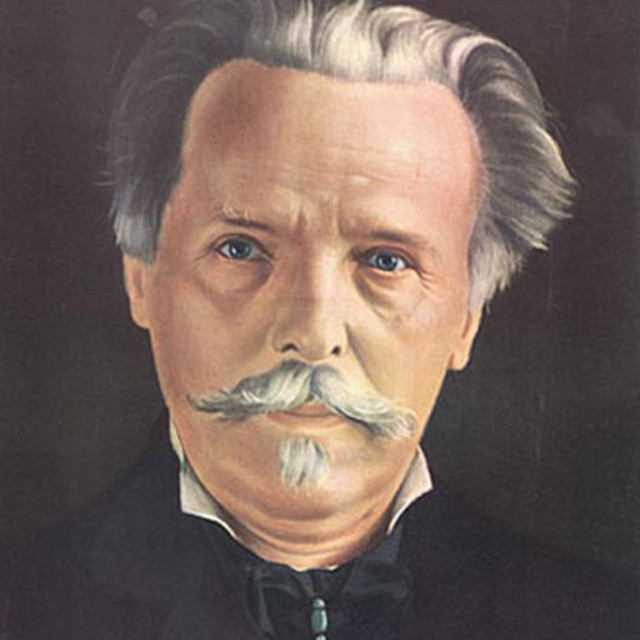
Karl May

K. H. Scheer

Marc A. Herren

Leo Lukas

Frank Borsch

Gotthold Ephraim Lessing

Gottfried Keller
Clark Darlton

H.G. Ewers

Dimiter Inkiow

William Voltz

Peter Matic
Herman Melville

Jack London
Fyodor Dostoevsky

Philip Kerr

Sven Görtz


Harald Gilbers

Patricia Cornwell

Wim Vandemaan

Sherlock Holmes - Die neuen Romane

Tana French


Arthur Schnitzler