Data may be outdated
Last updated: 9 months ago — Click refresh to get the latest statistics.
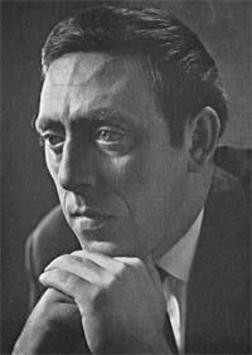
Upon examing the biography of Karel Ančerl, it would seem at first glance that within his 65 years he lived several, disconnected lives. In the 1930s, we see a fledgling young artist who gained recognition as a dexterous contemporary music performer. The six years of World War II brought his promising career to a standstill. Ančerl was imprisoned in Nazi concentration camps, he miraculously survived Auschwitz, while all his family were murdered in the gas chambers. Following the end of the war, he started anew. Ančerl assumed the post of director of the Opera, before being appointed principal conductor of the Prague Radio Symphony Orchestra. In the autumn of 1950, he was named music director of the Czech Philharmonic. Ančerl’s surprise appointment met with doubt, with not even those close to him believing it was a fortunate choice, as well as with aversion on the part of the orchestra members. Yet in spite of the low expecta)tions, Ančerl’s 18-year tenure with the Czech Philharmonic was a great era, characterised by a precious continuity of artistic work and high requirements. In the wake of the Warsaw Pact invasion of Czechoslovakia in August 1968, Ančerl resigned from his post and decided to emigrate. In the spring of 1969, he left his homeland, to which he would never return. He became chief conductor of the Toronto Symphony Orchestra, with whom he remained until his death, and regularly worked as a guest with orchestras in Amsterdam, Cleveland, New York, Jerusalem etc.
Monthly Listeners
28,686
Monthly Listeners History
Track the evolution of monthly listeners over the last 28 days.
Followers
1,390
Followers History
Track the evolution of followers over the last 28 days.
Top Cities

Related Artists

コンセル・ソンドール
ロビン・ステープルトン

遠江国オーケストラ

のだめカンタービレ

Erich Binder

石丸寛
岩城宏之

ホフシュテッター

ベルリン放送交響楽団
セルジュ・ボド
マクサンス・ラリュー


渡邉暁雄
リチャード・ディアリング

大津シンフォニックバンド

コロムビア・マーチ・オーケストラ
Tsugio Tokunaga
Fumiaki Miura
Hans Kalafusz, Klaus von Wildemann

Takashi Baba
Narimichi Kawabata
ヴィットリオ・モンティ
ソフィア交響楽団