Data may be outdated
Last updated: 9 months ago — Click refresh to get the latest statistics.
Locomotive was a Birmingham-based band that went through some serious evolution in the final years of the 1960s, releasing consistently good music in several genres during their three-year history. Their early lineup included future <a href="spotify:artist:1CD77o9fbdyQFrHnUPUEsF">Traffic</a> flautist Chris Wood.
In contrast to Mike Sheridan & the Nightriders, <a href="spotify:artist:5BcZ22XONcRoLhTbZRuME1">the Moody Blues</a>, <a href="spotify:artist:2BLpGstUHxDc6vHfBEiaXm">the Move</a>, and <a href="spotify:artist:04eUV5Ml7cff2sEJEwll6G">the Idle Race</a>, all Birmingham bands that aimed for what is variously perceived as the mainstream, whether it was British beat, R&B, or mod-punk, Locomotive started out playing ska. With Norman Haines (late of a band called the Brumbeats) handling the songwriting, they picked up on Bluebeat as it developed in 1967, but rather than evolving along the next natural step to reggae, Locomotive hung a 90-degree turn into psychedelia.
After recording initially for the <a href="spotify:search:label%3A%22Direction%22">Direction</a> label with the single "Broken Heart" b/w "Rudy a Message to You" in late 1967, they moved to EMI's Parlophone label in 1968 and charted in the Top 30 with their first single, the lyrical and low-key melodic "Rudi's in Love." In 1969, they released a single called "Mr. Armageddon," a piece of tight, big-band psychedelia that never managed to chart despite a unique sound for its time, doomsday rock with a heavy brass component.
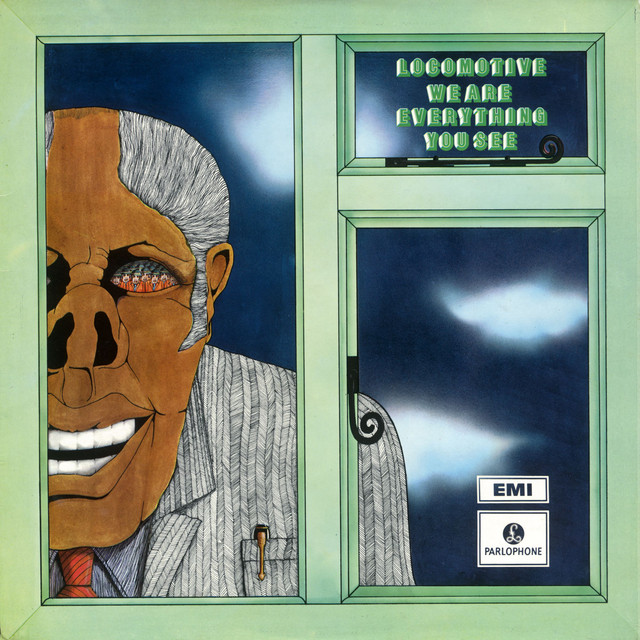
The band cut one album, We Are Everything You See, for Parlophone in 1969, with <a href="spotify:artist:7ddT6bounWJRVKKuJ48Jmj">Dick Heckstall Smith</a> on sax and Chris Wood (by then a member of <a href="spotify:artist:1CD77o9fbdyQFrHnUPUEsF">Traffic</a>) on flute augmenting the core lineup. The album failed to ignite any fires with the public, although it was interesting, containing a pair of songs that had been written for and recorded by the band <a href="spotify:artist:5pq14S4AFVXGSyYbIGJC6Q">the United States of America</a>, as well as "Mr. Armageddon." The group also recorded a single incognito for the <a href="spotify:search:label%3A%22Transatlantic%22">Transatlantic</a> label under the name Steam Shovel, which resurfaced in the '90s on the CD re-release of the Parlophone LP. They might've made the jump to the newly formed <a href="spotify:search:label%3A%22Harvest%22">Harvest</a> label easily enough, but Locomotive broke up just as EMI was getting serious and methodical about psychedelia and progressive rock. Norman Haines later led a band bearing his own name, and <a href="spotify:artist:08YvZ2qzFrDSITfHLbPKMP">Lamb</a> ended up playing drums with <a href="spotify:artist:6rdVnjHQOVrtvGtxUpIoN8">Steve Gibbons</a> during the mid-'70s. ~ Bruce Eder, Rovi
In contrast to Mike Sheridan & the Nightriders, <a href="spotify:artist:5BcZ22XONcRoLhTbZRuME1">the Moody Blues</a>, <a href="spotify:artist:2BLpGstUHxDc6vHfBEiaXm">the Move</a>, and <a href="spotify:artist:04eUV5Ml7cff2sEJEwll6G">the Idle Race</a>, all Birmingham bands that aimed for what is variously perceived as the mainstream, whether it was British beat, R&B, or mod-punk, Locomotive started out playing ska. With Norman Haines (late of a band called the Brumbeats) handling the songwriting, they picked up on Bluebeat as it developed in 1967, but rather than evolving along the next natural step to reggae, Locomotive hung a 90-degree turn into psychedelia.
After recording initially for the <a href="spotify:search:label%3A%22Direction%22">Direction</a> label with the single "Broken Heart" b/w "Rudy a Message to You" in late 1967, they moved to EMI's Parlophone label in 1968 and charted in the Top 30 with their first single, the lyrical and low-key melodic "Rudi's in Love." In 1969, they released a single called "Mr. Armageddon," a piece of tight, big-band psychedelia that never managed to chart despite a unique sound for its time, doomsday rock with a heavy brass component.
The band cut one album, We Are Everything You See, for Parlophone in 1969, with <a href="spotify:artist:7ddT6bounWJRVKKuJ48Jmj">Dick Heckstall Smith</a> on sax and Chris Wood (by then a member of <a href="spotify:artist:1CD77o9fbdyQFrHnUPUEsF">Traffic</a>) on flute augmenting the core lineup. The album failed to ignite any fires with the public, although it was interesting, containing a pair of songs that had been written for and recorded by the band <a href="spotify:artist:5pq14S4AFVXGSyYbIGJC6Q">the United States of America</a>, as well as "Mr. Armageddon." The group also recorded a single incognito for the <a href="spotify:search:label%3A%22Transatlantic%22">Transatlantic</a> label under the name Steam Shovel, which resurfaced in the '90s on the CD re-release of the Parlophone LP. They might've made the jump to the newly formed <a href="spotify:search:label%3A%22Harvest%22">Harvest</a> label easily enough, but Locomotive broke up just as EMI was getting serious and methodical about psychedelia and progressive rock. Norman Haines later led a band bearing his own name, and <a href="spotify:artist:08YvZ2qzFrDSITfHLbPKMP">Lamb</a> ended up playing drums with <a href="spotify:artist:6rdVnjHQOVrtvGtxUpIoN8">Steve Gibbons</a> during the mid-'70s. ~ Bruce Eder, Rovi
Monthly Listeners
471
Monthly Listeners History
Track the evolution of monthly listeners over the last 28 days.
Followers
831
Followers History
Track the evolution of followers over the last 28 days.
Top Cities
16 listeners

10 listeners

7 listeners

7 listeners
5 listeners
Related Artists


Waterloo


Saturnalia
Genesis

Nicholas Greenwood

Skin Alley
Galliard

Ginhouse

Graffiti

Pesky Gee!

Pugh's Place

Joseph Defazio


Mabel Greer's Toyshop
