Data may be outdated
Last updated: 9 months ago — Click refresh to get the latest statistics.
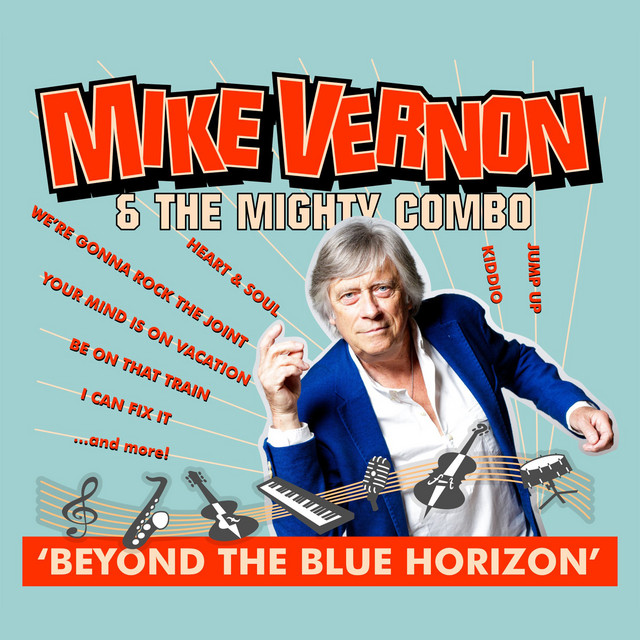
Mike Vernon was the leading producer of the British blues boom in the late '60s, working on discs by <a href="spotify:artist:5s4z3mRAE7nxE3jjft8J3h">John Mayall</a>, <a href="spotify:artist:08GQAI4eElDnROBrJRGE0X">Fleetwood Mac</a>, <a href="spotify:artist:7aUVQRiWaOqZU0JwOlGfWi">Chicken Shack</a>, <a href="spotify:artist:3aos6Gjahfz5kPMX9KK0ib">Duster Bennett</a>, <a href="spotify:artist:17obwOahRWI121iMUZznh2">Savoy Brown</a>, and <a href="spotify:artist:7nkLRaWHImCvWGHdNGnhVE">Ten Years After</a>. Several of these recordings came out on Vernon's own <a href="spotify:search:label%3A%22Blue+Horizon%22">Blue Horizon</a> label, as well as the lesser-known Vernon-run labels, Purdah and Outasite, and Vernon also recorded some American artists for his companies. Although he's primarily associated with blues-rock and blues, Vernon has produced significant acts outside of the blues field as well, including <a href="spotify:artist:0oSGxfWSnnOXhD2fKuz2Gy">David Bowie</a>, <a href="spotify:artist:34my5PBbL8TiTcfJc2YoPD">Focus</a>, and <a href="spotify:artist:7z1zaOeWiHpl4SD2N9ZBgk">Bloodstone</a>. After playing for a while in the <a href="spotify:artist:0RMmoLhiIGyaVI6icgcJU9">Mojo Men</a>, Vernon started working for Decca Records in 1963, entering production with an album by Texan blues singer and pianist <a href="spotify:artist:57dYeOpw946Lqe0B4ILs4m">Curtis Jones</a>, and following that up with projects by better-known American bluesmen, <a href="spotify:artist:1NnRjWELSLqFONDhwc8VU7">Champion Jack Dupree</a> and <a href="spotify:artist:0xeI9Z0Uhs8bYGBRpqq88X">Otis Spann</a>. At a time when <a href="spotify:artist:5s4z3mRAE7nxE3jjft8J3h">John Mayall</a> and <a href="spotify:artist:6PAt558ZEZl0DmdXlnjMgD">Eric Clapton</a> had established their names live with the <a href="spotify:artist:5s4z3mRAE7nxE3jjft8J3h">Bluesbreakers</a> but had made relatively few recordings, Vernon encouraged <a href="spotify:artist:2lLsOukzlMA39z4DjjeCWP">Mayall</a> to make an album with the <a href="spotify:artist:2ScuQMRWThcifBRIvNDFDC">Clapton Bluesbreakers</a> lineup for Decca, which <a href="spotify:artist:2lLsOukzlMA39z4DjjeCWP">Mayall</a> returned to after a brief sojourn at Immediate. In 1966, Vernon was in the producer's chair for the only album the <a href="spotify:artist:5s4z3mRAE7nxE3jjft8J3h">Bluesbreakers</a> made with <a href="spotify:artist:6PAt558ZEZl0DmdXlnjMgD">Clapton</a> as guitarist, Bluesbreakers, which is roundly recognized as the best British blues album. There had been several other great blues-soaked British recordings prior to this LP by bands such as the <a href="spotify:artist:22bE4uQ6baNwSHPVcDxLCe">Rolling Stones</a>, <a href="spotify:artist:2lxX1ivRYp26soIavdG9bX">Yardbirds</a>, and <a href="spotify:artist:3ICflSq6ZgYAIrm2CTkfVP">Animals</a>, but all of those groups were indebted to R&B, pop, and rock as well as the blues. Bluesbreakers was almost all pure blues, bringing out some of <a href="spotify:artist:2lLsOukzlMA39z4DjjeCWP">Mayall</a> and <a href="spotify:artist:6PAt558ZEZl0DmdXlnjMgD">Clapton's</a> best performances, sometimes augmented by a horn section. Vernon also produced the <a href="spotify:artist:2ScuQMRWThcifBRIvNDFDC">Bluesbreakers'</a> only album with <a href="spotify:artist:6PAt558ZEZl0DmdXlnjMgD">Clapton's</a> replacement, <a href="spotify:artist:3y1DgnVXqckGJrbwOKchdU">Peter Green</a> (A Hard Road). It was while working with the <a href="spotify:artist:5s4z3mRAE7nxE3jjft8J3h">Bluesbreakers</a> that Vernon became familiar with the musicians who were to become the nucleus of the most successful British blues-rock band, <a href="spotify:artist:08GQAI4eElDnROBrJRGE0X">Fleetwood Mac</a>, particularly <a href="spotify:artist:3y1DgnVXqckGJrbwOKchdU">Peter Green</a> and bassist <a href="spotify:artist:3IuIXQGupZ89qG162Y5sZ6">John McVie</a>. Vernon produced <a href="spotify:artist:08GQAI4eElDnROBrJRGE0X">Fleetwood Mac's</a> first few albums and singles, including the hit "Albatross," and was on board for much of their most blues-centered work. <a href="spotify:search:label%3A%22Blue+Horizon%22">Blue Horizon</a> made a major mistake, though, and forgot to pick up their option for a second year on <a href="spotify:artist:08GQAI4eElDnROBrJRGE0X">Fleetwood Mac's</a> contract, which meant that the group left <a href="spotify:search:label%3A%22Blue+Horizon%22">Blue Horizon</a> in early 1969.
There was still plenty of work for Vernon at <a href="spotify:search:label%3A%22Blue+Horizon%22">Blue Horizon</a> and other labels during the late '60s. These included recordings by <a href="spotify:artist:7nkLRaWHImCvWGHdNGnhVE">Ten Years After</a>, <a href="spotify:artist:7aUVQRiWaOqZU0JwOlGfWi">Chicken Shack</a>, <a href="spotify:artist:17obwOahRWI121iMUZznh2">Savoy Brown</a>, and several other lesser lights of the British blues boom. As a major blues/R&B enthusiast himself, Vernon seems to have allowed the bands to pretty much be as they were in the studio. With the best of his charges, such as <a href="spotify:artist:2lLsOukzlMA39z4DjjeCWP">Mayall</a> and <a href="spotify:artist:08GQAI4eElDnROBrJRGE0X">Fleetwood Mac</a>, this worked very well; they got to make pure blues, or experiment within and without the form if they wished, without the sort of interference that might have been expected from more pop-conscious big labels and producers. There was also a good amount of routine, or even boring, material by artists and players that could not compare to the Americans they idolized. Vernon did champion Americans as well, recording a wide variety of solid talents in both the U.S. and U.K., like <a href="spotify:artist:6tlPbmYME3fjRkSBb3pjoB">Eddie Boyd</a>, <a href="spotify:artist:66SiMdpsWXE23qqX0JaWg9">Furry Lewis</a>, and <a href="spotify:artist:2gSskdDhLQCx3CQd6XKDhp">Bukka White</a>, as well as leasing sides for U.K. release by greats like <a href="spotify:artist:5xLSa7l4IV1gsQfhAMvl0U">B.B. King</a> and <a href="spotify:artist:0q9kpdDkEA3H17gcRMjgVS">Elmore James</a>. Vernon himself made a solo album for <a href="spotify:search:label%3A%22Blue+Horizon%22">Blue Horizon</a> in the early '70s, with <a href="spotify:artist:1kcWyDvrlPUbyxkIoM6pAV">Rory Gallagher</a> as one of the guest guitarists.
Vernon's importance to British music went beyond the mixed results he achieved in the studio. In a period of about four years, during which <a href="spotify:search:label%3A%22Blue+Horizon%22">Blue Horizon</a> had distribution from CBS and <a href="spotify:search:label%3A%22Polydor%22">Polydor</a>, it issued about 60 singles and more than 100 albums, most of them blues records. This was a time when blues records were not too readily available in general, especially in Britain, and Vernon deserves much credit for raising the profile of the music in general in the UK. A good way to get acquainted with Vernon's work and sensibilities is on the double-LP Sire compilation History of British Blues, which covers British blues from the early '60s to the early '70s. Vernon assembled this anthology, which is largely comprised of sides he produced. Vernon has not solely worked on blues or blues-rock recordings. In 1967 he was the producer for <a href="spotify:artist:0oSGxfWSnnOXhD2fKuz2Gy">David Bowie's</a> self-titled debut album on Decca. Oddly, considering Vernon's own tastes and <a href="spotify:artist:0oSGxfWSnnOXhD2fKuz2Gy">Bowie's</a> past background (in which he had often sung and recorded R&B), there was no blues or R&B influence on the LP, which found <a href="spotify:artist:0oSGxfWSnnOXhD2fKuz2Gy">Bowie</a> in the midst of his <a href="spotify:artist:5JXvJb6vQkSCFGCh4FCKOI">Anthony Newley</a> phase. Indeed, the arrangements were very much in the orchestrated music hall style, although Vernon was not fond of <a href="spotify:artist:0oSGxfWSnnOXhD2fKuz2Gy">Bowie's</a> Newleyesque direction. In the early '70s, Vernon produced Dutch progressive rock stars <a href="spotify:artist:34my5PBbL8TiTcfJc2YoPD">Focus</a>, moving into soul in the mid-'70s with the American soul group <a href="spotify:artist:7z1zaOeWiHpl4SD2N9ZBgk">Bloodstone</a> (including their big hit "Natural High") and the Olympic Runners. Over the next couple of decades, Vernon maintained an active profile as a producer, although he didn't generate discs with the commercial or artistic impact of those he had overseen during the British blues boom. Generally, he kept his hands in the rootsy sector, working at various points with <a href="spotify:artist:25IRTisJjqI6JlkyCVMBsV">Dr. Feelgood</a>, <a href="spotify:artist:0xUA9sZvM1DBVySSvUaHtu">Chris Farlowe</a>, <a href="spotify:artist:5dCuFngSPyOOnTAvrC7v2s">Freddie King</a>, <a href="spotify:artist:7nkIxnGUsFXm89JX9ijD4p">Frankie Ford</a>, and <a href="spotify:artist:6vth8u6Wp7k2bbzDQMCmrb">Jimmy Witherspoon</a>, while outside of R&B he worked with <a href="spotify:artist:0L9xkvBPcEp1nrhDrodxc5">Level 42</a>. He revived the <a href="spotify:search:label%3A%22Blue+Horizon%22">Blue Horizon</a> label in the late '80s, and in the '90s set up a couple of other blues-oriented labels, Indigo and <a href="spotify:search:label%3A%22Code+Blue%22">Code Blue</a>. ~ Richie Unterberger, Rovi
There was still plenty of work for Vernon at <a href="spotify:search:label%3A%22Blue+Horizon%22">Blue Horizon</a> and other labels during the late '60s. These included recordings by <a href="spotify:artist:7nkLRaWHImCvWGHdNGnhVE">Ten Years After</a>, <a href="spotify:artist:7aUVQRiWaOqZU0JwOlGfWi">Chicken Shack</a>, <a href="spotify:artist:17obwOahRWI121iMUZznh2">Savoy Brown</a>, and several other lesser lights of the British blues boom. As a major blues/R&B enthusiast himself, Vernon seems to have allowed the bands to pretty much be as they were in the studio. With the best of his charges, such as <a href="spotify:artist:2lLsOukzlMA39z4DjjeCWP">Mayall</a> and <a href="spotify:artist:08GQAI4eElDnROBrJRGE0X">Fleetwood Mac</a>, this worked very well; they got to make pure blues, or experiment within and without the form if they wished, without the sort of interference that might have been expected from more pop-conscious big labels and producers. There was also a good amount of routine, or even boring, material by artists and players that could not compare to the Americans they idolized. Vernon did champion Americans as well, recording a wide variety of solid talents in both the U.S. and U.K., like <a href="spotify:artist:6tlPbmYME3fjRkSBb3pjoB">Eddie Boyd</a>, <a href="spotify:artist:66SiMdpsWXE23qqX0JaWg9">Furry Lewis</a>, and <a href="spotify:artist:2gSskdDhLQCx3CQd6XKDhp">Bukka White</a>, as well as leasing sides for U.K. release by greats like <a href="spotify:artist:5xLSa7l4IV1gsQfhAMvl0U">B.B. King</a> and <a href="spotify:artist:0q9kpdDkEA3H17gcRMjgVS">Elmore James</a>. Vernon himself made a solo album for <a href="spotify:search:label%3A%22Blue+Horizon%22">Blue Horizon</a> in the early '70s, with <a href="spotify:artist:1kcWyDvrlPUbyxkIoM6pAV">Rory Gallagher</a> as one of the guest guitarists.
Vernon's importance to British music went beyond the mixed results he achieved in the studio. In a period of about four years, during which <a href="spotify:search:label%3A%22Blue+Horizon%22">Blue Horizon</a> had distribution from CBS and <a href="spotify:search:label%3A%22Polydor%22">Polydor</a>, it issued about 60 singles and more than 100 albums, most of them blues records. This was a time when blues records were not too readily available in general, especially in Britain, and Vernon deserves much credit for raising the profile of the music in general in the UK. A good way to get acquainted with Vernon's work and sensibilities is on the double-LP Sire compilation History of British Blues, which covers British blues from the early '60s to the early '70s. Vernon assembled this anthology, which is largely comprised of sides he produced. Vernon has not solely worked on blues or blues-rock recordings. In 1967 he was the producer for <a href="spotify:artist:0oSGxfWSnnOXhD2fKuz2Gy">David Bowie's</a> self-titled debut album on Decca. Oddly, considering Vernon's own tastes and <a href="spotify:artist:0oSGxfWSnnOXhD2fKuz2Gy">Bowie's</a> past background (in which he had often sung and recorded R&B), there was no blues or R&B influence on the LP, which found <a href="spotify:artist:0oSGxfWSnnOXhD2fKuz2Gy">Bowie</a> in the midst of his <a href="spotify:artist:5JXvJb6vQkSCFGCh4FCKOI">Anthony Newley</a> phase. Indeed, the arrangements were very much in the orchestrated music hall style, although Vernon was not fond of <a href="spotify:artist:0oSGxfWSnnOXhD2fKuz2Gy">Bowie's</a> Newleyesque direction. In the early '70s, Vernon produced Dutch progressive rock stars <a href="spotify:artist:34my5PBbL8TiTcfJc2YoPD">Focus</a>, moving into soul in the mid-'70s with the American soul group <a href="spotify:artist:7z1zaOeWiHpl4SD2N9ZBgk">Bloodstone</a> (including their big hit "Natural High") and the Olympic Runners. Over the next couple of decades, Vernon maintained an active profile as a producer, although he didn't generate discs with the commercial or artistic impact of those he had overseen during the British blues boom. Generally, he kept his hands in the rootsy sector, working at various points with <a href="spotify:artist:25IRTisJjqI6JlkyCVMBsV">Dr. Feelgood</a>, <a href="spotify:artist:0xUA9sZvM1DBVySSvUaHtu">Chris Farlowe</a>, <a href="spotify:artist:5dCuFngSPyOOnTAvrC7v2s">Freddie King</a>, <a href="spotify:artist:7nkIxnGUsFXm89JX9ijD4p">Frankie Ford</a>, and <a href="spotify:artist:6vth8u6Wp7k2bbzDQMCmrb">Jimmy Witherspoon</a>, while outside of R&B he worked with <a href="spotify:artist:0L9xkvBPcEp1nrhDrodxc5">Level 42</a>. He revived the <a href="spotify:search:label%3A%22Blue+Horizon%22">Blue Horizon</a> label in the late '80s, and in the '90s set up a couple of other blues-oriented labels, Indigo and <a href="spotify:search:label%3A%22Code+Blue%22">Code Blue</a>. ~ Richie Unterberger, Rovi
Monthly Listeners
64
Monthly Listeners History
Track the evolution of monthly listeners over the last 28 days.
Followers
203
Followers History
Track the evolution of followers over the last 28 days.
Top Cities
3 listeners
Related Artists

Tomi Leino Trio

Knockout Greg & Blue Weather


Kevin Mark


Laura B and Her Band

Junior Binzugna

Bernard Sellam & The Boyz From The Hood
Mitch Woods

Rhythmtown-Jive
Greycap Ace
Sage Anthem
Bricks Anthem

Raywood Baudoin

U

The Blueskings
