Data may be outdated
Last updated: 7 months ago — Click refresh to get the latest statistics.
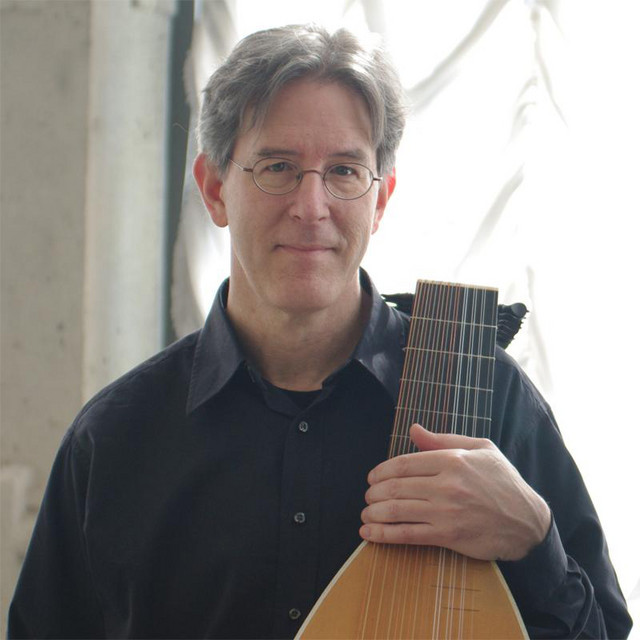
The American-born lutenist Paul Beier has been a central figure in establishing a solo lute performance scene in his adopted country of Italy. He has often participated in productions of early operas at La Scala and other major Italian opera houses, and at the Santa Fe Opera in New Mexico.
Paul Beier was born in 1954 in Salt Lake City, Utah. He attended the Royal College of Music in London, studying with Diana Poulton; she was a student of <a href="spotify:artist:5RXShi7HosLd8ujb5al4CZ">Arnold Dolmetsch</a> and herself a pioneer in early music in Britain. From her, Beier absorbed not only lute skills, but also enthusiasm for research into historical performance practices. In 1981, Beier was asked to create a new lute program at the Civica Scuola di Musica in Milan, Italy. He has taught there ever since, adding basso continuo and Renaissance ensemble classes to his responsibilities. Beier was a founder of the Italian Lute Society; he is a consulting editor of the Lute Society of America Journal and has written widely on lute performance. Beier's solo performance career has taken him on tours throughout Europe, the Americas, and Australia. His repertory is focused on Baroque lute music, extending from music of the early 16th century to works by <a href="spotify:artist:5aIqB5nVVvmFsvSdExz408">Bach</a> and <a href="spotify:artist:4bRcNJTLwLZmJM598wTQ3A">Silvius Leopold Weiss</a>. Beier founded his own Baroque ensemble, Galatea, and he has also collaborated with La Cetra and other major Baroque groups in Italy and elsewhere. He is the creator of Beiertab, a computer program that facilitates the creation and editing of lute tablature, its conversion into standard notation, and its audio realization. Beier has a large discography of solo lute recordings on the <a href="spotify:search:label%3A%22Stradivarius%22">Stradivarius</a> label, including, in 2019, John Dowland: What if a day. He has also recorded for <a href="spotify:search:label%3A%22Opus+111%22">Opus 111</a>, <a href="spotify:search:label%3A%22Glossa%22">Glossa</a>, <a href="spotify:search:label%3A%22Tactus%22">Tactus</a>, and other labels, and made four recordings as director of Galatea.
Paul Beier was born in 1954 in Salt Lake City, Utah. He attended the Royal College of Music in London, studying with Diana Poulton; she was a student of <a href="spotify:artist:5RXShi7HosLd8ujb5al4CZ">Arnold Dolmetsch</a> and herself a pioneer in early music in Britain. From her, Beier absorbed not only lute skills, but also enthusiasm for research into historical performance practices. In 1981, Beier was asked to create a new lute program at the Civica Scuola di Musica in Milan, Italy. He has taught there ever since, adding basso continuo and Renaissance ensemble classes to his responsibilities. Beier was a founder of the Italian Lute Society; he is a consulting editor of the Lute Society of America Journal and has written widely on lute performance. Beier's solo performance career has taken him on tours throughout Europe, the Americas, and Australia. His repertory is focused on Baroque lute music, extending from music of the early 16th century to works by <a href="spotify:artist:5aIqB5nVVvmFsvSdExz408">Bach</a> and <a href="spotify:artist:4bRcNJTLwLZmJM598wTQ3A">Silvius Leopold Weiss</a>. Beier founded his own Baroque ensemble, Galatea, and he has also collaborated with La Cetra and other major Baroque groups in Italy and elsewhere. He is the creator of Beiertab, a computer program that facilitates the creation and editing of lute tablature, its conversion into standard notation, and its audio realization. Beier has a large discography of solo lute recordings on the <a href="spotify:search:label%3A%22Stradivarius%22">Stradivarius</a> label, including, in 2019, John Dowland: What if a day. He has also recorded for <a href="spotify:search:label%3A%22Opus+111%22">Opus 111</a>, <a href="spotify:search:label%3A%22Glossa%22">Glossa</a>, <a href="spotify:search:label%3A%22Tactus%22">Tactus</a>, and other labels, and made four recordings as director of Galatea.
Monthly Listeners
3,995
Monthly Listeners History
Track the evolution of monthly listeners over the last 28 days.
Followers
2,388
Followers History
Track the evolution of followers over the last 28 days.
Top Cities
113 listeners

72 listeners

49 listeners

43 listeners

38 listeners

Related Artists

Alberto Crugnola



Jacques Gallot

José Miguel Moreno
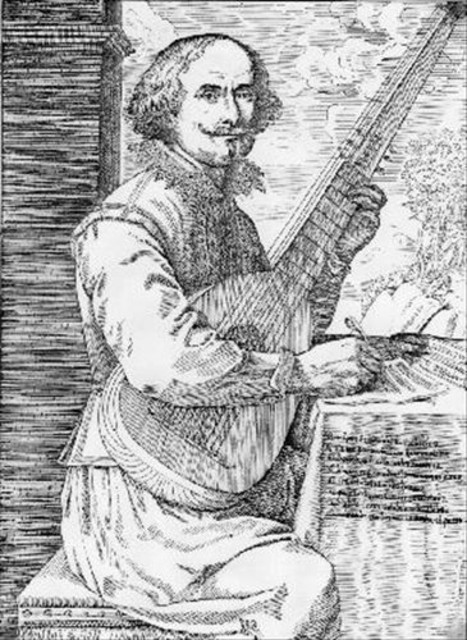
Bellerofonte Castaldi

Francesco Corbetta
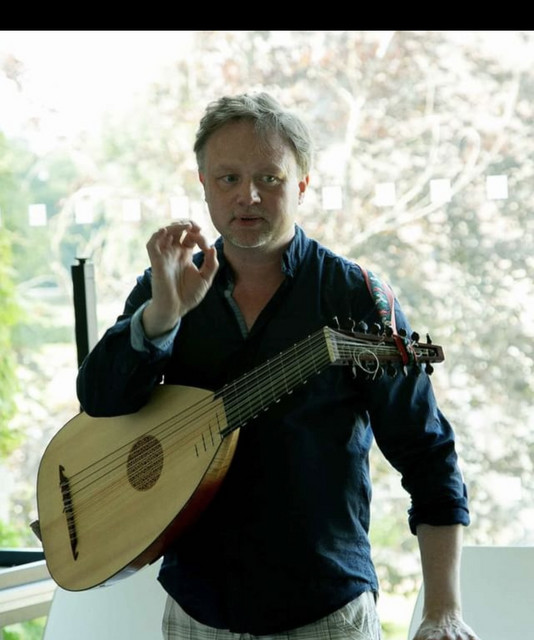
James Akers

Adam Falckenhagen

Esaias Reusner

Francesca Torelli

Michelangelo Galilei

Monica Pustilnik

François Dufaut

Simon Linné

Venere Lute Quartet


Fred Jacobs

Israel Golani
Michel de Béthune

Edward Martin and Paul Berget

William Waters
Luis de Milán

Angelo Michele Bartolotti

Jan Antonín Losy
Alfred Fernández

Mauricio Buraglia


Michelagnolo Galilei

Michel Cardin

Martin Eastwell
Giovanni Maria Trabaci
Pietro Paolo Borrono

Lucas Harris