
Data may be outdated
Last updated: 7 months ago — Click refresh to get the latest statistics.
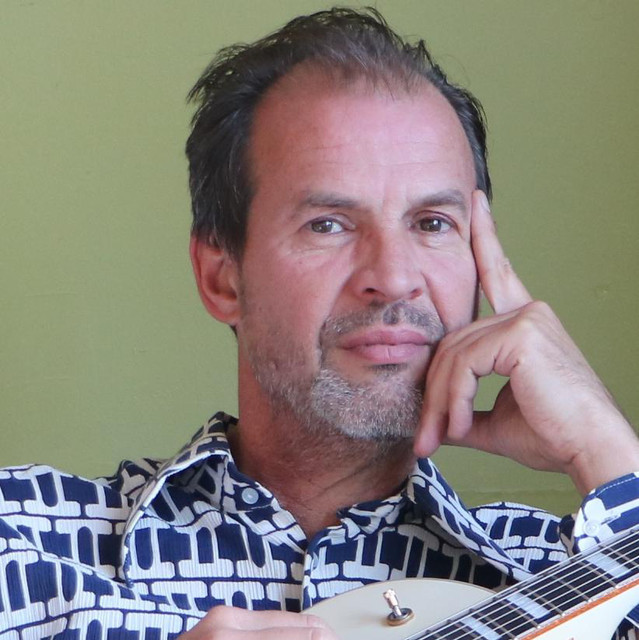
Violinist Paul Giger has had an unusual freelance career encompassing contemporary concert music, jazz and other improvised music, and world music. He is a fixture of the <a href="spotify:search:label%3A%22ECM%22">ECM</a> label's catalog.
Giger, whose name might be translated from German as "violinist," was born in Herisau, Switzerland, in 1952. He took up the violin at eight. In his late teens, he traveled for a time in various Asian countries and made a living as a street musician. Back in Switzerland in 1971, he took classes at conservatories in Winterthur and Bern; in 1976, he earned a music education degree after studies with Peter Mezger, and in 1980, a soloist's degree, studying with Ulrich Lehmann. Soon after that, Giger won a place as a first violinist in the St. Gallen Symphony Orchestra, near his hometown. In 1983, he left the orchestra to launch a freelance career, which he has pursued ever since. He made his debut in 1989 with Chartres, an album consisting of his own compositions that he recorded in Chartres Cathedral on the summer solstice of 1988.
Giger has continued to record for <a href="spotify:search:label%3A%22ECM%22">ECM</a>, and some of his recordings are likewise rooted in specific places. His 1992 recording Alpstein explored the musical implications of Swiss Alpine mountain singing. On that album, Giger was joined by jazz saxophonist <a href="spotify:artist:7MEyCD4G0Zl6kmikEAZsym">Jan Garbarek</a> and <a href="spotify:artist:5ioKof3fmNKrgzZWnyZg4v">Pierre Favre</a> on percussion. Some of his recordings feature improvisation and other jazz influences, and some make use of extended techniques such as microtonal playing. Giger performs and records both solo and with other musicians; in addition to those on Alpstein, these have included Marie-Louis Dähler, <a href="spotify:artist:15iQ5XT6Esaps90Qp8XlXr">Glen Velez</a>, and the <a href="spotify:artist:4xz6NoBwhQYH0TLJU8bn5a">Estonian Philharmonic Chamber Choir</a>. He has also written cinematic scores and music for dancers. In 2015, Giger won the Kulturpreis of the Cantons Appenzell. In 2017, he moved to the <a href="spotify:search:label%3A%22Divox%22">Divox</a> label for the album Trans Limen ad Lumen, but he returned to <a href="spotify:search:label%3A%22ECM%22">ECM</a> for 2022's Ars Moriendi. ~ James Manheim, Rovi
Giger, whose name might be translated from German as "violinist," was born in Herisau, Switzerland, in 1952. He took up the violin at eight. In his late teens, he traveled for a time in various Asian countries and made a living as a street musician. Back in Switzerland in 1971, he took classes at conservatories in Winterthur and Bern; in 1976, he earned a music education degree after studies with Peter Mezger, and in 1980, a soloist's degree, studying with Ulrich Lehmann. Soon after that, Giger won a place as a first violinist in the St. Gallen Symphony Orchestra, near his hometown. In 1983, he left the orchestra to launch a freelance career, which he has pursued ever since. He made his debut in 1989 with Chartres, an album consisting of his own compositions that he recorded in Chartres Cathedral on the summer solstice of 1988.
Giger has continued to record for <a href="spotify:search:label%3A%22ECM%22">ECM</a>, and some of his recordings are likewise rooted in specific places. His 1992 recording Alpstein explored the musical implications of Swiss Alpine mountain singing. On that album, Giger was joined by jazz saxophonist <a href="spotify:artist:7MEyCD4G0Zl6kmikEAZsym">Jan Garbarek</a> and <a href="spotify:artist:5ioKof3fmNKrgzZWnyZg4v">Pierre Favre</a> on percussion. Some of his recordings feature improvisation and other jazz influences, and some make use of extended techniques such as microtonal playing. Giger performs and records both solo and with other musicians; in addition to those on Alpstein, these have included Marie-Louis Dähler, <a href="spotify:artist:15iQ5XT6Esaps90Qp8XlXr">Glen Velez</a>, and the <a href="spotify:artist:4xz6NoBwhQYH0TLJU8bn5a">Estonian Philharmonic Chamber Choir</a>. He has also written cinematic scores and music for dancers. In 2015, Giger won the Kulturpreis of the Cantons Appenzell. In 2017, he moved to the <a href="spotify:search:label%3A%22Divox%22">Divox</a> label for the album Trans Limen ad Lumen, but he returned to <a href="spotify:search:label%3A%22ECM%22">ECM</a> for 2022's Ars Moriendi. ~ James Manheim, Rovi
Monthly Listeners
999
Monthly Listeners History
Track the evolution of monthly listeners over the last 28 days.
Followers
1,228
Followers History
Track the evolution of followers over the last 28 days.
Top Cities
24 listeners

20 listeners

18 listeners

13 listeners

13 listeners

Related Artists


Stefano Scodanibbio


Kristaps Pētersons

Alexander Knaifel
Bo Wiget

Clare O'Connell

Marius Ungureanu

Wim Henderickx

Gareth Lubbe

Simone Slattery

Arnoud Noordegraaf
Christian Sutter

Calliope Tsoupaki

Frances-Marie Uitti