Data may be outdated
Last updated: 9 months ago — Click refresh to get the latest statistics.
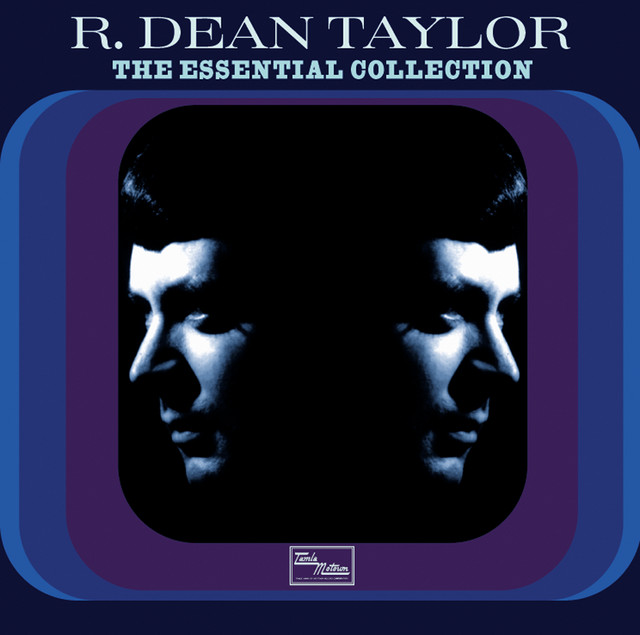
Singer/songwriter/producer R. Dean Taylor was one of the lesser-known players in the <a href="spotify:search:label%3A%22Motown%22">Motown</a> story, but an important and underrated figure all the same. After first proving his mettle as a chart-topping staff songwriter, his own single, "Indiana Wants Me," was a Top Five smash in 1970, becoming one of the label's first major crossover hits performed by a white artist. Subsequent singles and albums like 1975's LA Sunset followed, and Taylor had more success in the U.K. than in the States throughout the '70s.
Born Richard Dean Taylor in Toronto in 1939, he began his singing career at age 12, performing at local country showcases before embracing rock & roll. In 1960, he signed to the Toronto-based Audiomaster label to cut his rockabilly-flavored debut single, "At the High School Dance," supported by appearances on the CBC as well as a brief tour of the northeastern U.S. Taylor relocated to New York City in 1962, signing to the Amy/Mala label to cut a pair of singles, "I'll Remember" and the novelty effort "We Fell in Love as We Tangoed." Neither attracted much notice, and the following year a friend in the Detroit area recommended he audition for <a href="spotify:artist:4xRLKAf96K6YdGDWjY6ra8">Berry Gordy</a>'s up-and-coming <a href="spotify:search:label%3A%22Motown+Records%22">Motown Records</a>.
While not the label's first white artist, Taylor would prove one of its most successful. Paired with <a href="spotify:artist:2BgyJtxoixkegtJX6HqT4w">Eddie Holland</a> of the fabled <a href="spotify:artist:3ig4Yf8S2Bjq2yVsiayKM0">Holland-Dozier-Holland</a> songwriting/production team, he quickly proved an essential cog in the <a href="spotify:search:label%3A%22Motown%22">Motown</a> assembly line, co-writing hits like <a href="spotify:artist:57bUPid8xztkieZfS7OlEV">the Supremes</a>' number one pop blockbuster "Love Child," <a href="spotify:artist:3RwQ26hR2tJtA8F9p2n7jG">the Temptations</a>' "All I Need," and <a href="spotify:artist:7fIvjotigTGWqjIz6EP1i4">the Four Tops</a>' "I'll Turn to Stone." In 1965, Taylor issued his own <a href="spotify:search:label%3A%22Motown%22">Motown</a> debut, the protest anthem "Let's Go Somewhere." The record went nowhere, and while the same fate greeted the follow-up, "There's a Ghost in My House," it would later enjoy a renaissance as one of the most beloved cult classics within Britain's Northern soul club scene. With 1967's "Gotta See Jane," Taylor cracked the U.K. Top 20, but <a href="spotify:search:label%3A%22Motown%22">Motown</a> continued focusing its promotional muscle on its established acts and the record barely registered at home in the U.S.
Upon relocating to <a href="spotify:artist:6eEsIl4wosvhuWI0mfXxAF">Rare Earth</a>, the fledgling <a href="spotify:search:label%3A%22Motown%22">Motown</a> subsidiary formed to support its growing roster of white artists, Taylor finally hit paydirt with 1970's "Indiana Wants Me." A major hit in Detroit and across the Detroit River in Windsor, Ontario, its local success galvanized <a href="spotify:search:label%3A%22Motown%22">Motown</a>'s marketing forces, and the record peaked in the Billboard Top Five. The album I Think, Therefore I Am soon followed, but subsequent singles like 1971's "Candy Apple Red" and the following year's "Taos, New Mexico" failed to maintain Taylor's commercial momentum, and when <a href="spotify:artist:6eEsIl4wosvhuWI0mfXxAF">Rare Earth</a> folded in 1976, his <a href="spotify:search:label%3A%22Motown%22">Motown</a> career came to a close. Taylor launched his own label, Jane Records in 1973 as an outlet for his own work as well as a few scattered sides from Lucky Mud Band and <a href="spotify:artist:68n1Ift1wh7POizmCirp9t">Paul Sabu</a>. After a 1981 comeback attempt, "Let's Talk It Over," fizzled, Taylor retired from performing for over a decade, resurfacing in the late '90s as the headliner at several overseas Northern soul showcases. R. Dean Taylor died on January 7, 2022, at the age of 82. ~ Jason Ankeny, Rovi
Born Richard Dean Taylor in Toronto in 1939, he began his singing career at age 12, performing at local country showcases before embracing rock & roll. In 1960, he signed to the Toronto-based Audiomaster label to cut his rockabilly-flavored debut single, "At the High School Dance," supported by appearances on the CBC as well as a brief tour of the northeastern U.S. Taylor relocated to New York City in 1962, signing to the Amy/Mala label to cut a pair of singles, "I'll Remember" and the novelty effort "We Fell in Love as We Tangoed." Neither attracted much notice, and the following year a friend in the Detroit area recommended he audition for <a href="spotify:artist:4xRLKAf96K6YdGDWjY6ra8">Berry Gordy</a>'s up-and-coming <a href="spotify:search:label%3A%22Motown+Records%22">Motown Records</a>.
While not the label's first white artist, Taylor would prove one of its most successful. Paired with <a href="spotify:artist:2BgyJtxoixkegtJX6HqT4w">Eddie Holland</a> of the fabled <a href="spotify:artist:3ig4Yf8S2Bjq2yVsiayKM0">Holland-Dozier-Holland</a> songwriting/production team, he quickly proved an essential cog in the <a href="spotify:search:label%3A%22Motown%22">Motown</a> assembly line, co-writing hits like <a href="spotify:artist:57bUPid8xztkieZfS7OlEV">the Supremes</a>' number one pop blockbuster "Love Child," <a href="spotify:artist:3RwQ26hR2tJtA8F9p2n7jG">the Temptations</a>' "All I Need," and <a href="spotify:artist:7fIvjotigTGWqjIz6EP1i4">the Four Tops</a>' "I'll Turn to Stone." In 1965, Taylor issued his own <a href="spotify:search:label%3A%22Motown%22">Motown</a> debut, the protest anthem "Let's Go Somewhere." The record went nowhere, and while the same fate greeted the follow-up, "There's a Ghost in My House," it would later enjoy a renaissance as one of the most beloved cult classics within Britain's Northern soul club scene. With 1967's "Gotta See Jane," Taylor cracked the U.K. Top 20, but <a href="spotify:search:label%3A%22Motown%22">Motown</a> continued focusing its promotional muscle on its established acts and the record barely registered at home in the U.S.
Upon relocating to <a href="spotify:artist:6eEsIl4wosvhuWI0mfXxAF">Rare Earth</a>, the fledgling <a href="spotify:search:label%3A%22Motown%22">Motown</a> subsidiary formed to support its growing roster of white artists, Taylor finally hit paydirt with 1970's "Indiana Wants Me." A major hit in Detroit and across the Detroit River in Windsor, Ontario, its local success galvanized <a href="spotify:search:label%3A%22Motown%22">Motown</a>'s marketing forces, and the record peaked in the Billboard Top Five. The album I Think, Therefore I Am soon followed, but subsequent singles like 1971's "Candy Apple Red" and the following year's "Taos, New Mexico" failed to maintain Taylor's commercial momentum, and when <a href="spotify:artist:6eEsIl4wosvhuWI0mfXxAF">Rare Earth</a> folded in 1976, his <a href="spotify:search:label%3A%22Motown%22">Motown</a> career came to a close. Taylor launched his own label, Jane Records in 1973 as an outlet for his own work as well as a few scattered sides from Lucky Mud Band and <a href="spotify:artist:68n1Ift1wh7POizmCirp9t">Paul Sabu</a>. After a 1981 comeback attempt, "Let's Talk It Over," fizzled, Taylor retired from performing for over a decade, resurfacing in the late '90s as the headliner at several overseas Northern soul showcases. R. Dean Taylor died on January 7, 2022, at the age of 82. ~ Jason Ankeny, Rovi
Monthly Listeners
81,396
Monthly Listeners History
Track the evolution of monthly listeners over the last 28 days.
Followers
10,760
Followers History
Track the evolution of followers over the last 28 days.
Top Cities
7,572 listeners

3,753 listeners
2,300 listeners
1,556 listeners
974 listeners
Related Artists
Dean Parrish


Limmie & Family Cookin'


Laurence Weiss