Data may be outdated
Last updated: 9 months ago — Click refresh to get the latest statistics.
The instrumental smash "Ame Câline" vaulted conductor and arranger Raymond LeFevre to the front ranks of the easy listening renaissance that followed the commercial vogue for stereophonic sound. Born in Calais, France on November 20, 1929, LeFevre studied flute as a child and at 16 entered Paris' Conservatoire National de Musique, moonlighting as a jazz pianist in local clubs and cabarets. After a stint behind jazz bandleader <a href="spotify:artist:7zM3bs7txo1TnD1psGGfQc">Hubert Rostaing</a>, LeFevre joined conductor Bernard Hilda's Club des Champs-Elysées orchestra. He established himself as a composer and arranger during a lengthy tenure as a Barclay Records staffer, concurrently serving six years behind Egyptian born singer <a href="spotify:artist:04aQfpx1U1WQEJkrvGs4ig">Dalida</a> and in 1957 scoring the first of more than a dozen films with director Guillaume Radot, Fric-Frac en Dentelles. A year later, LeFevre notched a minor U.S. hit with his interpretation of <a href="spotify:artist:31GFatrHl2ijnS4ZAWA9s0">Gilbert Bécaud</a>'s "Le Jour Ou La Pluie Viendra," retitled "The Day the Rains Came" for American consumption. By this time, he was also established as the musical director for the French television variety series Musicorama, leading his orchestra in accompaniment of countless singers. While scoring the 1964 feature Faites Sauter La Banque!, LeFevre first collaborated with fellow easy listening maestro <a href="spotify:artist:5Oj26LEf8jdgR2woWEjlhi">Paul Mauriat</a>, his greatest commercial rival in the years to follow. While <a href="spotify:artist:5Oj26LEf8jdgR2woWEjlhi">Mauriat</a> scored the biggest instrumental hit of the period with the chart-topping "Love Is Blue," LeFevre's lush symphonic approach was a fixture on the European pop charts throughout the '60s as consumer demand for stereo recordings guaranteed impressive sales for singles including "La La La (He Gives Me Love)," "Puppet on a String," and "A Whiter Shade of Pale." He scored his biggest hit in 1968 when composer <a href="spotify:artist:7aKldvGENbL4bj8TCWHuhT">Michel Polnareff</a>'s haunting "Ame Câline" (aka "Soul Coaxing") emerged as a staple on pirate station Radio Caroline, and while his commercial fortunes dwindled in the decade to follow, LeFevre remained a ubiquitous presence in French cinema, winning widespread acclaim for the 1971 thriller score Jo. He also continued recording until 2001, enjoying his greatest commercial renown in Japan. LeFevre died in Seine-Port, France on June 27, 2008. ~ Jason Ankeny, Rovi
Monthly Listeners
82,732
Monthly Listeners History
Track the evolution of monthly listeners over the last 28 days.
Followers
6,943
Followers History
Track the evolution of followers over the last 28 days.
Top Cities



Related Artists

Raymond Alessandrini
Cinema Sounds Orchestra

Gérard Calvi

Guy Marchand


Eric Levi



Yves Prin


Timothée Oudinot

Ciné-Trio
Philippe Barbey-Lallia

Georges Granier



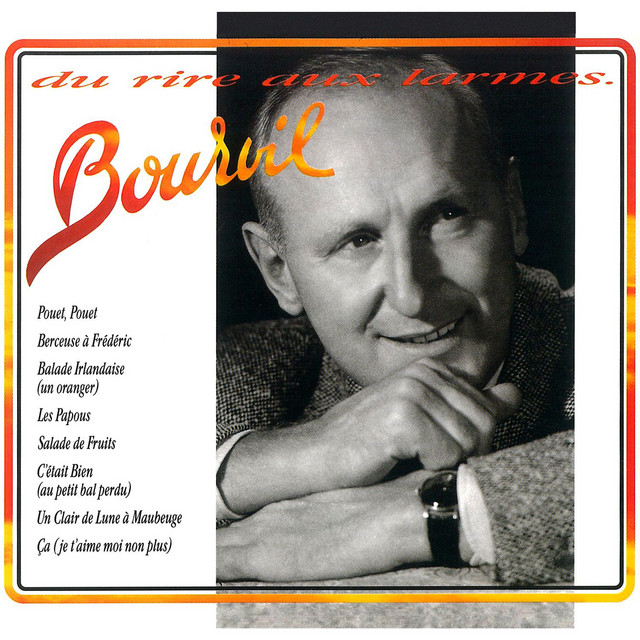
Andre Bourvil