Data may be outdated
Last updated: 9 months ago — Click refresh to get the latest statistics.
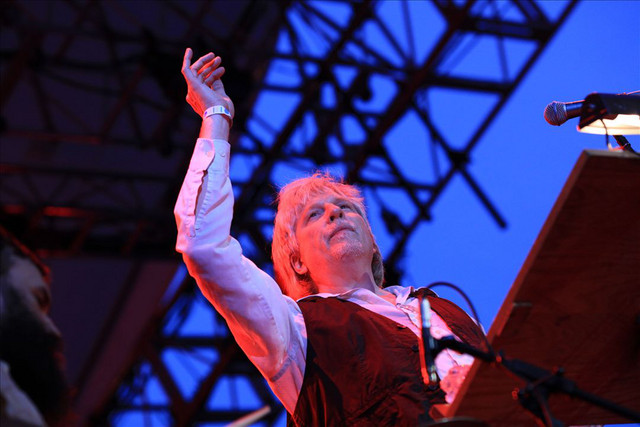
Post-minimalist composer and New York downtown music figure Rhys Chatham was involved in music at an early age. He studied classical flute, and was already playing works by contemporary composers such as <a href="spotify:artist:5M1ZBrPeHjV8y3qFKnq7hO">Luciano Berio</a> and <a href="spotify:artist:2prZJWfQMnIgwUKxKcBxH7">Pierre Boulez</a> by the time he began studying composition (including serialism) in his early teens. Chatham started writing electronic works after meeting <a href="spotify:artist:60p2TqH9OKWfKB46wWaGIQ">Morton Subotnick</a> in college, and came into contact with <a href="spotify:artist:1oG3G8tFIIseWu474ardvh">Eliane Radigue</a>, <a href="spotify:artist:1xjZbUHqwdtYlK0Tc8rAag">Maryanne Amacher</a>, and <a href="spotify:artist:2s0TXSF4Nqiy1UkZKJ9yWt">Ingram Marshall</a>, among others, at NYU's Studio for Electronic Music. Starting in the '70s, Chatham began composing in just intonation, and made a living tuning instruments, sometimes in trade for lessons, as he did with <a href="spotify:artist:5h2yl4fuAyztOOBgMRyQhE">LaMonte Young</a>. He played in Young's Dream House band and in a group with <a href="spotify:artist:4JZ6ZOxHDimksHWN4DFmoM">Tony Conrad</a> during this time. Later in the '70s, Chatham began incorporating rock elements into his music and explored non-notated forms. The rock part of his work mainly focused on electric guitars which he was inspired to love after seeing <a href="spotify:artist:1co4F2pPNH8JjTutZkmgSm">the Ramones</a> play at CBGB's. Chatham's guitar works -- the first of which, "Guitar Trio," was premiered by a trio including <a href="spotify:artist:0eiyrB0ET8AbrR5s6rrLJr">Glenn Branca</a> -- were played at high volumes, revealing the overtones, which can sound like voices, but also resulted in tinnitus for him by the early '80s. Chatham's better-known guitar works include "Drastic Classicism" (1982) for four guitars with alternate tunings, and the symphony "An Angel Moves Too Fast to See" (1989) for 100 electric guitars (with bass and drums). Performances of his large-scale works utilized guitarists including <a href="spotify:artist:6RutswK0vkC0aMKCPRvY9E">Bill Brovold</a> (who went on to form Larval) and <a href="spotify:artist:499WdWQJtDNCx4l9bBuP0U">Robert Poss</a> (<a href="spotify:artist:02l58kgFNVlUnTrj65AQiO">Band of Susans</a>). Chatham began composing for brass (such as "Factor X") in addition to guitar, and resumed notating his works. After years of living in NYC, he relocated to Paris. Chatham also began incorporating his trumpeting (often electrified, with effects) after about a decade of studying the instrument. You can hear his trumpet on Hard Edge (1999, Wire Editions) and Neon (1996, NTone), an album by Chatham and <a href="spotify:artist:0difqb9Bi1Bhls28pwBYNk">Martin Wheeler</a>. In the late '90s, Chatham co-founded the group Septile with a Bronx DJ and ex-<a href="spotify:artist:79S80ZWgVhIPMCHuvl6SkA">Swans</a> drummer <a href="spotify:artist:3aZ4YrvcGT1oUiodEm2QV2">Jonathan Kane</a>. ~ Joslyn Layne, Rovi
Monthly Listeners
486
Monthly Listeners History
Track the evolution of monthly listeners over the last 28 days.
Followers
3,587
Followers History
Track the evolution of followers over the last 28 days.
Top Cities
15 listeners

13 listeners

7 listeners

6 listeners
6 listeners

Related Artists
Vibracathedral Orchestra
Lichens
David Daniell

Burkhard Stangl

Shalabi Effect
Sirenes
No-Neck Blues Band
"A" Trio
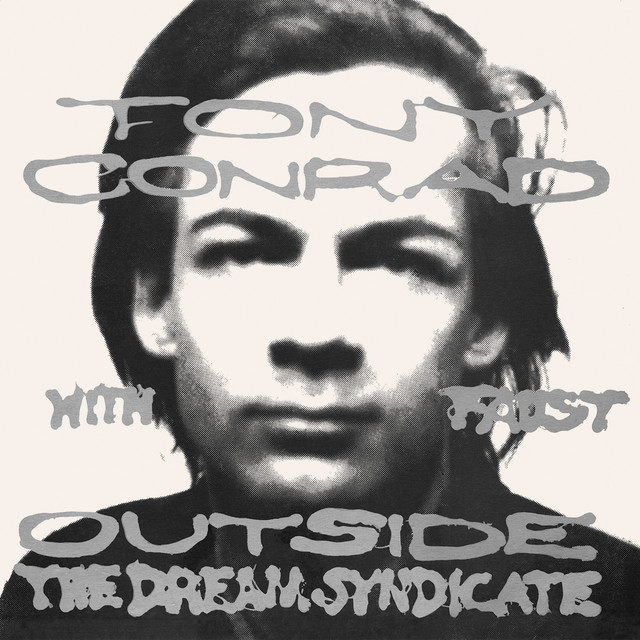
Tony Conrad With Faust