Data may be outdated
Last updated: 9 months ago — Click refresh to get the latest statistics.
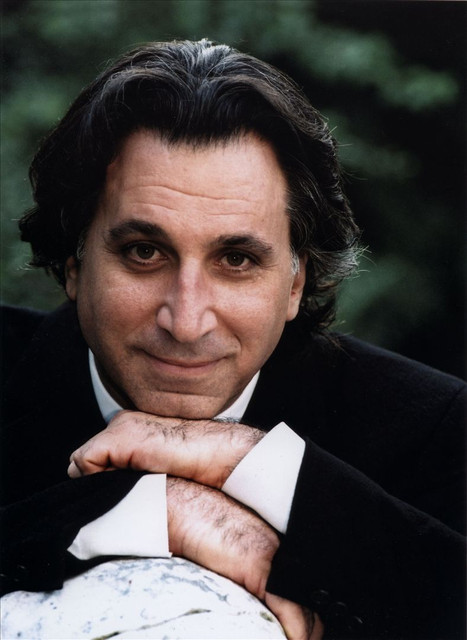
Born in the middle of an overwhelmingly diverse musical century, Richard Danielpour established himself as an innovator of a different sort: one who works within a musical inheritance and seeks originality in the poignancy of expression rather than the novelty of method. Danielpour's accessibility has elicited criticism; one prominent reviewer derided his allegiance to "the dictatorship of the past." While resisting the facile categorization "neo-Romantic" and likewise respecting the 20th century's great musical mavericks, Danielpour has embraced his role as a composer "between revolutions." Songs in Three Languages, a recording of several Danielpour vocal works, appeared in 2024.
Danielpour was born in New York on January 28, 1956. His family was of Persian Jewish background. At the New England Conservatory, then at the Juilliard School, he established his reputation as a skilled pianist and gifted composer (studying composition under <a href="spotify:artist:1WiSkCjZy8u96gb1GmVy45">Vincent Persichetti</a> and <a href="spotify:artist:2X1spvOUvdVE7krbIwCG2B">Peter Mennin</a>). His works in the early '80s employed serial methods. Works from the end of that decade, however, such works as First Light (1988) and The Awakened Heart (1990), adopted a broader and more unapologetically expressive style. He emerged in the '90s as one of a handful of composers who embraced both the sonic engagement of triadic harmony and the experimental innovations of the previous century, along with the cultural ubiquity of pop, rock, and jazz. The Concerto for Orchestra ("Zoroastrian Riddles," 1996), for example, hides beneath its ostensibly serious surface musical allusions to Broadway, movies, and television. Danielpour's works resonated with audiences and garnered wide acclaim; in fact, he became one of only three composers (the others being <a href="spotify:artist:7ie36YytMoKtPiL7tUvmoE">Stravinsky</a> and <a href="spotify:artist:0nJvyjVTb8sAULPYyA1bqU">Copland</a>) to enjoy an exclusive recording contract with <a href="spotify:search:label%3A%22Sony+Classical%22">Sony Classical</a>. By the end of the century, he had fulfilled commissions for numerous prestigious orchestras, such as the <a href="spotify:artist:1qHStDLIc8uV7hvTG6FGRJ">San Francisco Symphony</a> to the <a href="spotify:artist:3gacryguGmpmCvgPGt2CBI">New York Philharmonic</a>, received several awards, completed numerous residencies, and served on the faculties of the Curtis Institute and the Manhattan School of Music. In 2005, Danielpour completed his first opera, Margaret Garner, in collaboration with novelist Toni Morrison. That work, moving from a Detroit premiere to the New York City Opera, spawned other high-profile vocal commissions, including Songs from an Old War, for baritone and piano, written for baritone <a href="spotify:artist:6pxEWWaFpWFJGEZK6dOzsF">Thomas Hampson</a>.
Danielpour's major works of the 2010s included the oratorio Toward a Season of Peace (2011), recorded for the <a href="spotify:search:label%3A%22Naxos%22">Naxos</a> label in 2014, and the ballet Layla and the Majnun (2016). The latter work, based on a 12th century Persian love poem, drew on the composer's own Persian Jewish heritage. By the mid-2020s, more than 65 of Danielpour's compositions had been recorded, including Songs of My Father (2021), based on love letters written by his father to his mother. That work appeared on the 2024 <a href="spotify:search:label%3A%22Naxos%22">Naxos</a> album Songs in Three Languages. Among Danielpour's many honors are a Guggenheim Foundation Fellowship, a Charles Ives Fellowship and Award both from the American Academy of Arts and Letters, five MacDowell Colony Fellowships, a Jerome Foundation Award, and a Rockefeller Foundation Grant. ~ J. Neal & James Manheim, Rovi
Danielpour was born in New York on January 28, 1956. His family was of Persian Jewish background. At the New England Conservatory, then at the Juilliard School, he established his reputation as a skilled pianist and gifted composer (studying composition under <a href="spotify:artist:1WiSkCjZy8u96gb1GmVy45">Vincent Persichetti</a> and <a href="spotify:artist:2X1spvOUvdVE7krbIwCG2B">Peter Mennin</a>). His works in the early '80s employed serial methods. Works from the end of that decade, however, such works as First Light (1988) and The Awakened Heart (1990), adopted a broader and more unapologetically expressive style. He emerged in the '90s as one of a handful of composers who embraced both the sonic engagement of triadic harmony and the experimental innovations of the previous century, along with the cultural ubiquity of pop, rock, and jazz. The Concerto for Orchestra ("Zoroastrian Riddles," 1996), for example, hides beneath its ostensibly serious surface musical allusions to Broadway, movies, and television. Danielpour's works resonated with audiences and garnered wide acclaim; in fact, he became one of only three composers (the others being <a href="spotify:artist:7ie36YytMoKtPiL7tUvmoE">Stravinsky</a> and <a href="spotify:artist:0nJvyjVTb8sAULPYyA1bqU">Copland</a>) to enjoy an exclusive recording contract with <a href="spotify:search:label%3A%22Sony+Classical%22">Sony Classical</a>. By the end of the century, he had fulfilled commissions for numerous prestigious orchestras, such as the <a href="spotify:artist:1qHStDLIc8uV7hvTG6FGRJ">San Francisco Symphony</a> to the <a href="spotify:artist:3gacryguGmpmCvgPGt2CBI">New York Philharmonic</a>, received several awards, completed numerous residencies, and served on the faculties of the Curtis Institute and the Manhattan School of Music. In 2005, Danielpour completed his first opera, Margaret Garner, in collaboration with novelist Toni Morrison. That work, moving from a Detroit premiere to the New York City Opera, spawned other high-profile vocal commissions, including Songs from an Old War, for baritone and piano, written for baritone <a href="spotify:artist:6pxEWWaFpWFJGEZK6dOzsF">Thomas Hampson</a>.
Danielpour's major works of the 2010s included the oratorio Toward a Season of Peace (2011), recorded for the <a href="spotify:search:label%3A%22Naxos%22">Naxos</a> label in 2014, and the ballet Layla and the Majnun (2016). The latter work, based on a 12th century Persian love poem, drew on the composer's own Persian Jewish heritage. By the mid-2020s, more than 65 of Danielpour's compositions had been recorded, including Songs of My Father (2021), based on love letters written by his father to his mother. That work appeared on the 2024 <a href="spotify:search:label%3A%22Naxos%22">Naxos</a> album Songs in Three Languages. Among Danielpour's many honors are a Guggenheim Foundation Fellowship, a Charles Ives Fellowship and Award both from the American Academy of Arts and Letters, five MacDowell Colony Fellowships, a Jerome Foundation Award, and a Rockefeller Foundation Grant. ~ J. Neal & James Manheim, Rovi
Monthly Listeners
3,989
Monthly Listeners History
Track the evolution of monthly listeners over the last 28 days.
Followers
839
Followers History
Track the evolution of followers over the last 28 days.
Top Cities
55 listeners

54 listeners

45 listeners

43 listeners

41 listeners
Related Artists
Tonya Lemoh
Stefano Greco
Antonio Oyarzábal

Duo Praxedis

Jeanell Carrigan
Marco Rapetti
吉松 隆

Mattias Spee
Walter Damrosch
Walter Niemann

Roy Agnew
Emili Brugalla

Adolf Pla

Christina McMaster

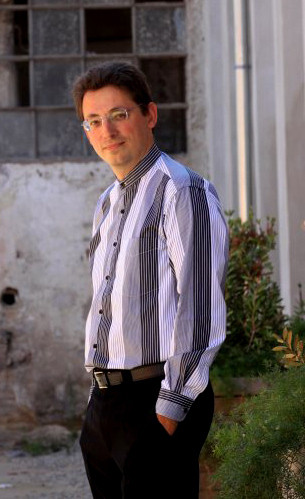

Olivier Chauzu

Marta Zabaleta
Eugenio Catone
Carles Marigó

Matthew Schellhorn

Viktor Stepanovych Kosenko
Florence Ewart

Matteo Bevilacqua
Bruno Belthoise
Peter Jacobs
Cora Irsen

Wojciech Rybicki

Lilit Grigoryan

Robert Neumann
Haskell Small


