Data may be outdated
Last updated: 9 months ago — Click refresh to get the latest statistics.
A pioneering figure in the history of country rock, guitarist, vocalist, and songwriter Richie Furay was a founding member of two important bands in the genre, <a href="spotify:artist:3eskO5m0H4yiF64vRySBjr">Buffalo Springfield</a> and <a href="spotify:artist:0fyqyjD7pbaVzbu94ylWQR">Poco</a>. Furay was also part of the country-rock supergroup <a href="spotify:artist:7hbzXJ5K6AqdPnbUcCL1hL">the Souther-Hillman-Furay Band</a>, and in all of his projects, he showed off his warm, graceful vocals, his sturdy guitar work, and the down-to-earth, relatable emotions of his songwriting. In addition to his work as a collaborator and sideman, Furay recorded extensively as a solo artist, beginning with 1976's I've Got a Reason, and 1978's Dance a Little Light and 2005's I Am Sure reflected his sure hand at country, folk, and rock styles as well as his deep religious faith, and 2022's In the Country saw him putting his own stamp on a program of noted country songs.
Paul Richard Furay was born in Yellow Springs, Ohio on May 9, 1944. Furay learned to play the guitar, and in his teens joined his first band, a local group called the Barons. After completing high school, Furay enrolled at Oberlin College, and when not busy with classes, he took part in a student choral group. Their performances took the group to New York City, where Furay was drawn into the city's thriving folk music scene. He was playing folk venues in Greenwich Village when he was approached by producer and songwriter Ed E. Miller, who was putting together a Broadway show rooted in folk music. Furay joined the cast of Miller's project, America Sings, but the show closed after just two weeks. Hoping to salvage something from the failed show, Miller recruited nine members of the cast to form a commercial folk group he dubbed <a href="spotify:artist:3wP78hIw6GjrMzumNet9RH">the Au-Go-Go Singers</a>. The group lasted just long enough to cut an album in 1964 before breaking up, but one of Furay's bandmates was a singer from Texas named <a href="spotify:artist:4WlSvDKaq1PA2Nr7cCIPxX">Stephen Stills</a>, and they struck up a friendship. Furay had quit the Singers before they evolved into a group called the Company, where during a date in Thunder Bay, Ontario, Canada, they shared a bill with the Squires, featuring a guitarist and songwriter named <a href="spotify:artist:6v8FB84lnmJs434UJf2Mrm">Neil Young</a>. <a href="spotify:artist:4WlSvDKaq1PA2Nr7cCIPxX">Stills</a> relocated to Los Angeles, and after <a href="spotify:artist:6v8FB84lnmJs434UJf2Mrm">Young</a> made his way to California, they decided to form a group. Remembering his talented friend from his Greenwich Village days, <a href="spotify:artist:4WlSvDKaq1PA2Nr7cCIPxX">Stills</a> invited Furay to join <a href="spotify:artist:3eskO5m0H4yiF64vRySBjr">Buffalo Springfield</a>. They made their debut in 1966, and in March 1967, they landed a Top Ten single with <a href="spotify:artist:4WlSvDKaq1PA2Nr7cCIPxX">Stills</a>' song "For What It's Worth."
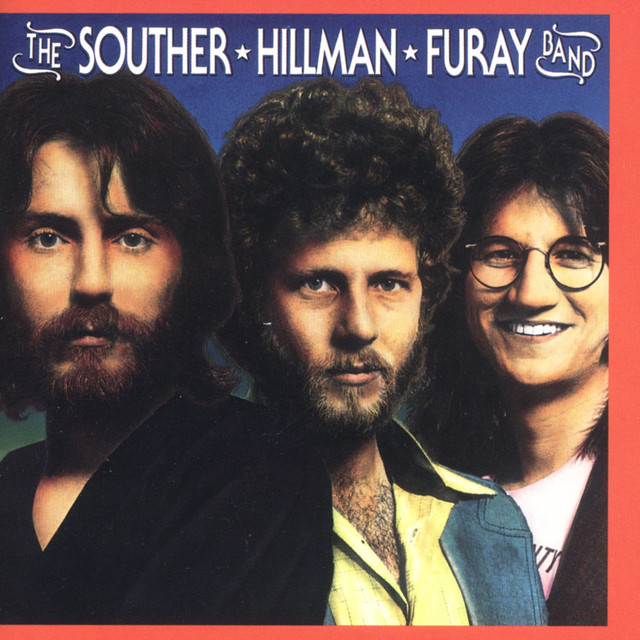
<a href="spotify:artist:3eskO5m0H4yiF64vRySBjr">Buffalo Springfield</a> was popular and influential, but the group's membership was volatile, and they broke up in 1968; the last track on their third and final album, Last Time Around, was a song Furay had written for his girlfriend and future wife, "Kind Woman." Wasting no time, Furay and guitarist <a href="spotify:artist:62MaT134frQwZdcvQcjcSY">Jim Messina</a>, who had worked in the studio with <a href="spotify:artist:3eskO5m0H4yiF64vRySBjr">Buffalo Springfield</a>, put together a new band with pedal steel guitarist <a href="spotify:artist:4if0dPbXjtc89UWy63Y5zV">Rusty Young</a>, bassist <a href="spotify:artist:00f43SIUld0KU349dnwsmC">Randy Meisner</a>, and drummer George Grantham. The band was named <a href="spotify:artist:0fyqyjD7pbaVzbu94ylWQR">Poco</a>, and they made their live debut in November 1968. <a href="spotify:search:label%3A%22Epic+Records%22">Epic Records</a> signed the band, and their debut album, Pickin' Up the Pieces, appeared in May 1969. <a href="spotify:artist:0fyqyjD7pbaVzbu94ylWQR">Poco</a> would enjoy moderate success, and Furay would cut five more albums with the group – Poco (1970), Deliverin' (1971), From the Inside (1971), A Good Feelin' to Know (1972), and Crazy Eyes (1973) – before he chose to leave the band. Furay's next project came when David Geffen invited him to join a country-rock supergroup with <a href="spotify:artist:70FybmH2MMz9fHewhnLvjs">Chris Hillman</a> (formerly of <a href="spotify:artist:1PCZpxHJz7WAMF8EEq8bfc">the Byrds</a> and <a href="spotify:artist:0rESpKEusFHxhW59MIf7eM">the Flying Burrito Brothers</a>) and <a href="spotify:artist:0I7UnRLIdCD310ZBgeuqh5">J.D. Souther</a> (a musician and songwriter whose tunes had been hits for <a href="spotify:artist:1sXbwvCQLGZnaH0Jp2HTVc">Linda Ronstadt</a> and <a href="spotify:artist:0ECwFtbIWEVNwjlrfc6xoL">the Eagles</a>). Dubbed <a href="spotify:artist:7hbzXJ5K6AqdPnbUcCL1hL">the Souther-Hillman-Furay Band</a>, their self-titled debut album was issued by <a href="spotify:search:label%3A%22Asylum+Records%22">Asylum Records</a> in 1974, and "Fallin' In Love," penned by Furay, became a hit single, while the album went gold. A second <a href="spotify:artist:7hbzXJ5K6AqdPnbUcCL1hL">Souther-Hillman-Furay Band</a> album, Trouble in Paradise, came out in 1975, but the title proved prophetic – sales and critical response didn't match the debut, and as tensions within the group mounted, they disbanded.
One of the factors behind Furay's decision to leave <a href="spotify:artist:7hbzXJ5K6AqdPnbUcCL1hL">Souther-Hillman-Furay</a> was a recent spiritual awakening. The group's busy schedule was taking a toll on his marriage, and <a href="spotify:artist:6jljeHwt7a8MQpsCAtqXIK">Al Perkins</a>, a pedal steel guitarist who recorded and toured with the group, started discussing his Christian faith with him. Furay became a devoted Christian and left Los Angeles for Boulder, CO. His first solo album, 1976's I've Got a Reason, was filled with songs informed by his new faith, as were his next two LPs, 1978's Dance a Little Light and 1979's I Still Have Dreams. Furay's first three solo releases were issued by <a href="spotify:search:label%3A%22Asylum+Records%22">Asylum Records</a>; when the label became disappointed with Furay's sales figures, he struck a new record deal with the Christian label <a href="spotify:search:label%3A%22Myrrh%22">Myrrh</a>, who reissued I've Got a Reason with new artwork in 1981, followed by an album of fresh material, 1982's Seasons of Change. Dissatisfied with the progress of his career and eager to devote himself to his family and his faith, Furay stepped away from music and became a pastor at Calvary Chapel in Broomfield, CO.
Furay performed at church services and local events, but was little heard from outside of his community until 1989, when he rejoined <a href="spotify:artist:0fyqyjD7pbaVzbu94ylWQR">Poco</a> for 1989's Legacy, an album that brought the group's original lineup back together. Furay also took part in <a href="spotify:artist:0fyqyjD7pbaVzbu94ylWQR">Poco</a>'s subsequent concert tour, and the album spawned two successful singles, "Call It Love" and "Nothin' to Hide." The reunion was a one-off, but it renewed Furay's interest in performing, and in 1997 he released a new album of Christian music, In My Father's House. 2005's I Am Sure was an album of worship music that included guest appearances from three of his former Poco bandmates – <a href="spotify:artist:6QYXFBSi7zIfSY1A7QUlAS">Paul Cotton</a>, <a href="spotify:artist:62MaT134frQwZdcvQcjcSY">Jim Messina</a>, and <a href="spotify:artist:4if0dPbXjtc89UWy63Y5zV">Rusty Young</a> – as well as <a href="spotify:artist:70FybmH2MMz9fHewhnLvjs">Chris Hillman</a> from the <a href="spotify:artist:7hbzXJ5K6AqdPnbUcCL1hL">Souther-Hillman-Furay Band</a>. 2006's The Heartbeat of Love was a country rock-flavored set that also featured a number of Furay's old colleagues, among them <a href="spotify:artist:6v8FB84lnmJs434UJf2Mrm">Neil Young</a>, <a href="spotify:artist:4WlSvDKaq1PA2Nr7cCIPxX">Stephen Stills</a>, <a href="spotify:artist:2VbrivHnDf4Z43xPTgqvym">Timothy B. Schmit</a>, and <a href="spotify:artist:3Y3xIwWyq5wnNHPp5gPjOW">Kenny Loggins</a>.
In 2011, Furay joined forces with <a href="spotify:artist:6v8FB84lnmJs434UJf2Mrm">Neil Young</a> and <a href="spotify:artist:4WlSvDKaq1PA2Nr7cCIPxX">Stephen Stills</a> for a <a href="spotify:artist:3eskO5m0H4yiF64vRySBjr">Buffalo Springfield</a> reunion tour. <a href="spotify:artist:6v8FB84lnmJs434UJf2Mrm">Young</a> dropped out before they could record a new album, but some songs Furay was writing in anticipation of a new <a href="spotify:artist:3eskO5m0H4yiF64vRySBjr">Springfield</a> project appeared on 2015's Hand in Hand, which also featured a new recording of "Kind Woman" with <a href="spotify:artist:6v8FB84lnmJs434UJf2Mrm">Neil Young</a> and <a href="spotify:artist:3Y3xIwWyq5wnNHPp5gPjOW">Kenny Loggins</a> on backing vocals. On November 16, 2018, Furay and his band played a special show at the Troubadour in Los Angeles, where <a href="spotify:artist:0fyqyjD7pbaVzbu94ylWQR">Poco</a> got their start, to honor the 50th anniversary of <a href="spotify:artist:0fyqyjD7pbaVzbu94ylWQR">Poco</a>'s live album Deliverin'. The show was recorded, and 2021's Return to the Troubadour was a two-CD set that gave fans outside of California a chance to hear the concert. Furay signed with <a href="spotify:search:label%3A%22BMG+Rights+Management%22">BMG Rights Management</a> for 2022's In the Country, in which he covered a dozen of his favorite country songs, including numbers made famous by <a href="spotify:artist:4BclNkZtAUq1YrYNzye3N7">Garth Brooks</a>, <a href="spotify:artist:0u2FHSq3ln94y5Q57xazwf">Keith Urban</a>, <a href="spotify:artist:6rJqqRce0Kvo2dJUXoHleC">Alabama</a>, <a href="spotify:artist:7EK1bQADBoqbYXnT4Cqv9w">John Denver</a>, and <a href="spotify:artist:61YXt5O4gENijzfR9cjjSV">Buddy & Julie Miller</a>. ~ Mark Deming, Rovi
Paul Richard Furay was born in Yellow Springs, Ohio on May 9, 1944. Furay learned to play the guitar, and in his teens joined his first band, a local group called the Barons. After completing high school, Furay enrolled at Oberlin College, and when not busy with classes, he took part in a student choral group. Their performances took the group to New York City, where Furay was drawn into the city's thriving folk music scene. He was playing folk venues in Greenwich Village when he was approached by producer and songwriter Ed E. Miller, who was putting together a Broadway show rooted in folk music. Furay joined the cast of Miller's project, America Sings, but the show closed after just two weeks. Hoping to salvage something from the failed show, Miller recruited nine members of the cast to form a commercial folk group he dubbed <a href="spotify:artist:3wP78hIw6GjrMzumNet9RH">the Au-Go-Go Singers</a>. The group lasted just long enough to cut an album in 1964 before breaking up, but one of Furay's bandmates was a singer from Texas named <a href="spotify:artist:4WlSvDKaq1PA2Nr7cCIPxX">Stephen Stills</a>, and they struck up a friendship. Furay had quit the Singers before they evolved into a group called the Company, where during a date in Thunder Bay, Ontario, Canada, they shared a bill with the Squires, featuring a guitarist and songwriter named <a href="spotify:artist:6v8FB84lnmJs434UJf2Mrm">Neil Young</a>. <a href="spotify:artist:4WlSvDKaq1PA2Nr7cCIPxX">Stills</a> relocated to Los Angeles, and after <a href="spotify:artist:6v8FB84lnmJs434UJf2Mrm">Young</a> made his way to California, they decided to form a group. Remembering his talented friend from his Greenwich Village days, <a href="spotify:artist:4WlSvDKaq1PA2Nr7cCIPxX">Stills</a> invited Furay to join <a href="spotify:artist:3eskO5m0H4yiF64vRySBjr">Buffalo Springfield</a>. They made their debut in 1966, and in March 1967, they landed a Top Ten single with <a href="spotify:artist:4WlSvDKaq1PA2Nr7cCIPxX">Stills</a>' song "For What It's Worth."
<a href="spotify:artist:3eskO5m0H4yiF64vRySBjr">Buffalo Springfield</a> was popular and influential, but the group's membership was volatile, and they broke up in 1968; the last track on their third and final album, Last Time Around, was a song Furay had written for his girlfriend and future wife, "Kind Woman." Wasting no time, Furay and guitarist <a href="spotify:artist:62MaT134frQwZdcvQcjcSY">Jim Messina</a>, who had worked in the studio with <a href="spotify:artist:3eskO5m0H4yiF64vRySBjr">Buffalo Springfield</a>, put together a new band with pedal steel guitarist <a href="spotify:artist:4if0dPbXjtc89UWy63Y5zV">Rusty Young</a>, bassist <a href="spotify:artist:00f43SIUld0KU349dnwsmC">Randy Meisner</a>, and drummer George Grantham. The band was named <a href="spotify:artist:0fyqyjD7pbaVzbu94ylWQR">Poco</a>, and they made their live debut in November 1968. <a href="spotify:search:label%3A%22Epic+Records%22">Epic Records</a> signed the band, and their debut album, Pickin' Up the Pieces, appeared in May 1969. <a href="spotify:artist:0fyqyjD7pbaVzbu94ylWQR">Poco</a> would enjoy moderate success, and Furay would cut five more albums with the group – Poco (1970), Deliverin' (1971), From the Inside (1971), A Good Feelin' to Know (1972), and Crazy Eyes (1973) – before he chose to leave the band. Furay's next project came when David Geffen invited him to join a country-rock supergroup with <a href="spotify:artist:70FybmH2MMz9fHewhnLvjs">Chris Hillman</a> (formerly of <a href="spotify:artist:1PCZpxHJz7WAMF8EEq8bfc">the Byrds</a> and <a href="spotify:artist:0rESpKEusFHxhW59MIf7eM">the Flying Burrito Brothers</a>) and <a href="spotify:artist:0I7UnRLIdCD310ZBgeuqh5">J.D. Souther</a> (a musician and songwriter whose tunes had been hits for <a href="spotify:artist:1sXbwvCQLGZnaH0Jp2HTVc">Linda Ronstadt</a> and <a href="spotify:artist:0ECwFtbIWEVNwjlrfc6xoL">the Eagles</a>). Dubbed <a href="spotify:artist:7hbzXJ5K6AqdPnbUcCL1hL">the Souther-Hillman-Furay Band</a>, their self-titled debut album was issued by <a href="spotify:search:label%3A%22Asylum+Records%22">Asylum Records</a> in 1974, and "Fallin' In Love," penned by Furay, became a hit single, while the album went gold. A second <a href="spotify:artist:7hbzXJ5K6AqdPnbUcCL1hL">Souther-Hillman-Furay Band</a> album, Trouble in Paradise, came out in 1975, but the title proved prophetic – sales and critical response didn't match the debut, and as tensions within the group mounted, they disbanded.
One of the factors behind Furay's decision to leave <a href="spotify:artist:7hbzXJ5K6AqdPnbUcCL1hL">Souther-Hillman-Furay</a> was a recent spiritual awakening. The group's busy schedule was taking a toll on his marriage, and <a href="spotify:artist:6jljeHwt7a8MQpsCAtqXIK">Al Perkins</a>, a pedal steel guitarist who recorded and toured with the group, started discussing his Christian faith with him. Furay became a devoted Christian and left Los Angeles for Boulder, CO. His first solo album, 1976's I've Got a Reason, was filled with songs informed by his new faith, as were his next two LPs, 1978's Dance a Little Light and 1979's I Still Have Dreams. Furay's first three solo releases were issued by <a href="spotify:search:label%3A%22Asylum+Records%22">Asylum Records</a>; when the label became disappointed with Furay's sales figures, he struck a new record deal with the Christian label <a href="spotify:search:label%3A%22Myrrh%22">Myrrh</a>, who reissued I've Got a Reason with new artwork in 1981, followed by an album of fresh material, 1982's Seasons of Change. Dissatisfied with the progress of his career and eager to devote himself to his family and his faith, Furay stepped away from music and became a pastor at Calvary Chapel in Broomfield, CO.
Furay performed at church services and local events, but was little heard from outside of his community until 1989, when he rejoined <a href="spotify:artist:0fyqyjD7pbaVzbu94ylWQR">Poco</a> for 1989's Legacy, an album that brought the group's original lineup back together. Furay also took part in <a href="spotify:artist:0fyqyjD7pbaVzbu94ylWQR">Poco</a>'s subsequent concert tour, and the album spawned two successful singles, "Call It Love" and "Nothin' to Hide." The reunion was a one-off, but it renewed Furay's interest in performing, and in 1997 he released a new album of Christian music, In My Father's House. 2005's I Am Sure was an album of worship music that included guest appearances from three of his former Poco bandmates – <a href="spotify:artist:6QYXFBSi7zIfSY1A7QUlAS">Paul Cotton</a>, <a href="spotify:artist:62MaT134frQwZdcvQcjcSY">Jim Messina</a>, and <a href="spotify:artist:4if0dPbXjtc89UWy63Y5zV">Rusty Young</a> – as well as <a href="spotify:artist:70FybmH2MMz9fHewhnLvjs">Chris Hillman</a> from the <a href="spotify:artist:7hbzXJ5K6AqdPnbUcCL1hL">Souther-Hillman-Furay Band</a>. 2006's The Heartbeat of Love was a country rock-flavored set that also featured a number of Furay's old colleagues, among them <a href="spotify:artist:6v8FB84lnmJs434UJf2Mrm">Neil Young</a>, <a href="spotify:artist:4WlSvDKaq1PA2Nr7cCIPxX">Stephen Stills</a>, <a href="spotify:artist:2VbrivHnDf4Z43xPTgqvym">Timothy B. Schmit</a>, and <a href="spotify:artist:3Y3xIwWyq5wnNHPp5gPjOW">Kenny Loggins</a>.
In 2011, Furay joined forces with <a href="spotify:artist:6v8FB84lnmJs434UJf2Mrm">Neil Young</a> and <a href="spotify:artist:4WlSvDKaq1PA2Nr7cCIPxX">Stephen Stills</a> for a <a href="spotify:artist:3eskO5m0H4yiF64vRySBjr">Buffalo Springfield</a> reunion tour. <a href="spotify:artist:6v8FB84lnmJs434UJf2Mrm">Young</a> dropped out before they could record a new album, but some songs Furay was writing in anticipation of a new <a href="spotify:artist:3eskO5m0H4yiF64vRySBjr">Springfield</a> project appeared on 2015's Hand in Hand, which also featured a new recording of "Kind Woman" with <a href="spotify:artist:6v8FB84lnmJs434UJf2Mrm">Neil Young</a> and <a href="spotify:artist:3Y3xIwWyq5wnNHPp5gPjOW">Kenny Loggins</a> on backing vocals. On November 16, 2018, Furay and his band played a special show at the Troubadour in Los Angeles, where <a href="spotify:artist:0fyqyjD7pbaVzbu94ylWQR">Poco</a> got their start, to honor the 50th anniversary of <a href="spotify:artist:0fyqyjD7pbaVzbu94ylWQR">Poco</a>'s live album Deliverin'. The show was recorded, and 2021's Return to the Troubadour was a two-CD set that gave fans outside of California a chance to hear the concert. Furay signed with <a href="spotify:search:label%3A%22BMG+Rights+Management%22">BMG Rights Management</a> for 2022's In the Country, in which he covered a dozen of his favorite country songs, including numbers made famous by <a href="spotify:artist:4BclNkZtAUq1YrYNzye3N7">Garth Brooks</a>, <a href="spotify:artist:0u2FHSq3ln94y5Q57xazwf">Keith Urban</a>, <a href="spotify:artist:6rJqqRce0Kvo2dJUXoHleC">Alabama</a>, <a href="spotify:artist:7EK1bQADBoqbYXnT4Cqv9w">John Denver</a>, and <a href="spotify:artist:61YXt5O4gENijzfR9cjjSV">Buddy & Julie Miller</a>. ~ Mark Deming, Rovi
Monthly Listeners
6,124
Monthly Listeners History
Track the evolution of monthly listeners over the last 28 days.
Followers
6,972
Followers History
Track the evolution of followers over the last 28 days.
Top Cities
86 listeners
65 listeners
57 listeners

55 listeners
55 listeners
Related Artists
Heartsfield
Pousette-Dart Band


Ian Matthews


Batdorf


Robbin Thompson

Bat McGrath
Rusty Young
Rick Nelson
Jerry Riopelle

Meisner, Swan & Rich

Batdorf & Rodney
Funky Kings
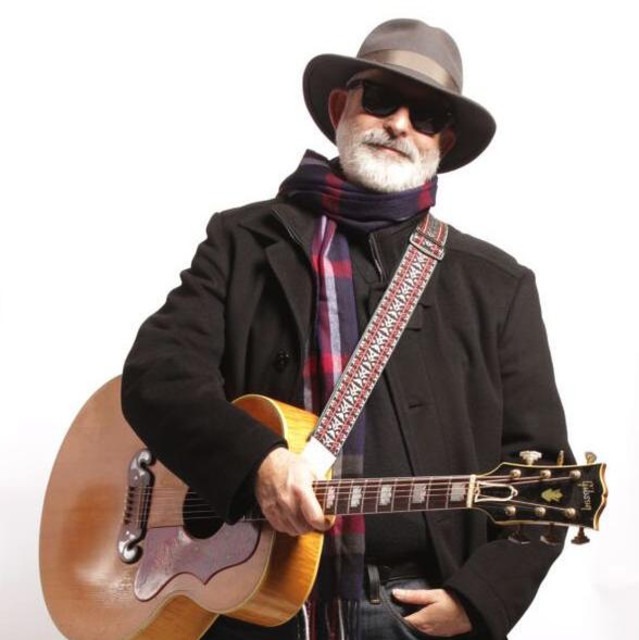
Jack Tempchin
Shake Russell
Timberline
Johnathan Edwards

The Robbin Thompson Band


McGuffey Lane

Paul Cotton

Bearfoot

Tom Jans

Bryndle
Wayne Berry