Data may be outdated
Last updated: 9 months ago — Click refresh to get the latest statistics.
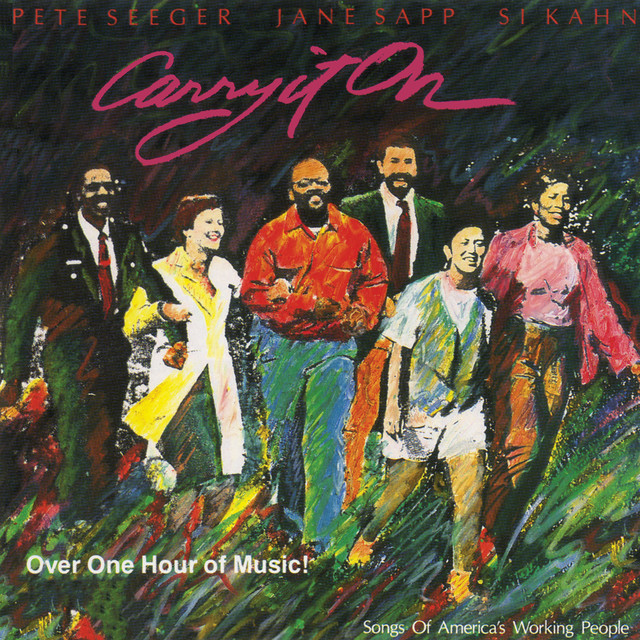
The political balladry of <a href="spotify:artist:4rAgFKtlTr66ic18YZZyF1">Woody Guthrie</a>, <a href="spotify:artist:55kipiKplrHBCZN6L1gtrv">Tom Paxton</a>, and <a href="spotify:artist:3JhQGw54MOytJP3GZ8KNPo">Phil Ochs</a> is reflected in the songs of North Carolina-based singer/songwriter Si Kahn. Although his love songs are nearly as effective, Kahn's greatest strides have come with his lyrical looks at the unemployed, the racially abused, the sexually harassed, and the working-class oppressed. Kahn's songs, including "Go to Work on Monday" and "Aragon Mill," have become labor union anthems. Together with singer/songwriter, <a href="spotify:artist:0TzlaraGqiaAfTjqTh96dc">John McCutcheon</a>, Kahn has written a number of family-oriented and topical tunes. Kahn and <a href="spotify:artist:0TzlaraGqiaAfTjqTh96dc">McCutcheon</a> collaborated on an album, Sign of the Times, in 1986. Kahn joined <a href="spotify:artist:1P9syEkl41IFowWIJN7ZBY">Pete Seeger</a> and Jane Sapp on a trio album, Carry It On: Songs of America's Working People, the same year.
The son of a rabbi and president of the national Hillel organization, Kahn was born in Massachusetts General Hospital in Boston and raised in Upstate College, a small Pennsylvania town (population 8,000). Music played a strong role in the Kahn household. Kahn's father played violin while his mother played piano. The family often gathered together to sing songs of the Jewish Liturgy. Although he briefly took piano lessons, Kahn had little interest in the instrument.
Kahn's involvement with American folk music was sparked shortly after moving, with his family, to Washington, D.C. in 1959. Discovering the Archive of Folk Music while researching an 11th grade term paper at the Smithsonian Institute, Kahn was hooked by what he heard on the Archive's tapes. Although he had previously preferred the blues of <a href="spotify:artist:4y6J8jwRAwO4dssiSmN91R">Muddy Waters</a> and the bluegrass of the <a href="spotify:artist:0qqGnmHBX2yVvCITRAvuRD">Stanley Brothers</a>, Kahn became enchanted by folk music's balladry. During his college freshman year, he traveled South with some friends to search for their musical roots. The experience culminated when Kahn, who acquired an inexpensive guitar, and his friends attended a folk festival in Asheville, North Carolina.
Continuing his education at Harvard University in Cambridge, Massachusetts, Kahn lived in a dorm that was a half-block from premier folk music coffeehouse Club 47. He became a frequent attendee of shows at the club. Although he played at several open mikes, Kahn remained drawn to politics, traveling South in 1965 to work with the civil rights movement. While there, he became aware of the connection between songs of Freedom and the folk songs he had heard at the Smithsonian.
Kahn was inspired to write his first songs in 1970, eventually, building a large enough repertoire to record a cassette that he passed out to friends. When a copy reached the attention of Jackie Wright, who was forming a folk music record label, <a href="spotify:search:label%3A%22June+Apple%22">June Apple</a>, Kahn was signed to record his debut album, New Wood, with a band, the <a href="spotify:search:label%3A%22Mountain+Music+Cooperative%22">Mountain Music Cooperative</a>, that included his future songwriting partner, <a href="spotify:artist:0TzlaraGqiaAfTjqTh96dc">John McCutcheon</a>. Shortly after performing his first major concert at the University of Chicago Folk Festival in 1979, Kahn was signed by Chicago-based label <a href="spotify:search:label%3A%22Flying+Fish%22">Flying Fish</a>. During the next 11 years, he recorded six albums for the label.
Kahn's prolific output includes more than music and songs. He has written three plays including, Mother Jones, based on the life of the early union organizer, which featured <a href="spotify:artist:3eygVwHBnCJUSs5yZ6hhdN">Ronnie Gilbert</a> of <a href="spotify:artist:4E5eAkpbJLO40r8fWNWm6X">the Weavers</a> in the title role when produced in the early '90s. Kahn has also authored two books on political organizing: How People Get Power and Organizing. Recorded during a 1993 concert, In My Heart: Live in Holland, celebrated the 20th anniversary of Kahn's first album and featured several of his best-known tunes. Profits from Kahn's concerts continue to be donated to Grassroots Leadership, a political organization he founded in the mid-'70s. ~ Craig Harris, Rovi
The son of a rabbi and president of the national Hillel organization, Kahn was born in Massachusetts General Hospital in Boston and raised in Upstate College, a small Pennsylvania town (population 8,000). Music played a strong role in the Kahn household. Kahn's father played violin while his mother played piano. The family often gathered together to sing songs of the Jewish Liturgy. Although he briefly took piano lessons, Kahn had little interest in the instrument.
Kahn's involvement with American folk music was sparked shortly after moving, with his family, to Washington, D.C. in 1959. Discovering the Archive of Folk Music while researching an 11th grade term paper at the Smithsonian Institute, Kahn was hooked by what he heard on the Archive's tapes. Although he had previously preferred the blues of <a href="spotify:artist:4y6J8jwRAwO4dssiSmN91R">Muddy Waters</a> and the bluegrass of the <a href="spotify:artist:0qqGnmHBX2yVvCITRAvuRD">Stanley Brothers</a>, Kahn became enchanted by folk music's balladry. During his college freshman year, he traveled South with some friends to search for their musical roots. The experience culminated when Kahn, who acquired an inexpensive guitar, and his friends attended a folk festival in Asheville, North Carolina.
Continuing his education at Harvard University in Cambridge, Massachusetts, Kahn lived in a dorm that was a half-block from premier folk music coffeehouse Club 47. He became a frequent attendee of shows at the club. Although he played at several open mikes, Kahn remained drawn to politics, traveling South in 1965 to work with the civil rights movement. While there, he became aware of the connection between songs of Freedom and the folk songs he had heard at the Smithsonian.
Kahn was inspired to write his first songs in 1970, eventually, building a large enough repertoire to record a cassette that he passed out to friends. When a copy reached the attention of Jackie Wright, who was forming a folk music record label, <a href="spotify:search:label%3A%22June+Apple%22">June Apple</a>, Kahn was signed to record his debut album, New Wood, with a band, the <a href="spotify:search:label%3A%22Mountain+Music+Cooperative%22">Mountain Music Cooperative</a>, that included his future songwriting partner, <a href="spotify:artist:0TzlaraGqiaAfTjqTh96dc">John McCutcheon</a>. Shortly after performing his first major concert at the University of Chicago Folk Festival in 1979, Kahn was signed by Chicago-based label <a href="spotify:search:label%3A%22Flying+Fish%22">Flying Fish</a>. During the next 11 years, he recorded six albums for the label.
Kahn's prolific output includes more than music and songs. He has written three plays including, Mother Jones, based on the life of the early union organizer, which featured <a href="spotify:artist:3eygVwHBnCJUSs5yZ6hhdN">Ronnie Gilbert</a> of <a href="spotify:artist:4E5eAkpbJLO40r8fWNWm6X">the Weavers</a> in the title role when produced in the early '90s. Kahn has also authored two books on political organizing: How People Get Power and Organizing. Recorded during a 1993 concert, In My Heart: Live in Holland, celebrated the 20th anniversary of Kahn's first album and featured several of his best-known tunes. Profits from Kahn's concerts continue to be donated to Grassroots Leadership, a political organization he founded in the mid-'70s. ~ Craig Harris, Rovi
Monthly Listeners
1,855
Monthly Listeners History
Track the evolution of monthly listeners over the last 28 days.
Followers
711
Followers History
Track the evolution of followers over the last 28 days.
Top Cities
118 listeners
98 listeners
40 listeners

38 listeners
34 listeners
Related Artists

Art Thieme

The New Golden Ring

Joe Hickerson

Roger Welsch

John Greenway

Will Brown
Lawrence Older
Fred Holstein

U. Utah Phillips

Tom Wisner

Stan Ransom the Connecticut Peddler

Stanley G. Triggs

Kendall Morse

Paul Kaplan
Grant Rogers

Julianne Macarus

Charlie King

Rick Lee

Bob Walser

Tom Paley's Old-Time Moonshine Revue

Logan English

Hermes Nye
Bob Franke

Vivien Richman

Harry Tuft

Work O' The Weavers

Jack Elliott

Sara Grey
The Red Clay Ramblers
Lorre Wyatt

Lost Radio Rounders

Ellen Stekert
Sally Rogers

David Sear

Bob Camp

Caroline Paton
Sandy Paton
