Data may be outdated
Last updated: 9 months ago — Click refresh to get the latest statistics.
As both a singer and vocal arranger, Tony Rivers had a part in two of the most overlooked bands of the 1960's U.K. music scene -- the beat group-turned surf aficionados Tony Rivers & the Castaways and the sunshine poppers <a href="spotify:artist:3Oiv1Zlx1vIOkZCqUKju2Z">Harmony Grass</a> -- then parlayed his skills into a long-running job with <a href="spotify:artist:2nvKpWcP8etYTq4JrRiUiy">Cliff Richard</a>, as well as appearing with <a href="spotify:artist:3PhoLpVuITZKcymswpck5b">Elton John</a> at Live Aid, recording with artists from <a href="spotify:artist:0k17h0D3J5VfsdmQ1iZtE9">Pink Floyd</a> to <a href="spotify:artist:5dcOK4stT4JDkP6Dqhbz5s">Sheena Easton</a>, and in 2005 working with his son on a <a href="spotify:artist:1N2FgBLehaq77UEdJhCt7f">Saint Etienne</a> album. No matter the project, Rivers' bright vocals and knack for how to put voices together in a pleasing fashion always came through, whether it was on <a href="spotify:artist:3Oiv1Zlx1vIOkZCqUKju2Z">Harmony Grass</a>' hit from 1969 "Move a Little Closer," where he took the lead, or on <a href="spotify:artist:2nvKpWcP8etYTq4JrRiUiy">Cliff Richard</a>'s soft rock ballad "Miss You Nights" where his backing vocal harmonies provide heavenly comfort.
Rivers, born Douglas Anthony Thompson in Shildon, County Dorset late in 1940, began singing professionally in 1961. Working in the kitchen at Butlins holiday camp that summer, he was able to sing a song with the band while their leader was on break. Once back in London, where his family had moved, he took the stage occasionally at his local pub with the house band. His singing caught the attention of local group the Cutaways, who were looking for a lead vocalist. It was at this point that he started using Tony Rivers and Tony Rivers and the Cutaways as stage names. They began playing gigs around town in mid-1962 with a style indebted to early rock & roll icons like <a href="spotify:artist:73sSFVlM6pkweLXE8qw1OS">Ricky Nelson</a> and <a href="spotify:artist:3wYyutjgII8LJVVOLrGI0D">Buddy Holly</a>. The group soon changed their name to Tony Rivers & The Castaways and with the help of their manager, were able to score auditions at both <a href="spotify:search:label%3A%22EMI%22">EMI</a> and <a href="spotify:search:label%3A%22Decca%22">Decca</a>. The former decided to sign them, and the group entered Abbey Road to record their first singles, the excitable rockers "Shake, Shake Shake" and "Row, Row, Row." Before its release the band shared a bill with <a href="spotify:artist:3WrFJ7ztbogyGnTHbHJFl2">the Beatles</a> at a small nightclub, impressing the Fab Four enough that they were invited to be a part of the 15th episode of BBC Radio's Pop Goes the Beatles show. The single was issued in October of 1963, starting a trend of artistically impressive records that failed to hit the top of the charts. By the middle of 1964, the group had begun to move away from the R&B-heavy sounds of the Beat scene in favor of the vocal harmony-heavy yet lighter approach of American bands like <a href="spotify:artist:3oDbviiivRWhXwIE8hxkVV">the Beach Boys</a>. When that band visited the U.K. in late 1964, the two groups struck up a lasting friendship. The Castaways were dealt a cruel blow soon after, however, when a van crash took the life of drummer Brian Talbot and injured everyone else. Rivers regrouped the next year to release the "She"/"Til We Get Home" single; the B-side of which was a spot-on pastiche of the kind of surfy California pop <a href="spotify:artist:3oDbviiivRWhXwIE8hxkVV">the Beach Boys</a> had perfected.
Their new sound piqued the attention of <a href="spotify:artist:3WrFJ7ztbogyGnTHbHJFl2">Beatles</a>' manager <a href="spotify:artist:2A3KGd7NkgkLzqudWj7jbc">Brian Epstein</a>, who signed the band to his NEMS Enterprises agency, as well as <a href="spotify:artist:22bE4uQ6baNwSHPVcDxLCe">Rolling Stones</a> producer <a href="spotify:artist:7osQlIEugmCDo8AXAyzlqq">Andrew Loog Oldham</a>, who inked them to his new label <a href="spotify:search:label%3A%22Immediate%22">Immediate</a>. He set them to work right away covering <a href="spotify:artist:3oDbviiivRWhXwIE8hxkVV">Beach Boys</a> songs and their versions of "The Girl from New York City" and "Girl Don't Tell Me' -- to which Rivers added a harmony vocal arrangement where one hadn't previously existed -- gave their idols a run for their money. Even with the powerful backing of two industry bigwigs, the band couldn't buy a hit. Undaunted, they continued to explore different styles in search of gold, covering oldies like "Charade," sounding cabaret-ready on "Graduation Day," and in a mild stroke of genius revamped an old <a href="spotify:artist:4NJhFmfw43RLBLjQvxDuRS">Mozart</a> tune into a harmony-laced mod pop on "Einer Kleiner Miser Musik." Nobody was able to hear it at the time, though, as it remained unreleased for years. Rivers and the band grew tired of their slumping career and were unhappy to find themselves confined to the cabaret circuit. Part of the group split off to be a part of <a href="spotify:artist:1NB6ttNPDxR31H2nH7a6b6">Grapefruit</a>, Rivers carried on with a new lineup and management, who rechristened the new group Rivers assembled <a href="spotify:artist:3Oiv1Zlx1vIOkZCqUKju2Z">Harmony Grass</a> in late 1969. Their first song, the horn-and-strings filled "Move a Little Closer" was the hit Rivers had been hoping for, climbing steadily up various U.K. charts until an obscure rule change stalled it in its tracks. Further singles didn't do as well, and by the time the group released their one and only album, This Is Us, in 1970, there wasn't much of an audience for their sound, even though they had expanded confidently into <a href="spotify:artist:1CYsQCypByMVgnv17qsSbQ">CSN&Y</a> territory on a few tracks. After this disappointment, Rivers left the band in July of 1970. While <a href="spotify:artist:3Oiv1Zlx1vIOkZCqUKju2Z">Harmony Grass</a> issued one more single without him, he moved into a production role at <a href="spotify:search:label%3A%22CBS+Records%22">CBS Records</a>, then began releasing singles under different names in the first half of the decade. Some of the names he traded under were <a href="spotify:artist:4BXBbDdVd12IukZcUfRWFy">Summer Wine</a>, Indiana, River, Shine, and Hollywood Freeway; despite his efforts, no hits were forthcoming. He also stayed busy working as a backing singer for artists as diverse as <a href="spotify:artist:5odf7hjI7hyvAw66tmxhGF">Roger Daltrey</a> and <a href="spotify:artist:0DW7boyjvbaSP3OJ72sXgC">Al Stewart</a>, providing vocals for budget Top of the Pops collections and TV themes, and working as <a href="spotify:artist:2nvKpWcP8etYTq4JrRiUiy">Cliff Richard</a>'s musical director and chief backing vocalist from 1976 to 1985. He then shifted to <a href="spotify:artist:0wi4yTYlGtEnbGo4ltZTib">Shakin' Stevens</a>' band, backed <a href="spotify:artist:3PhoLpVuITZKcymswpck5b">Elton John</a> at Live Aid, and continued to work into the '90s with artists like <a href="spotify:artist:0AD4odMWVQ2wUSlgxOB5Rl">Jeff Beck</a> and <a href="spotify:artist:2DmyIp3IBWUwRukba22G3n">Nick Heyward</a>.
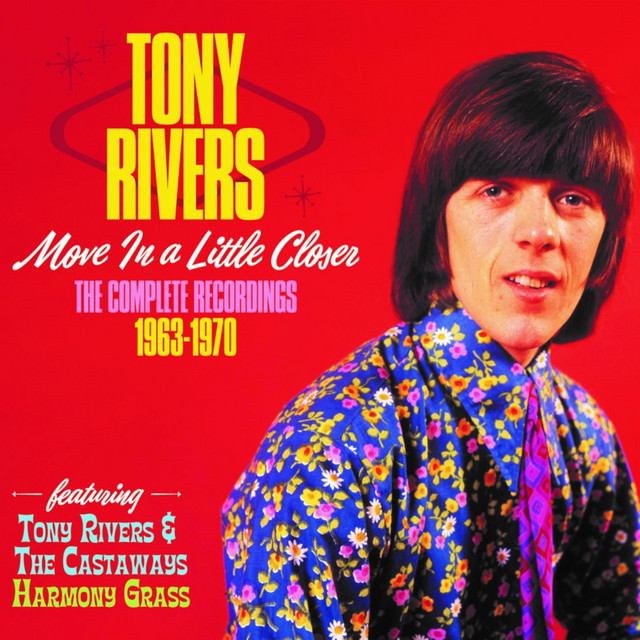
At the end of the decade <a href="spotify:search:label%3A%22RPM+Records%22">RPM Records</a> reissued most of Rivers' work from the '60s. The Tony Rivers Collection, Vol 1: Castaways and The Tony Rivers Collection, Vol. 2: Harmony Grass brought his music to a new generation of listeners. The next year they delved into his work in the '70s with The Tony Rivers Collection, Vol. 3: Harmony Soul. One fan of his work was <a href="spotify:artist:1N2FgBLehaq77UEdJhCt7f">Saint Etienne</a>'s Bob Stanley, who called in Rivers and his son <a href="spotify:artist:7hN1aI9crOW3OqSzXNTY3B">Anthony</a> to add vocals and arrangements to the group's 2005 album Tales from Turnpike House. In 2019, Rivers published a memoir titled I'm Nearly Famous; The Tales of a Likely Lad, that covered his whole career with a focus on his years with <a href="spotify:artist:2nvKpWcP8etYTq4JrRiUiy">Cliff Richard</a>. Musically, another look back was taken when <a href="spotify:search:label%3A%22Grapefruit+Records%22">Grapefruit Records</a> released Move a Little Closer: The Complete Recordings 1963-1970. It featured all the recordings made by the Castaways and <a href="spotify:artist:3Oiv1Zlx1vIOkZCqUKju2Z">Harmony Grass</a>, as well as a selection of BBC recordings made by both groups. It helped solidify Rivers' position as one of the great underrated singers and vocal arrangers of his era. ~ Tim Sendra, Rovi
Rivers, born Douglas Anthony Thompson in Shildon, County Dorset late in 1940, began singing professionally in 1961. Working in the kitchen at Butlins holiday camp that summer, he was able to sing a song with the band while their leader was on break. Once back in London, where his family had moved, he took the stage occasionally at his local pub with the house band. His singing caught the attention of local group the Cutaways, who were looking for a lead vocalist. It was at this point that he started using Tony Rivers and Tony Rivers and the Cutaways as stage names. They began playing gigs around town in mid-1962 with a style indebted to early rock & roll icons like <a href="spotify:artist:73sSFVlM6pkweLXE8qw1OS">Ricky Nelson</a> and <a href="spotify:artist:3wYyutjgII8LJVVOLrGI0D">Buddy Holly</a>. The group soon changed their name to Tony Rivers & The Castaways and with the help of their manager, were able to score auditions at both <a href="spotify:search:label%3A%22EMI%22">EMI</a> and <a href="spotify:search:label%3A%22Decca%22">Decca</a>. The former decided to sign them, and the group entered Abbey Road to record their first singles, the excitable rockers "Shake, Shake Shake" and "Row, Row, Row." Before its release the band shared a bill with <a href="spotify:artist:3WrFJ7ztbogyGnTHbHJFl2">the Beatles</a> at a small nightclub, impressing the Fab Four enough that they were invited to be a part of the 15th episode of BBC Radio's Pop Goes the Beatles show. The single was issued in October of 1963, starting a trend of artistically impressive records that failed to hit the top of the charts. By the middle of 1964, the group had begun to move away from the R&B-heavy sounds of the Beat scene in favor of the vocal harmony-heavy yet lighter approach of American bands like <a href="spotify:artist:3oDbviiivRWhXwIE8hxkVV">the Beach Boys</a>. When that band visited the U.K. in late 1964, the two groups struck up a lasting friendship. The Castaways were dealt a cruel blow soon after, however, when a van crash took the life of drummer Brian Talbot and injured everyone else. Rivers regrouped the next year to release the "She"/"Til We Get Home" single; the B-side of which was a spot-on pastiche of the kind of surfy California pop <a href="spotify:artist:3oDbviiivRWhXwIE8hxkVV">the Beach Boys</a> had perfected.
Their new sound piqued the attention of <a href="spotify:artist:3WrFJ7ztbogyGnTHbHJFl2">Beatles</a>' manager <a href="spotify:artist:2A3KGd7NkgkLzqudWj7jbc">Brian Epstein</a>, who signed the band to his NEMS Enterprises agency, as well as <a href="spotify:artist:22bE4uQ6baNwSHPVcDxLCe">Rolling Stones</a> producer <a href="spotify:artist:7osQlIEugmCDo8AXAyzlqq">Andrew Loog Oldham</a>, who inked them to his new label <a href="spotify:search:label%3A%22Immediate%22">Immediate</a>. He set them to work right away covering <a href="spotify:artist:3oDbviiivRWhXwIE8hxkVV">Beach Boys</a> songs and their versions of "The Girl from New York City" and "Girl Don't Tell Me' -- to which Rivers added a harmony vocal arrangement where one hadn't previously existed -- gave their idols a run for their money. Even with the powerful backing of two industry bigwigs, the band couldn't buy a hit. Undaunted, they continued to explore different styles in search of gold, covering oldies like "Charade," sounding cabaret-ready on "Graduation Day," and in a mild stroke of genius revamped an old <a href="spotify:artist:4NJhFmfw43RLBLjQvxDuRS">Mozart</a> tune into a harmony-laced mod pop on "Einer Kleiner Miser Musik." Nobody was able to hear it at the time, though, as it remained unreleased for years. Rivers and the band grew tired of their slumping career and were unhappy to find themselves confined to the cabaret circuit. Part of the group split off to be a part of <a href="spotify:artist:1NB6ttNPDxR31H2nH7a6b6">Grapefruit</a>, Rivers carried on with a new lineup and management, who rechristened the new group Rivers assembled <a href="spotify:artist:3Oiv1Zlx1vIOkZCqUKju2Z">Harmony Grass</a> in late 1969. Their first song, the horn-and-strings filled "Move a Little Closer" was the hit Rivers had been hoping for, climbing steadily up various U.K. charts until an obscure rule change stalled it in its tracks. Further singles didn't do as well, and by the time the group released their one and only album, This Is Us, in 1970, there wasn't much of an audience for their sound, even though they had expanded confidently into <a href="spotify:artist:1CYsQCypByMVgnv17qsSbQ">CSN&Y</a> territory on a few tracks. After this disappointment, Rivers left the band in July of 1970. While <a href="spotify:artist:3Oiv1Zlx1vIOkZCqUKju2Z">Harmony Grass</a> issued one more single without him, he moved into a production role at <a href="spotify:search:label%3A%22CBS+Records%22">CBS Records</a>, then began releasing singles under different names in the first half of the decade. Some of the names he traded under were <a href="spotify:artist:4BXBbDdVd12IukZcUfRWFy">Summer Wine</a>, Indiana, River, Shine, and Hollywood Freeway; despite his efforts, no hits were forthcoming. He also stayed busy working as a backing singer for artists as diverse as <a href="spotify:artist:5odf7hjI7hyvAw66tmxhGF">Roger Daltrey</a> and <a href="spotify:artist:0DW7boyjvbaSP3OJ72sXgC">Al Stewart</a>, providing vocals for budget Top of the Pops collections and TV themes, and working as <a href="spotify:artist:2nvKpWcP8etYTq4JrRiUiy">Cliff Richard</a>'s musical director and chief backing vocalist from 1976 to 1985. He then shifted to <a href="spotify:artist:0wi4yTYlGtEnbGo4ltZTib">Shakin' Stevens</a>' band, backed <a href="spotify:artist:3PhoLpVuITZKcymswpck5b">Elton John</a> at Live Aid, and continued to work into the '90s with artists like <a href="spotify:artist:0AD4odMWVQ2wUSlgxOB5Rl">Jeff Beck</a> and <a href="spotify:artist:2DmyIp3IBWUwRukba22G3n">Nick Heyward</a>.
At the end of the decade <a href="spotify:search:label%3A%22RPM+Records%22">RPM Records</a> reissued most of Rivers' work from the '60s. The Tony Rivers Collection, Vol 1: Castaways and The Tony Rivers Collection, Vol. 2: Harmony Grass brought his music to a new generation of listeners. The next year they delved into his work in the '70s with The Tony Rivers Collection, Vol. 3: Harmony Soul. One fan of his work was <a href="spotify:artist:1N2FgBLehaq77UEdJhCt7f">Saint Etienne</a>'s Bob Stanley, who called in Rivers and his son <a href="spotify:artist:7hN1aI9crOW3OqSzXNTY3B">Anthony</a> to add vocals and arrangements to the group's 2005 album Tales from Turnpike House. In 2019, Rivers published a memoir titled I'm Nearly Famous; The Tales of a Likely Lad, that covered his whole career with a focus on his years with <a href="spotify:artist:2nvKpWcP8etYTq4JrRiUiy">Cliff Richard</a>. Musically, another look back was taken when <a href="spotify:search:label%3A%22Grapefruit+Records%22">Grapefruit Records</a> released Move a Little Closer: The Complete Recordings 1963-1970. It featured all the recordings made by the Castaways and <a href="spotify:artist:3Oiv1Zlx1vIOkZCqUKju2Z">Harmony Grass</a>, as well as a selection of BBC recordings made by both groups. It helped solidify Rivers' position as one of the great underrated singers and vocal arrangers of his era. ~ Tim Sendra, Rovi
Monthly Listeners
997
Monthly Listeners History
Track the evolution of monthly listeners over the last 28 days.
Followers
244
Followers History
Track the evolution of followers over the last 28 days.
Top Cities
35 listeners

19 listeners

15 listeners
12 listeners

10 listeners
Related Artists

Love Generation
The Innocence

The Pleasure Fair
Candy Choir

The Match

Michael Rabon & The Five Americans

The Astral Projection

Pythagoras Theorem

The Eighth Day
The Munx

Espirit De Corps
Uncle Sound

Sixpentz

Doug Randle

Don Grady

Bunky

The Alan Copeland Conspiracy
The Other Voices

Joyfull Noise

The Sands of Time

Augie Moreno
Twinn Connexion
Don Agrati
Cat
Orange Colored Sky


The Alan Copeland Singers

3's a Crowd
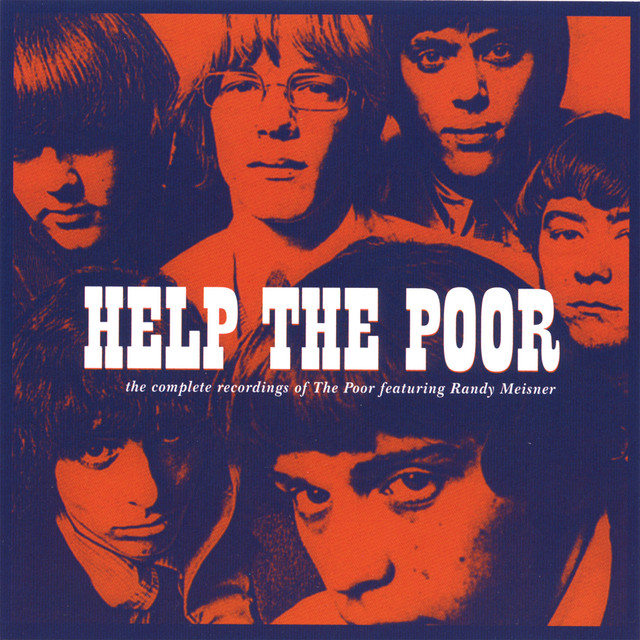
The Poor
The Montanas

The Pipe Dream

Bergen White
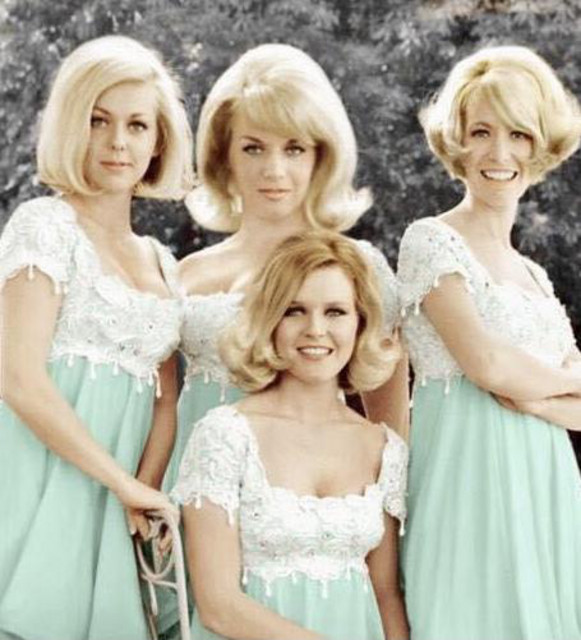
The Four King Cousins

Roger Nichols & the Small Circle of Friends

