Data may be outdated
Last updated: 9 months ago — Click refresh to get the latest statistics.
An enigmatic character in the history of music, Haussmann had no difficulty in finding a station wherever he went. It seems that he did not hold one position for a lengthy period of time but pursued travels, composition and editing thoughout Germany. He collected, edited and published a series of Polish dances and much of his music, at least according to his descriptions, was informed by the Polish dance. His anthologies contained and disseminated a great deal of information concerning Italian pieces, Polish dances, and texts as well as music from <a href="spotify:artist:0z1XjvxOaFNkmNAM5mTAFZ">Gastoldi</a>, <a href="spotify:artist:3M0Vsjmhfly4PRGywWmNYX">Marenzio</a>, <a href="spotify:artist:7u13Tj34GMs3CELoFpTxSL">Vecchi</a> and others. Haussmann's dance collections were precursors to those of Hasler and <a href="spotify:artist:73F8j7xZAuxkhDDfhPGGBu">Demantius</a>; he considered the pavan and galliard pairs (instrumentally) as single pieces of music and in his collections he would occasionally compose the music and/or write the texts himself. Instrumentally he was the first known German to score for the violin in the upper part. Up until Haussmann the position which he afforded the violin would have been played by the viol. His fugues in the "Fuga prima" are historically significant in the further development of the fugal form. Illustrating the popularity of his musical pieces were numerous transcriptions of his dances for the use of his songs in anthologies and transcriptions into lute intablatures. ~ Keith Johnson, Rovi
Monthly Listeners
376
Monthly Listeners History
Track the evolution of monthly listeners over the last 28 days.
Followers
68
Followers History
Track the evolution of followers over the last 28 days.
Top Cities
12 listeners

11 listeners

8 listeners
7 listeners

5 listeners

Related Artists
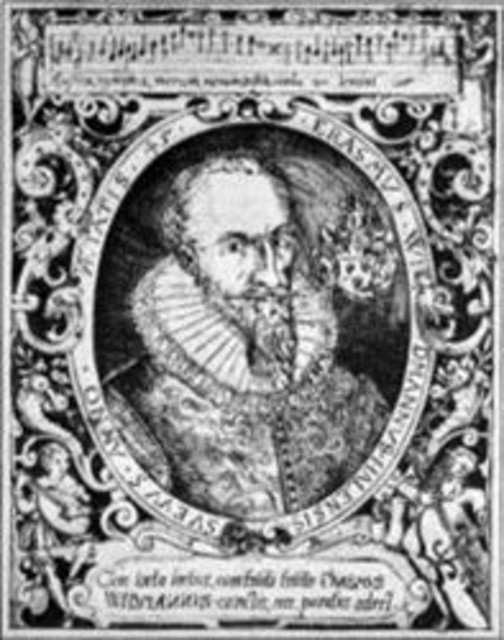
Erasmus Widmann
Filles a marier

Janette Floel
Jacques Moderne
Pierre Phalèse the Elder
The Morley Consort

Tonkünstlerensemble
Praetorius Consort
Étienne Du Tertre
Michel Praetorius
Collegium Musicum Aldovadensis
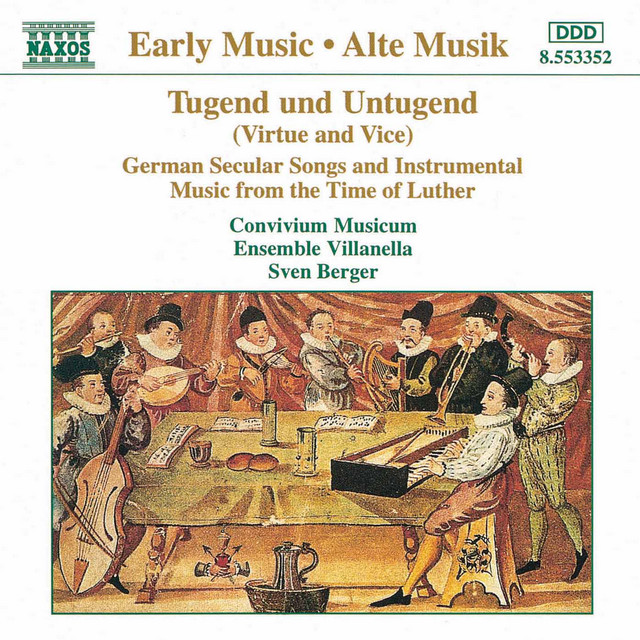
Ensemble Villanella
Hans Kotter
Francesco de la Torre
Pierre Phalèse
Early Music Consort of London/David Munrow
Jean d'Estrées
Edmund Kete
Siegfried Fink
Nicholas le Strange
de Terte

Syntagma Musicum
Bernard Krainis
Pierre Phalese
Ottaviano Petrucci
French 13th Cent.
Ja. Paix
Richard Nicholson
Cesare Negri
Conrad Paumann
Antonio Cornazzano
The Mulliner Book
anon arr Alan Crumpler
André Philidor
The Shakespeare's Globe Theatre Company, London
Norbert Zeilberger
