Data may be outdated
Last updated: 9 months ago — Click refresh to get the latest statistics.
Following childhood and student days filled with associations with prominent Central European musicians, Vilém Tauský achieved success as a coach and conductor -- and on occasion -- as a composer. When the Nazis overwhelmed Czechoslovakia, Tauský made an escape to the West, settling in England where he became an important figure in the nation's musical life for more than a half century. For the breadth and quality of his achievements, Tauský has received numerous awards and citations. The son of a Czech doctor and a mother who had sung under the baton of <a href="spotify:artist:2ANtgfhQkKpsW6EYSDqldz">Gustav Mahler</a>, Tauský spent his earliest years avidly following the local brass bands that performed on Sundays. By age seven, he had sufficiently learned piano enough to accompany both his mother and Magda Santrucek, the daughter of <a href="spotify:artist:6n7nd5iceYpXVwcx8VPpxF">Antonín Dvorák</a>. He counted <a href="spotify:artist:0cM8NUhUJpM5F1q96tndP7">Rudolf Firkusný</a>, later recognized as Czechoslovakia's premier pianist, among his friends. After beginning his studies in law at Brno University, he transferred to the Janácek Conservatory, gaining entrance there by submitting a cello sonata written when he was 15, and benefiting from instruction under <a href="spotify:artist:46xXzoOdtD7SL2PTRq5irp">Janácek</a> himself. The composition written for his degree won a state prize and entrance into Prague's Meisterschule, where he studied with <a href="spotify:artist:6xV7WL4etX4sILBdTz6fYN">Josef Suk</a> and <a href="spotify:artist:3b5GNQNWgJ3b3ddPpSvCSX">Zdenek Chalabala</a>. After joining the Brno Opera at age 18 (while still a student), Tauský was called upon the following year to take over a performance from <a href="spotify:artist:3b5GNQNWgJ3b3ddPpSvCSX">Chalabala</a>, leading <a href="spotify:artist:5cFoaoS38WBzMmMU8lrZFL">Zinka Kuncová</a> (later known as <a href="spotify:artist:5cFoaoS38WBzMmMU8lrZFL">Zinka Milanov</a>) and <a href="spotify:artist:71exK6ISISg9eRrNY78uMW">Jan Kiepura</a> in Turandot. Soon thereafter, the young conductor led <a href="spotify:artist:1A6JXyIYY4ZhWxdLTLt3kR">Chaliapin</a> in Boris Godounov and <a href="spotify:artist:7IPE1DKqWUlGlCPFcM162L">Jarmila Novotná</a> in La traviata. Other subsequent projects included extensive performances with the ballet, conducting the premiere of <a href="spotify:artist:6n7nd5iceYpXVwcx8VPpxF">Dvorák</a>'s recently discovered Symphony No. 1, composing four operettas, working with composer <a href="spotify:artist:2cN9SgfyZo6l6TijoewUaZ">Bohuslav Martinù</a>, and leading the premiere of <a href="spotify:artist:5sxqkehMzCuzt4F9nBytun">Tcherepnin</a>'s opera Vanka. Following the German occupation, Tauský undertook a hair-raising escape through Paris to England, arriving there aboard a Yugoslav coal hauler. Upon the formation of a Czech Army choir, Tauský directed concerts in all parts of England, often inviting such luminaries as <a href="spotify:artist:0cM8NUhUJpM5F1q96tndP7">Firkusný</a> and <a href="spotify:artist:0MQyjuZSqwUlAmWo7bryry">Witold Malcuzynski</a> as guests. In 1945, he was appointed music director at the Carl Rosa Opera, debuting there with Tosca and remaining with the company until 1949. After serving in three BBC appointments (the Manchester Variety Orchestra assignment had him working with such performers as Benny Hill and <a href="spotify:artist:3Ld1hAQ5LWFw46Pv8VS5tP">Gracie Fields</a>), he became music director for the Welsh Opera Company (now the Welsh National Opera), at the same time serving with the National School of Opera. The year of his W.N.O. appointment, 1951, also brought his debut at the Royal Opera, where he led a Pique Dame featuring Edith Coates and later conducted performances of Il Trovatore, Tosca, and Salome. In July 1953, Tauský joined the Sadler's Wells Opera Company, leading a performance of Hansel and Gretel in English and later directing the premiere of <a href="spotify:artist:2V0VrZFIcWB3jB8FXrYyQs">Lennox Berkeley</a>'s Nelson. In 1954, he was invited by <a href="spotify:artist:7MJ1pB5d6Vjmzep2zQlorn">Benjamin Britten</a> and <a href="spotify:artist:2B4N612xGjNj2cAAYsP4MO">Peter Pears</a> to organize the schedule for the English Opera Group that year and beyond. The following year, he conducted a complete cycle of <a href="spotify:artist:2cN9SgfyZo6l6TijoewUaZ">Martinù</a>'s symphonies for the BBC, in the process of which he re-established contact with the composer. From 1956 to 1967, Tauský served as conductor of the <a href="spotify:artist:3dIPaddbWppnquuPkcYVDg">BBC Concert Orchestra</a>, leading that ensemble in a broad range of light music and premiering his march, Men of Tomorrow, with them. From 1966 to 1992, Tauský was head of the opera department at the Guildhall School of Music.
Monthly Listeners
5,083
Monthly Listeners History
Track the evolution of monthly listeners over the last 28 days.
Followers
47
Followers History
Track the evolution of followers over the last 28 days.
Top Cities
119 listeners

86 listeners

81 listeners
73 listeners

73 listeners
Related Artists
Grand Philharmonia Orchestra
Chor der Staatsoper Dresden
The Royal Alhambra Orchestra

Nederica Stepan

Alphons Czibulka
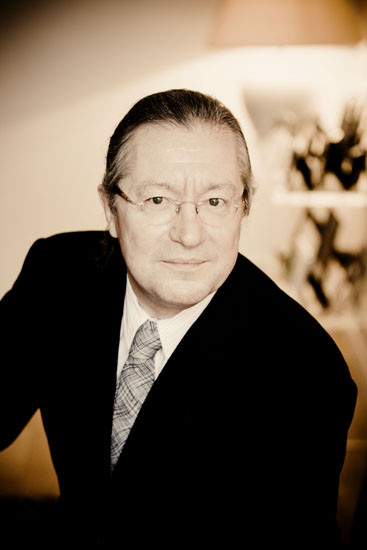

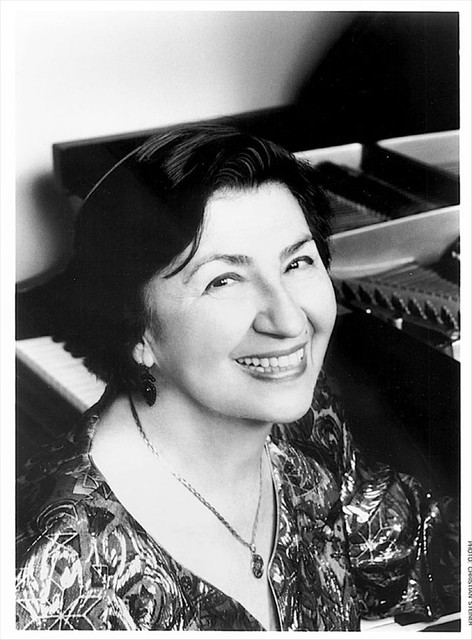
Bella Davidovich
Hamburg Radio Symphony Orchestra

St. Mark's Philharmonic Orchestra


John Oakman
Great Festival Orchestra

Leonard Pennario
Radio-Sinfonie-Orchester Frankfurt

Berliner Symphoniker Orchestra

Armonie Chamber Orchestra, Violino: Larisa Mochalin, Clavicembalo: Lyudmila Sapochikova
Stockholm Chamber Duo