Data may be outdated
Last updated: 9 months ago — Click refresh to get the latest statistics.
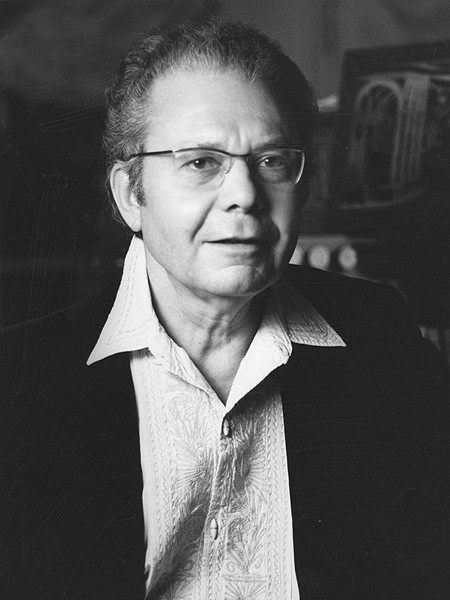
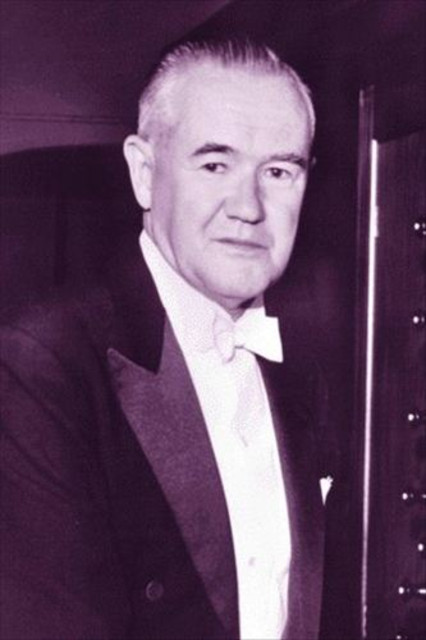
Virgil Fox was one of the most popular and accomplished classical organists of his time. He often generated controversy because of his flamboyant performance style, which involved the use of lights during live performances and often liberal changes to the scores he was playing. Yet Fox, a brilliant technician and insightful interpreter, maintained broad appeal and never used ostentation or eccentricity to camouflage diminishing technique or failing skills.
By age ten, Virgil Keel Fox had developed sufficient skills to serve as organist at local church services, and after four more years he displayed virtuoso skills in his first public concert, in Cincinnati. At age 16, he began studying with <a href="spotify:artist:4QxyjQ2W04CajT8eBNSJaj">Wilhelm Middelschulte</a>, then organist of the <a href="spotify:artist:6TD08jYeuN128P2MZTbc8E">Chicago Orchestra</a> (now the <a href="spotify:artist:6TD08jYeuN128P2MZTbc8E">Chicago Symphony Orchestra</a>). In 1929, Fox won first prize in the National Federation of Music Clubs' Biennial Contest, held in Boston. Fox gave two particularly prestigious recitals at age 19, the first in London's Kingway Hall and the latter in Carnegie Hall, audiences on both sides of the Atlantic greeting his performances with enthusiasm. He enrolled at the Peabody School of Music in Baltimore in 1931, where he studied organ with Louis Robert. He graduated one year later with an artist's diploma, then traveled to France where he studied from 1931-1933 with <a href="spotify:artist:1wyuV2UwDaVUPcvuC8YG68">Marcel Dupré</a>. In 1938, Fox returned to Peabody as head of the organ department, a post he retained until 1942, when he enlisted in the military service. As a member of the Army Air Force, Fox gave numerous recitals during the war to draw financial support for the Allied effort. He was discharged in 1946 and that year accepted the position as organist of New York's Riverside Church, where he remained until 1965. There he cultivated much of his trademark flamboyance. Over the years, Fox performed three times at the White House, ironically enough it was on the piano. In 1952, he was selected to represent the U.S. State Department in Bern, Switzerland, at the First International Conference of Sacred Music. Fox participated in one of the most memorable organ concerts in New York's history when he joined <a href="spotify:artist:32R0HxKDGYfnWueXYps3lf">E. Power Biggs</a> and Catharine Crozier in 1962 to play in the inaugural concert for the <a href="spotify:artist:3gacryguGmpmCvgPGt2CBI">New York Philharmonic</a>'s new organ at Philharmonic Hall (Lincoln Center). By this time, Fox was already active in the recording studio, turning out numerous LPs of music, from <a href="spotify:artist:5aIqB5nVVvmFsvSdExz408">Bach</a> and <a href="spotify:artist:1QL7yTHrdahRMpvNtn6rI2">Handel</a> to <a href="spotify:artist:6203wnH5ZX6U1s3CYacHKx">Fibich</a> and <a href="spotify:artist:3OUYF2xT6RlgU2Ut64ikpH">Jongen</a>. He made around 60 recordings in his lifetime, many of which are still available in various reissues on a number of labels. Fox's accomplishments were recognized in the academic world when he received an honorary doctorate degree from Bucknell University, in Lewisburg, PA, in 1963, and a Distinguished Alumni Award from the Peabody Conservatory in 1964. He helped design the new Rodgers organ for Carnegie Hall and gave the instrument's inaugural recital in 1974. Three years later, he gave a memorable sold-out <a href="spotify:artist:5aIqB5nVVvmFsvSdExz408">Bach</a> concert at the Kennedy Center. Typically, Fox would tour the country during these years playing a large Rodgers electronic organ and provide lighting effects to accompany his performances. In 1976, Fox was diagnosed with cancer and succumbed four years later in Palm Beach, FL. Amazingly, despite his deteriorating health, Fox, known to be strong-willed and deeply religious, performed his last concert only a month before, on September 26, at the opening concert of the 1980-1981 season of the <a href="spotify:artist:30ywQdA4ElkX92wuEe9YdP">Dallas Symphony Orchestra</a>.
By age ten, Virgil Keel Fox had developed sufficient skills to serve as organist at local church services, and after four more years he displayed virtuoso skills in his first public concert, in Cincinnati. At age 16, he began studying with <a href="spotify:artist:4QxyjQ2W04CajT8eBNSJaj">Wilhelm Middelschulte</a>, then organist of the <a href="spotify:artist:6TD08jYeuN128P2MZTbc8E">Chicago Orchestra</a> (now the <a href="spotify:artist:6TD08jYeuN128P2MZTbc8E">Chicago Symphony Orchestra</a>). In 1929, Fox won first prize in the National Federation of Music Clubs' Biennial Contest, held in Boston. Fox gave two particularly prestigious recitals at age 19, the first in London's Kingway Hall and the latter in Carnegie Hall, audiences on both sides of the Atlantic greeting his performances with enthusiasm. He enrolled at the Peabody School of Music in Baltimore in 1931, where he studied organ with Louis Robert. He graduated one year later with an artist's diploma, then traveled to France where he studied from 1931-1933 with <a href="spotify:artist:1wyuV2UwDaVUPcvuC8YG68">Marcel Dupré</a>. In 1938, Fox returned to Peabody as head of the organ department, a post he retained until 1942, when he enlisted in the military service. As a member of the Army Air Force, Fox gave numerous recitals during the war to draw financial support for the Allied effort. He was discharged in 1946 and that year accepted the position as organist of New York's Riverside Church, where he remained until 1965. There he cultivated much of his trademark flamboyance. Over the years, Fox performed three times at the White House, ironically enough it was on the piano. In 1952, he was selected to represent the U.S. State Department in Bern, Switzerland, at the First International Conference of Sacred Music. Fox participated in one of the most memorable organ concerts in New York's history when he joined <a href="spotify:artist:32R0HxKDGYfnWueXYps3lf">E. Power Biggs</a> and Catharine Crozier in 1962 to play in the inaugural concert for the <a href="spotify:artist:3gacryguGmpmCvgPGt2CBI">New York Philharmonic</a>'s new organ at Philharmonic Hall (Lincoln Center). By this time, Fox was already active in the recording studio, turning out numerous LPs of music, from <a href="spotify:artist:5aIqB5nVVvmFsvSdExz408">Bach</a> and <a href="spotify:artist:1QL7yTHrdahRMpvNtn6rI2">Handel</a> to <a href="spotify:artist:6203wnH5ZX6U1s3CYacHKx">Fibich</a> and <a href="spotify:artist:3OUYF2xT6RlgU2Ut64ikpH">Jongen</a>. He made around 60 recordings in his lifetime, many of which are still available in various reissues on a number of labels. Fox's accomplishments were recognized in the academic world when he received an honorary doctorate degree from Bucknell University, in Lewisburg, PA, in 1963, and a Distinguished Alumni Award from the Peabody Conservatory in 1964. He helped design the new Rodgers organ for Carnegie Hall and gave the instrument's inaugural recital in 1974. Three years later, he gave a memorable sold-out <a href="spotify:artist:5aIqB5nVVvmFsvSdExz408">Bach</a> concert at the Kennedy Center. Typically, Fox would tour the country during these years playing a large Rodgers electronic organ and provide lighting effects to accompany his performances. In 1976, Fox was diagnosed with cancer and succumbed four years later in Palm Beach, FL. Amazingly, despite his deteriorating health, Fox, known to be strong-willed and deeply religious, performed his last concert only a month before, on September 26, at the opening concert of the 1980-1981 season of the <a href="spotify:artist:30ywQdA4ElkX92wuEe9YdP">Dallas Symphony Orchestra</a>.
Monthly Listeners
8,320
Monthly Listeners History
Track the evolution of monthly listeners over the last 28 days.
Followers
1,744
Followers History
Track the evolution of followers over the last 28 days.
Top Cities
161 listeners
128 listeners
113 listeners
108 listeners
99 listeners
Related Artists
Percy Fletcher

Louis James Alfred Lefébure-Wély

Hans Fagius

David M Patrick
Jules Grison


Léon Boëllmann
Xaver Varnus

Douglas Major
Philippe Lefebvre
James Flores
Sigfrid Karg-Elert
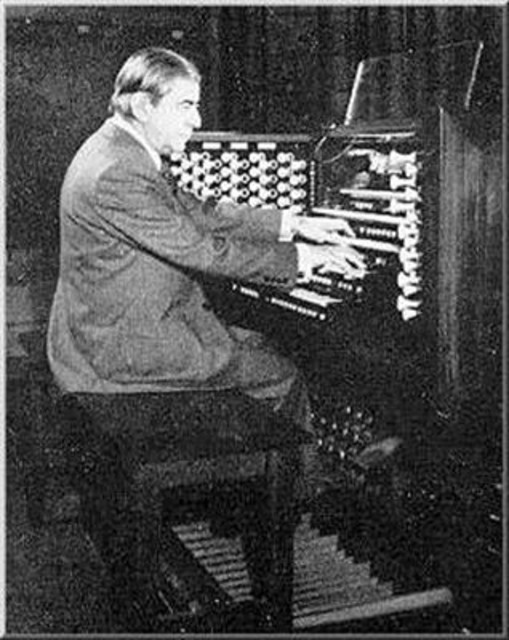
Arturo Sacchetti

Jan Lehtola
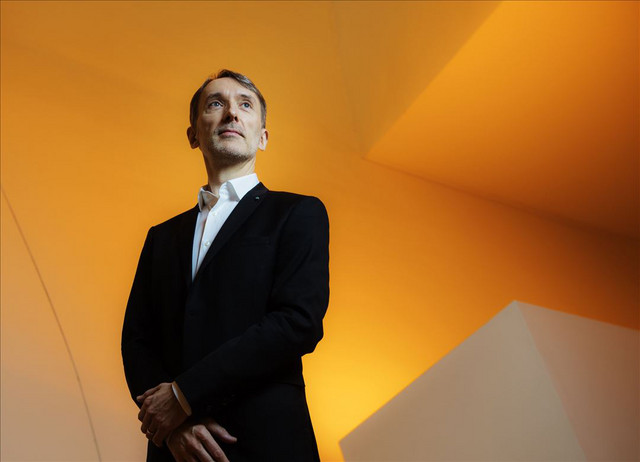

Hans Vollenweider

Johannes Somary

Organist Giles Taylor
Alan Morrison

Thomas Murray

Louis Vierne

Joachim Dorfmuller

Frederick Swann
Miklós Teleki

Gottfried Reiche
Gerhard Weinberger