Country
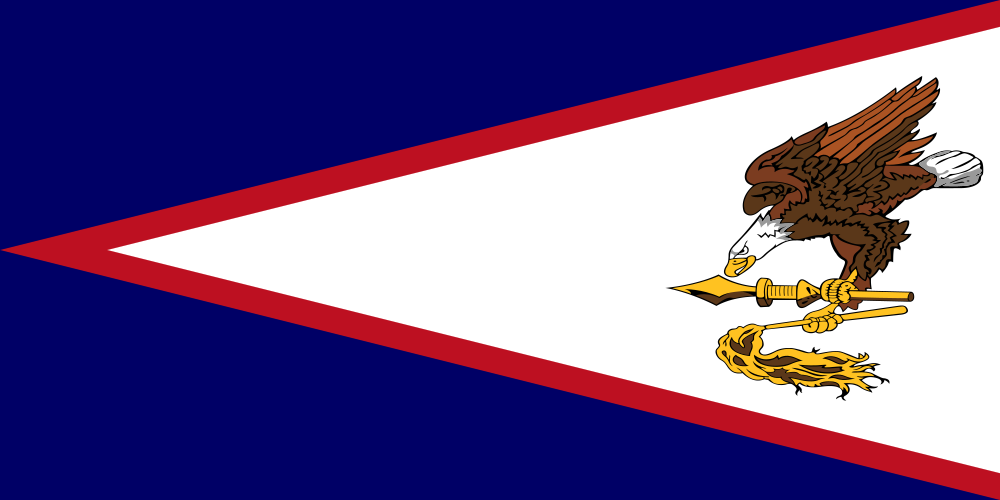
American Samoa
Top Artists from American Samoa
About American Samoa
American Samoa is a U.S. territory in the South Pacific, a lush and rugged archipelago dominated by Tutuila and the picturesque Pago Pago harbor. With a population of about 49,710 people (the 2020 census figure), the islands are small in size but vast in cultural richness. Music is woven into daily life here, from early-morning church hymns to energetic gatherings under starlit skies. For music enthusiasts, American Samoa offers a living, breathing tradition that blends ancient storytelling with contemporary rhythms.
Traditional soundscapes form the heart of the island’s musical identity. Song and chant are used to mark rites of passage, welcome visitors, and tell family histories. The rhythm of the drum and the call-and-response singing that accompanies dance create a sense of communal memory that many listeners find instantly transporting. One of the standout features of Samoan music is the emphasis on collective vocal harmony, often performed in long, resonant phrases that carry stories across generations. In many performances, singers support and challenge each other in a friendly vocal exchange, a dynamic that makes live shows feel like conversations with the past.
Dance is inseparable from music in American Samoa. Taualuga, a celebrated traditional dance, typically closes formal performances and ceremonies with a graceful, dramatic display that mingles song, hand gestures, and precise footwork. The accompanying dances and drumming provide a physical, visual expression of the territory’s stories and values. While formal stages host majesty and ritual, everyday social events—church gatherings, school performances, and family celebrations—also turn into intimate showcases where audiences experience the warmth and spontaneity of Samoan music.
The soundscape is enriched by a variety of instruments and textures. Percussion remains central, with drums that set a heartbeat for the group and create a shared pulse that audiences can feel as much as hear. Singing often carries a strong, emotional timbre, reflecting the islanders’ deep connection to family, land, and history. Church music, in particular, plays a crucial role, mixing traditional harmonies with modern arrangements and serving as a platform for community singing and musical development.
American Samoa also hosts recurring events that highlight music and performance. Flag Day celebrations, held each year, are a focal point for public music, dance, and cultural display, drawing participants from across the islands to parades, performances, and communal festivities. Beyond that, numerous cultural festivals, school concerts, and church events showcase the territory’s musical vitality, from intimate acoustic sets to larger, organized performances that bring together families and visitors alike.
For fans of Pacific music, American Samoa offers a unique groove: a resilient, genteel sound that honors ancestral voices while embracing new influences. Contemporary musicians and bands from the territory often blend traditional chants and percussion with modern styles such as pop, reggae, and R&B, reflecting the influence of Samoan culture on the broader Pacific and American music scenes. The result is a vibrant, welcoming musical ecosystem that invites listeners to explore, dance, and connect with a culture that treats music as a shared language—and a bridge to the wider world.
Traditional soundscapes form the heart of the island’s musical identity. Song and chant are used to mark rites of passage, welcome visitors, and tell family histories. The rhythm of the drum and the call-and-response singing that accompanies dance create a sense of communal memory that many listeners find instantly transporting. One of the standout features of Samoan music is the emphasis on collective vocal harmony, often performed in long, resonant phrases that carry stories across generations. In many performances, singers support and challenge each other in a friendly vocal exchange, a dynamic that makes live shows feel like conversations with the past.
Dance is inseparable from music in American Samoa. Taualuga, a celebrated traditional dance, typically closes formal performances and ceremonies with a graceful, dramatic display that mingles song, hand gestures, and precise footwork. The accompanying dances and drumming provide a physical, visual expression of the territory’s stories and values. While formal stages host majesty and ritual, everyday social events—church gatherings, school performances, and family celebrations—also turn into intimate showcases where audiences experience the warmth and spontaneity of Samoan music.
The soundscape is enriched by a variety of instruments and textures. Percussion remains central, with drums that set a heartbeat for the group and create a shared pulse that audiences can feel as much as hear. Singing often carries a strong, emotional timbre, reflecting the islanders’ deep connection to family, land, and history. Church music, in particular, plays a crucial role, mixing traditional harmonies with modern arrangements and serving as a platform for community singing and musical development.
American Samoa also hosts recurring events that highlight music and performance. Flag Day celebrations, held each year, are a focal point for public music, dance, and cultural display, drawing participants from across the islands to parades, performances, and communal festivities. Beyond that, numerous cultural festivals, school concerts, and church events showcase the territory’s musical vitality, from intimate acoustic sets to larger, organized performances that bring together families and visitors alike.
For fans of Pacific music, American Samoa offers a unique groove: a resilient, genteel sound that honors ancestral voices while embracing new influences. Contemporary musicians and bands from the territory often blend traditional chants and percussion with modern styles such as pop, reggae, and R&B, reflecting the influence of Samoan culture on the broader Pacific and American music scenes. The result is a vibrant, welcoming musical ecosystem that invites listeners to explore, dance, and connect with a culture that treats music as a shared language—and a bridge to the wider world.