Country
Cambodia
Top Artists from Cambodia
Showing 7 of 7 artists


About Cambodia
Cambodia is a country where music has always moved with the rhythms of daily life, from temple ceremonies to street-side jammers and glossy club nights. With a population of about 17 million, Phnom Penh, Siem Reap, and the provinces buzz with a soundscape that blends ancient tradition and bold contemporary voices. For music enthusiasts, Cambodia offers a vivid arc: rooted rituals, a golden era of Khmer popular music, and a thriving present tense of pop, rap, rock, and world-inspired fusion.
Traditional Khmer music forms the cultural backbone. Pinpeat, a ceremonial court ensemble, uses gongs, xylophones, and drums to accompany dance and storytelling, while phleng chapei dang veng (the long-neck guitar tradition) carries intimate songs of love and daily life. Cham communities contribute kantrum, a danceable style that travels across borders in the region. These traditional strands are not museum pieces; they nourish new music by providing melodic shapes, rhythmic textures, and a sense of national identity that many contemporary artists mine and remix.
Cambodia’s mid-20th century music scene produced a luminous but fragile legacy. Icons such as Sinn Sisamuth, known as the King of Khmer Music, and Ros Serey Sothea, the Golden Voice of Cambodia, drew huge crowds with songs that fused Western pop, rock, and Khmer melodies. Pen Ran and other artists from that era also left a lasting imprint. The Khmer Rouge years were devastating, scattering musicians and destroying venues, but the late 1990s and 2000s sparked a revival. A new generation of listeners rediscovered those classics, and local artists began to braid old Khmer motifs into modern forms.
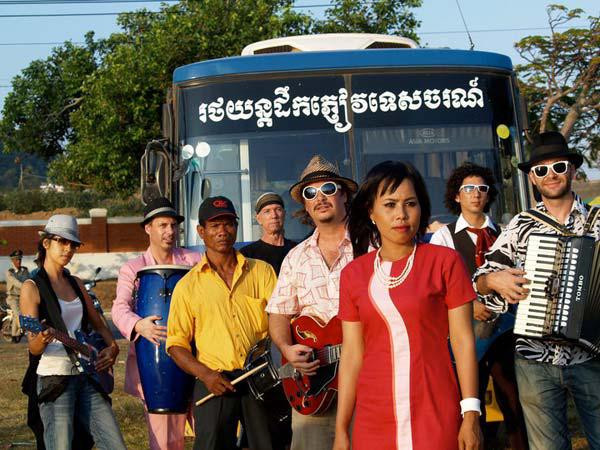
Today’s Cambodian music scene is diverse and internationally infused. Contemporary stars like Sophea Chin and the diaspora-anchored acts that emerged in Phnom Penh and beyond keep the pop flame alive, while hip-hop, indie rock, and electronic scenes paint the city with a restless energy. The Cambodian Space Project, led by Srey Thy, has helped put retro Khmer pop and garage-rock back on global stages, showing how Khmer melodies can pair with garage grit and international sensibilities. And artists such as VannDa—one of the country’s most visible modern rap performers—demonstrate how Cambodian rhythm, slang, and storytelling travel across borders through digital platforms.
Important venues and scenes speak to both locals and travelers. The riverside in Phnom Penh hosts open-air evenings during the Water Festival (Bon Om Touk), when boat races are paired with performances and street concerts. Institutions like the Foreign Correspondents’ Club Phnom Penh (FCC) and Chaktomuk Theatre are regular stops for jazz, world music, and theatrical music productions. Boutique venues along Bassac Lane offer intimate live sets, while larger rooms at NagaWorld host big-name acts and touring ensembles. META House and other cultural centers nurture new songwriting, experimentation, and collaborations between Cambodian and international artists.
Cambodia’s cultural pulse has a measurable influence on Southeast Asian music: a legacy of melodic storytelling, a resilient spirit after hardship, and a growing ecosystem where traditional textures meet modern production. For music lovers, Cambodia offers a bridge between centuries, a place where a Khmer chord can sound both ancient and forward-looking, and a listening map that rewards slow exploration and quick discoveries alike.
Traditional Khmer music forms the cultural backbone. Pinpeat, a ceremonial court ensemble, uses gongs, xylophones, and drums to accompany dance and storytelling, while phleng chapei dang veng (the long-neck guitar tradition) carries intimate songs of love and daily life. Cham communities contribute kantrum, a danceable style that travels across borders in the region. These traditional strands are not museum pieces; they nourish new music by providing melodic shapes, rhythmic textures, and a sense of national identity that many contemporary artists mine and remix.
Cambodia’s mid-20th century music scene produced a luminous but fragile legacy. Icons such as Sinn Sisamuth, known as the King of Khmer Music, and Ros Serey Sothea, the Golden Voice of Cambodia, drew huge crowds with songs that fused Western pop, rock, and Khmer melodies. Pen Ran and other artists from that era also left a lasting imprint. The Khmer Rouge years were devastating, scattering musicians and destroying venues, but the late 1990s and 2000s sparked a revival. A new generation of listeners rediscovered those classics, and local artists began to braid old Khmer motifs into modern forms.
Today’s Cambodian music scene is diverse and internationally infused. Contemporary stars like Sophea Chin and the diaspora-anchored acts that emerged in Phnom Penh and beyond keep the pop flame alive, while hip-hop, indie rock, and electronic scenes paint the city with a restless energy. The Cambodian Space Project, led by Srey Thy, has helped put retro Khmer pop and garage-rock back on global stages, showing how Khmer melodies can pair with garage grit and international sensibilities. And artists such as VannDa—one of the country’s most visible modern rap performers—demonstrate how Cambodian rhythm, slang, and storytelling travel across borders through digital platforms.
Important venues and scenes speak to both locals and travelers. The riverside in Phnom Penh hosts open-air evenings during the Water Festival (Bon Om Touk), when boat races are paired with performances and street concerts. Institutions like the Foreign Correspondents’ Club Phnom Penh (FCC) and Chaktomuk Theatre are regular stops for jazz, world music, and theatrical music productions. Boutique venues along Bassac Lane offer intimate live sets, while larger rooms at NagaWorld host big-name acts and touring ensembles. META House and other cultural centers nurture new songwriting, experimentation, and collaborations between Cambodian and international artists.
Cambodia’s cultural pulse has a measurable influence on Southeast Asian music: a legacy of melodic storytelling, a resilient spirit after hardship, and a growing ecosystem where traditional textures meet modern production. For music lovers, Cambodia offers a bridge between centuries, a place where a Khmer chord can sound both ancient and forward-looking, and a listening map that rewards slow exploration and quick discoveries alike.