Country
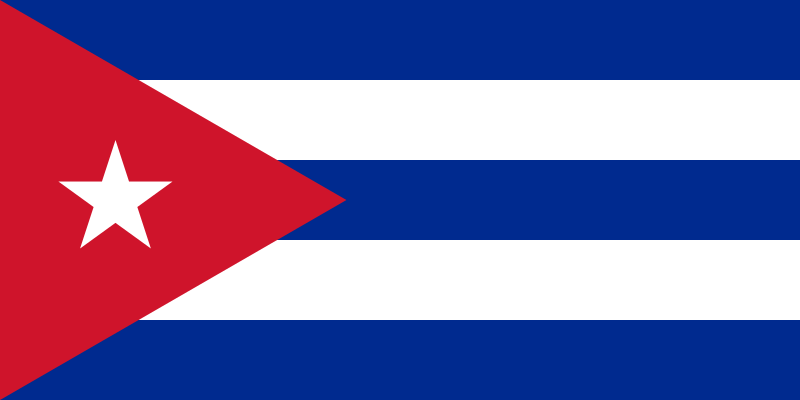
Cuba
Top Artists from Cuba
Showing 25 of 173 artists





About Cuba
Cuba is a country of rhythm and resilience, a Caribbean island whose cities swing with the echoes of centuries of music. For music enthusiasts, Cuba feels like a living instrument: a place where streets, churches, dance halls, and tiny kitchens fuse into a ceaseless soundtrack. The island's population is about 11 million people, and their shared language of percussion and melody ties generations of artists to a vibrant tradition of invention and improvisation.
Cuban music grew from a fusion of Spanish ballads, African rhythms, and Caribbean sounds, then exploded into a global vocabulary through dance, political life, and migration. The son cubano, born in the late 19th century, remains the foundation: a flexible, danceable conversation of guitar, tres, upright bass, and hand percussion, guided by the clave—those two measures that keep the groove honest. From the son, other genres flourished: mambo, cha-cha-cha, and rumba carved Afro-Cuban identities into popular culture, while the more intimate nueva trova turned intimate guitar-based poetry into a national movement.
Today, Cuba's music scene is both deeply traditional and boldly contemporary. The country hosts world-class artists who stay rooted in roots yet explore new forms. Prominent names include the late Ibrahim Ferrer and Compay Segundo as icons of the Buena Vista Social Club phenomenon, which in the 1990s reintroduced global audiences to the warmth of Cuban ensembles. Omara Portuondo, Rubén González, Eliades Ochoa, and many others carried that revival into modern concert halls and festivals. Chucho Valdés, a pianist and bandleader whose jazz-infused orbit includes the legendary Irakere, has dazzled listeners worldwide with Afro-Cuban jazz and technical brilliance. Contemporary stars such as Arturo Sandoval, a trumpet virtuoso, and Gonzalo Rubalcaba push Cuban piano and horn traditions toward new frontiers. In the songbook of today’s scene, artists like Silvio Rodríguez and Pablo Milanés of the nueva trova legacy continue to resonate with lyrical introspection and social storytelling.
Live venues are as much part of the musical experience as the records themselves. In Havana, Casa de la Música venues in Miramar and Centro Habana are famous for evening jam sessions that spill into the streets, while the historic La Tropical and the more intimate clubs offer nightly showcases of salsa, timba, son, and Afro-Cuban dance music. The Casa de la Música in Trinidad preserves the spirit of rural Cuban rhythms in a preserved colonial setting. For a forward-looking encounter, the Fábrica de Arte Cubano (FAC) in Havana brings visual art, film, and a revolving lineup of bands in a converted warehouse, turning the city into a continuous cultural laboratory.
Events anchor the calendar: the Havana Jazz Festival, which attracts ensembles and Cuban innovators alike; the Cubadisco awards that celebrate the country’s recorded music, and the Carnival seasons in Santiago de Cuba and Havana, where timba and rumba collide with street theater and dance teams. The influence of Cuban music—through son and Afro-Cuban rhythms—shines in salsa, Latin jazz, and popular Latin music. The country’s rhythmic literacy, a deep sense of time, and shared musical language invite travelers to hear.
Cuban music grew from a fusion of Spanish ballads, African rhythms, and Caribbean sounds, then exploded into a global vocabulary through dance, political life, and migration. The son cubano, born in the late 19th century, remains the foundation: a flexible, danceable conversation of guitar, tres, upright bass, and hand percussion, guided by the clave—those two measures that keep the groove honest. From the son, other genres flourished: mambo, cha-cha-cha, and rumba carved Afro-Cuban identities into popular culture, while the more intimate nueva trova turned intimate guitar-based poetry into a national movement.
Today, Cuba's music scene is both deeply traditional and boldly contemporary. The country hosts world-class artists who stay rooted in roots yet explore new forms. Prominent names include the late Ibrahim Ferrer and Compay Segundo as icons of the Buena Vista Social Club phenomenon, which in the 1990s reintroduced global audiences to the warmth of Cuban ensembles. Omara Portuondo, Rubén González, Eliades Ochoa, and many others carried that revival into modern concert halls and festivals. Chucho Valdés, a pianist and bandleader whose jazz-infused orbit includes the legendary Irakere, has dazzled listeners worldwide with Afro-Cuban jazz and technical brilliance. Contemporary stars such as Arturo Sandoval, a trumpet virtuoso, and Gonzalo Rubalcaba push Cuban piano and horn traditions toward new frontiers. In the songbook of today’s scene, artists like Silvio Rodríguez and Pablo Milanés of the nueva trova legacy continue to resonate with lyrical introspection and social storytelling.
Live venues are as much part of the musical experience as the records themselves. In Havana, Casa de la Música venues in Miramar and Centro Habana are famous for evening jam sessions that spill into the streets, while the historic La Tropical and the more intimate clubs offer nightly showcases of salsa, timba, son, and Afro-Cuban dance music. The Casa de la Música in Trinidad preserves the spirit of rural Cuban rhythms in a preserved colonial setting. For a forward-looking encounter, the Fábrica de Arte Cubano (FAC) in Havana brings visual art, film, and a revolving lineup of bands in a converted warehouse, turning the city into a continuous cultural laboratory.
Events anchor the calendar: the Havana Jazz Festival, which attracts ensembles and Cuban innovators alike; the Cubadisco awards that celebrate the country’s recorded music, and the Carnival seasons in Santiago de Cuba and Havana, where timba and rumba collide with street theater and dance teams. The influence of Cuban music—through son and Afro-Cuban rhythms—shines in salsa, Latin jazz, and popular Latin music. The country’s rhythmic literacy, a deep sense of time, and shared musical language invite travelers to hear.