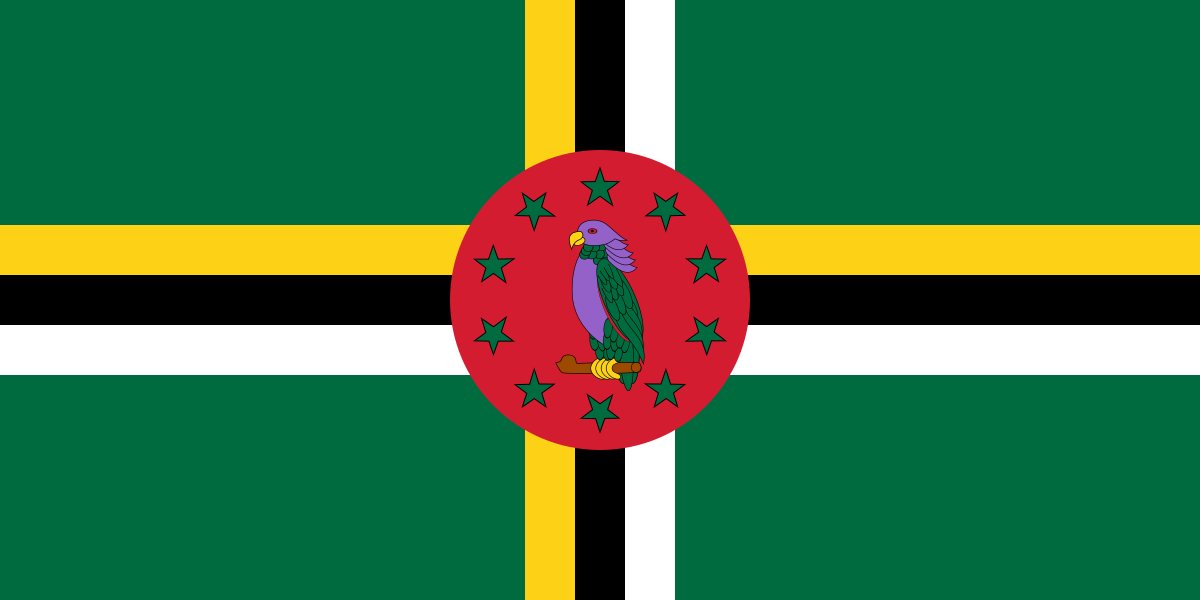
Country
Dominica
Top Artists from Dominica
No artists found
No artists from Dominica are currently tracked.
About Dominica
Dominica, the Nature Island of the Caribbean, is a country where rainforests breathe, waterfalls tumble into emerald rivers, and music is a constant companion to daily life. With a population of roughly 72,000, this small nation punches far above its weight in cultural output, turning its lush landscapes into a living stage for sound, voice, and rhythm.
Music in Dominica is a conversation across generations, weaving African-derived drumming, French Creole melodic lines, and Caribbean street percussion into something distinct. The island is known for its rich calypso and soca traditions, presented in intimate tents and during community fêtes, where singers trade clever verses for laughs and social commentary. Creole language, or Kweyol, threads through lyrics, lending a melodic patois that gives Dominica’s songs their warm, recognizable accent.
A cornerstone of the modern Dominica music scene is the World Creole Music Festival, held annually in Roseau. Since the late 1990s, this event has drawn crowds of both locals and visitors who come to hear Creole-influenced music from across the Caribbean and the diaspora. Past lineups have celebrated the ties among Guadeloupe, Martinique, Haiti, Dominica, and the broader Creole world, with genres spanning zouk, reggae-inflected pop, and lively Caribbean ballads. The festival is a grand showcase for voices and bands who blend traditional rhythms with contemporary hooks, and it has helped foster a sense of regional community among artists who share a language and a love of storytelling through song.
For many enthusiasts, a trip to Dominica isn’t complete without a stop at the Arawak House of Culture in Roseau or a night at a smaller venue where locals reveal the music’s raw edges. These spaces serve as laboratories for experimental fusions, from acoustic, guitar-driven tunes that recall folk origins to modern productions that flirt with electronic textures. The country’s venues—whether concert halls, community centers, or intimate outdoor stages—are defined by warmth, hospitality, and an atmosphere that encourages listeners to lean in and feel the rhythm.
Beyond the big festival, Dominica’s music scene thrives in community events and regional collaborations. Artists often collaborate with musicians from neighboring islands, and Dominican performers frequently appear in seasonal celebrations, church gatherings, and street parades, where percussion remains central. The island’s music has also influenced dance, theatre, and storytelling, reinforcing a broader cultural pride that sees music as a vehicle for resilience and identity.
In short, Dominica may be small, but its music is expansive: rooted in tradition, locally cherished, and continually shaped by international exchange. For music enthusiasts, the island offers a compact, intensely rewarding listening experience—an invitation to hear how a small nation can echo loudly on the world stage.
Beyond festivals, Dominica’s sound travels into the studio and hillside villages, where children drum on containers and new melodies emerge from found objects. Critics note how indie and Caribbean influences blend, with producers mixing traditional percussion, loops, and earthy basslines for a modern, tactile pulse. This evolving sound invites curious listeners to trace a lineage from forest drums to festival stages worldwide today, everywhere.
Music in Dominica is a conversation across generations, weaving African-derived drumming, French Creole melodic lines, and Caribbean street percussion into something distinct. The island is known for its rich calypso and soca traditions, presented in intimate tents and during community fêtes, where singers trade clever verses for laughs and social commentary. Creole language, or Kweyol, threads through lyrics, lending a melodic patois that gives Dominica’s songs their warm, recognizable accent.
A cornerstone of the modern Dominica music scene is the World Creole Music Festival, held annually in Roseau. Since the late 1990s, this event has drawn crowds of both locals and visitors who come to hear Creole-influenced music from across the Caribbean and the diaspora. Past lineups have celebrated the ties among Guadeloupe, Martinique, Haiti, Dominica, and the broader Creole world, with genres spanning zouk, reggae-inflected pop, and lively Caribbean ballads. The festival is a grand showcase for voices and bands who blend traditional rhythms with contemporary hooks, and it has helped foster a sense of regional community among artists who share a language and a love of storytelling through song.
For many enthusiasts, a trip to Dominica isn’t complete without a stop at the Arawak House of Culture in Roseau or a night at a smaller venue where locals reveal the music’s raw edges. These spaces serve as laboratories for experimental fusions, from acoustic, guitar-driven tunes that recall folk origins to modern productions that flirt with electronic textures. The country’s venues—whether concert halls, community centers, or intimate outdoor stages—are defined by warmth, hospitality, and an atmosphere that encourages listeners to lean in and feel the rhythm.
Beyond the big festival, Dominica’s music scene thrives in community events and regional collaborations. Artists often collaborate with musicians from neighboring islands, and Dominican performers frequently appear in seasonal celebrations, church gatherings, and street parades, where percussion remains central. The island’s music has also influenced dance, theatre, and storytelling, reinforcing a broader cultural pride that sees music as a vehicle for resilience and identity.
In short, Dominica may be small, but its music is expansive: rooted in tradition, locally cherished, and continually shaped by international exchange. For music enthusiasts, the island offers a compact, intensely rewarding listening experience—an invitation to hear how a small nation can echo loudly on the world stage.
Beyond festivals, Dominica’s sound travels into the studio and hillside villages, where children drum on containers and new melodies emerge from found objects. Critics note how indie and Caribbean influences blend, with producers mixing traditional percussion, loops, and earthy basslines for a modern, tactile pulse. This evolving sound invites curious listeners to trace a lineage from forest drums to festival stages worldwide today, everywhere.