Country
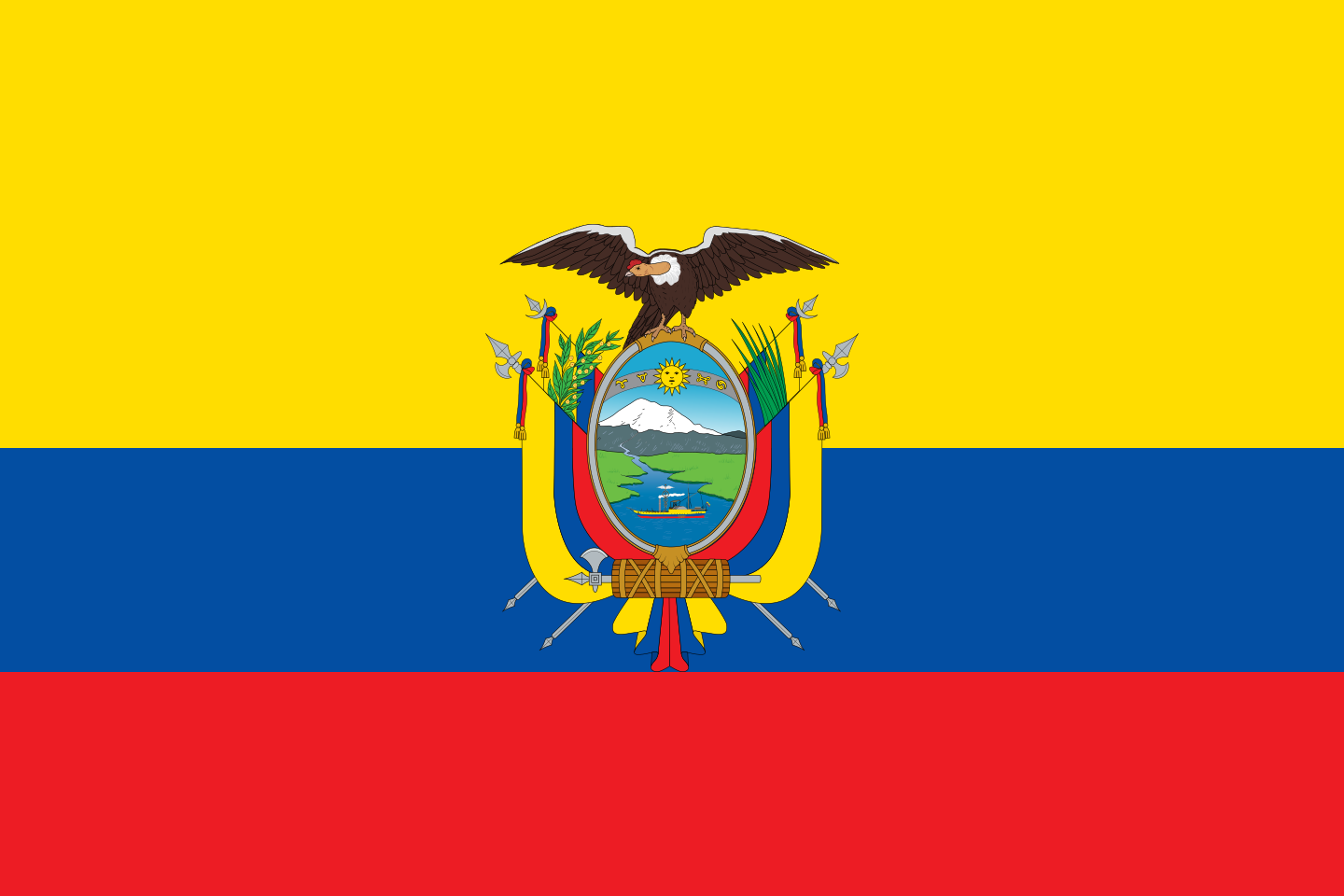
Ecuador
Top Artists from Ecuador
Showing 25 of 83 artists















About Ecuador
Nestled on the equator, Ecuador is a compact country with a vibrant, border-crossing musical heritage. Its three distinct regions—the Pacific coast, the Andean highlands, and the Amazon basin—nurture sounds that travel easily from folkloric pasillo to modern electronic grooves. As of recent estimates, Ecuador is home to about 18 million people, a population that sustains a lively and evolving music scene.
If you listen carefully, the coast’s cumbia and calypso-inflected rhythms meet the highland sanjuanito and yaraví, then mingle with contemporary urban pop, rock, and electronic experiments. The traditional backbone includes pasillo, a tender, wistful cousin of the waltz that has long carried the country’s romances and sorrows. Yaraví, with its melancholic strings and soulful vocal lines, evokes the Andean altiplano, while the sanjuanito dances across town plazas with vigorous footwork and call-and-response patterns. In the Amazon, rainforest chants and indigenous musical expressions layer the mix, adding a deeply rooted sense of place to every festival and venue.
Ecuador has produced artists who bridge generations and genres. Julio Jaramillo, known as El Ruiseñor del Pasillo, remains a towering figure in the annals of Ecuadorian music—a symbol of the old-school ballad tradition whose songs are still sung in bars, markets, and family gatherings. In more recent decades, singer-songwriter Juan Fernando Velasco has become a staple of Ecuador’s pop-rock scene, delivering melodic storytelling that resonates across urban and rural audiences. On the experimental edge, Nicola Cruz has helped bring Ecuadorian sounds to international electronic audiences, fusing Andean melodies with modern bass-weight and hypnotic textures. Together, these artists illustrate how Ecuadorian music travels from intimate, local gatherings to global listening rooms.
Live music thrives in both intimate venues and open-air spaces. The capital’s major stages host everything from classical to contemporary, while in Guayaquil and other cities you’ll find concerts that blend coastal vitality with urban sensibilities. A central hub for performance is Quito’s Teatro Nacional Sucre, a historic venue that has hosted orchestras, cantatas, and touring artists, providing a formal counterpoint to the country’s more experimental work. Beyond concerts, street performances, small clubs, and plazas keep music present in daily life, making Ecuador a country where an evening can feel like a cross-country musical journey.
Popular events reflect the country’s diverse influences. The Quito Jazz Festival brings international and local artists to the city’s stages, highlighting jazz’s ongoing dialogue with Andean and Caribbean rhythms. Coastal and Andean communities celebrate music through seasonal fiestas and folkloric performances, where traditional dress, dance, and song turn public spaces into living concert halls. In addition to these events, myriad local festivals spotlight pasillo, sanjuanito, and contemporary fusions, inviting visitors to discover how Ecuador’s sounds are continually reimagined.
For music enthusiasts, Ecuador offers a compact but endlessly rich soundscape: intimate folk-rooted songs, grand orchestral moments, and bold, modern experiments all coexisting within a country that values community, storytelling, and dance. If you’re chasing authentic rhythms and the pulse of a nation in motion, Ecuador is a destination that delivers—populated by a people who carry music in their hearts and share it with the world.
If you listen carefully, the coast’s cumbia and calypso-inflected rhythms meet the highland sanjuanito and yaraví, then mingle with contemporary urban pop, rock, and electronic experiments. The traditional backbone includes pasillo, a tender, wistful cousin of the waltz that has long carried the country’s romances and sorrows. Yaraví, with its melancholic strings and soulful vocal lines, evokes the Andean altiplano, while the sanjuanito dances across town plazas with vigorous footwork and call-and-response patterns. In the Amazon, rainforest chants and indigenous musical expressions layer the mix, adding a deeply rooted sense of place to every festival and venue.
Ecuador has produced artists who bridge generations and genres. Julio Jaramillo, known as El Ruiseñor del Pasillo, remains a towering figure in the annals of Ecuadorian music—a symbol of the old-school ballad tradition whose songs are still sung in bars, markets, and family gatherings. In more recent decades, singer-songwriter Juan Fernando Velasco has become a staple of Ecuador’s pop-rock scene, delivering melodic storytelling that resonates across urban and rural audiences. On the experimental edge, Nicola Cruz has helped bring Ecuadorian sounds to international electronic audiences, fusing Andean melodies with modern bass-weight and hypnotic textures. Together, these artists illustrate how Ecuadorian music travels from intimate, local gatherings to global listening rooms.
Live music thrives in both intimate venues and open-air spaces. The capital’s major stages host everything from classical to contemporary, while in Guayaquil and other cities you’ll find concerts that blend coastal vitality with urban sensibilities. A central hub for performance is Quito’s Teatro Nacional Sucre, a historic venue that has hosted orchestras, cantatas, and touring artists, providing a formal counterpoint to the country’s more experimental work. Beyond concerts, street performances, small clubs, and plazas keep music present in daily life, making Ecuador a country where an evening can feel like a cross-country musical journey.
Popular events reflect the country’s diverse influences. The Quito Jazz Festival brings international and local artists to the city’s stages, highlighting jazz’s ongoing dialogue with Andean and Caribbean rhythms. Coastal and Andean communities celebrate music through seasonal fiestas and folkloric performances, where traditional dress, dance, and song turn public spaces into living concert halls. In addition to these events, myriad local festivals spotlight pasillo, sanjuanito, and contemporary fusions, inviting visitors to discover how Ecuador’s sounds are continually reimagined.
For music enthusiasts, Ecuador offers a compact but endlessly rich soundscape: intimate folk-rooted songs, grand orchestral moments, and bold, modern experiments all coexisting within a country that values community, storytelling, and dance. If you’re chasing authentic rhythms and the pulse of a nation in motion, Ecuador is a destination that delivers—populated by a people who carry music in their hearts and share it with the world.