Country
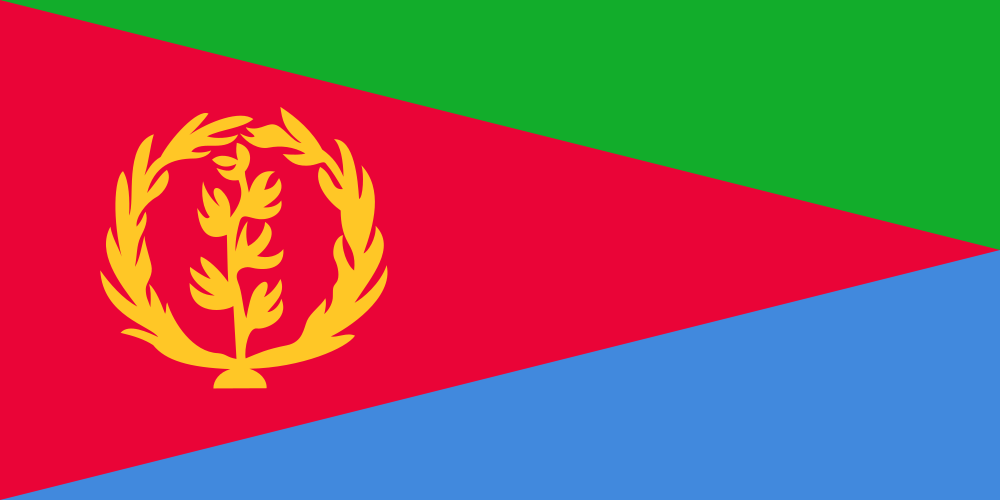
Eritrea
Top Artists from Eritrea
Showing 3 of 3 artists


About Eritrea
Eritrea is a small country on the Horn of Africa, where music feels woven into the air the moment you land. For music enthusiasts, its sounds are a living archive: a mix of traditional melodies carried by voices in Tigrinya and Tigre, braided with coastal percussion, and later, the more panoramic textures of modern pop and diasporic fusion. The population is roughly 3.6 million people, a number that belies Eritrea’s big musical heartbeat. In everyday life, weddings, religious feasts, and street performances become private concerts, small or large, that carry tunes from generation to generation.
Tradition and innovation share the stage. Traditional Eritrean music often centers on vocal call and response, communal singing, and drum-led dances that transform gatherings into rolling parades of sound. Instrumental color comes from bowed and plucked strings such as the krar and other local lyres, along with frame drums and hand percussion that keep time for dancers. The modern scene, while shaped by limited media channels, thrives in urban hubs and in the overseas communities where Eritrean musicians have built vibrant networks. Diaspora artists, especially in Sweden, Italy, and North America, continue to reinterpret local melodies with contemporary arrangements, creating a bridge between the old city’s nostalgia and today’s global rhythms.
Asmara—the capital—has long been a focal point. Its Italian-era streets house venues and studios that once hosted visiting ensembles and local star turns. Cinema Impero, a landmark cinema from the 1930s, is often cited as a symbol of Eritrea’s cultural narrative and a touchstone for performances that fuse film, theatre, and live music. The country’s official and unofficial stages celebrate a wide spectrum: intimate acoustic sets in cafés, brass ensembles at church gatherings, and big bands that recall the era when Asmara’s music scene drew travelers from across the region. Even during difficult decades, musicians kept a steady, resilient thread of melody alive.
Events and influence: Eritrea’s musical life blooms during religious and national holidays such as Timkat and other feasts, when choirs, poets, and dancers gather in public squares to perform. The rhythm of the horn, the tambour, and the stringed voices can travel far beyond borders, shaping tastes in neighboring countries and within the Eritrean diaspora. The country’s distinctive vocal timbres, its pentatonic flavor and call-and-response structures, have inspired younger artists who blend traditional roots with hip-hop, R&B, and electronic production. In venues and on streaming platforms, Eritrean music continues to travel as a cultural passport, inviting listeners to hear a voice both rooted and expansive.
Population: around 3.6 million. If you listen closely, you’ll hear the story of Eritrea in its music: a nation that keeps one foot in hereditary chorus and another in the cinema of the global stage, inviting music lovers to join the journey from Asmara’s staircases to stages around the world.
For visiting musicians, Eritrea offers a unique listening lab where ancient chants mingle with experimental beats in informal clubs and open-air venues. The experience rewards attentive ears with a feeling of timeless optimism and hard-won artistry.
Tradition and innovation share the stage. Traditional Eritrean music often centers on vocal call and response, communal singing, and drum-led dances that transform gatherings into rolling parades of sound. Instrumental color comes from bowed and plucked strings such as the krar and other local lyres, along with frame drums and hand percussion that keep time for dancers. The modern scene, while shaped by limited media channels, thrives in urban hubs and in the overseas communities where Eritrean musicians have built vibrant networks. Diaspora artists, especially in Sweden, Italy, and North America, continue to reinterpret local melodies with contemporary arrangements, creating a bridge between the old city’s nostalgia and today’s global rhythms.
Asmara—the capital—has long been a focal point. Its Italian-era streets house venues and studios that once hosted visiting ensembles and local star turns. Cinema Impero, a landmark cinema from the 1930s, is often cited as a symbol of Eritrea’s cultural narrative and a touchstone for performances that fuse film, theatre, and live music. The country’s official and unofficial stages celebrate a wide spectrum: intimate acoustic sets in cafés, brass ensembles at church gatherings, and big bands that recall the era when Asmara’s music scene drew travelers from across the region. Even during difficult decades, musicians kept a steady, resilient thread of melody alive.
Events and influence: Eritrea’s musical life blooms during religious and national holidays such as Timkat and other feasts, when choirs, poets, and dancers gather in public squares to perform. The rhythm of the horn, the tambour, and the stringed voices can travel far beyond borders, shaping tastes in neighboring countries and within the Eritrean diaspora. The country’s distinctive vocal timbres, its pentatonic flavor and call-and-response structures, have inspired younger artists who blend traditional roots with hip-hop, R&B, and electronic production. In venues and on streaming platforms, Eritrean music continues to travel as a cultural passport, inviting listeners to hear a voice both rooted and expansive.
Population: around 3.6 million. If you listen closely, you’ll hear the story of Eritrea in its music: a nation that keeps one foot in hereditary chorus and another in the cinema of the global stage, inviting music lovers to join the journey from Asmara’s staircases to stages around the world.
For visiting musicians, Eritrea offers a unique listening lab where ancient chants mingle with experimental beats in informal clubs and open-air venues. The experience rewards attentive ears with a feeling of timeless optimism and hard-won artistry.