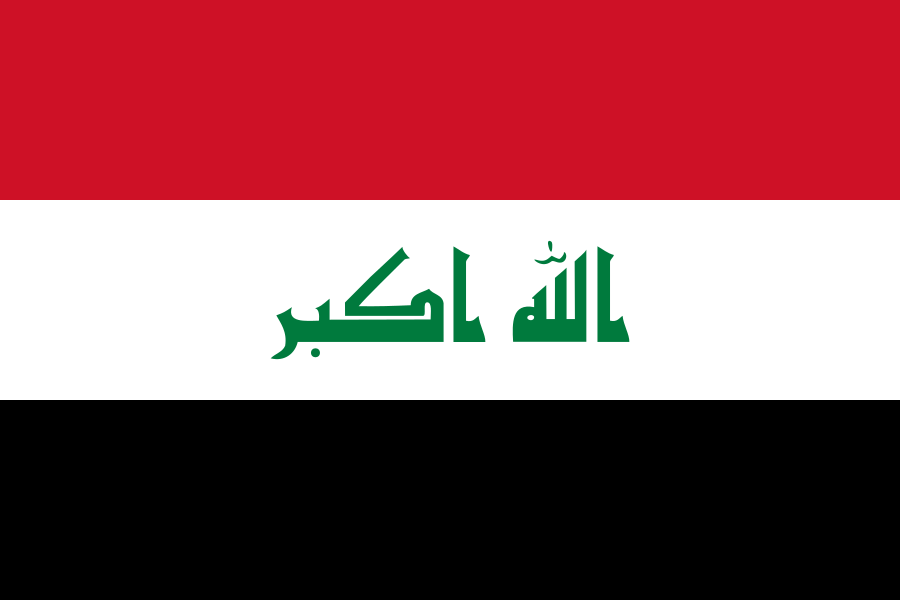
Country
Iraq
Top Artists from Iraq
Showing 25 of 26 artists







About Iraq
Iraq is a country where deserts meet river valleys along the Tigris and Euphrates, a cradle of civilizations and a living, breathing music scene. Home to roughly 43 million people, its cities and villages cradle a mosaic of Arab, Kurdish, Turkmen, Assyrian, Yazidi and Christian communities, each contributing distinct voices to a national sound that is both ancient and restless.
At the core of Iraqi musical identity is the maqam, a modal, improvisatory tradition that thrives on microtones, ornamented vocal lines, and intimate call-and-response play between singer and ensemble. Traditional ensembles rely on the oud, qanun, ney, riqq and darbuka, weaving textures that can feel at once hauntingly ancestral and vividly contemporary. In concert, halls and street corners alike carry faint echoes of the caravans that once crossed the desert, reminding listeners that music here is a conversation across generations.
Beyond the maqam, folk songs travel between Basra’s river ports, Kurdish highlands, and Christian plains, absorbing dialects, stories and rhythms that keep the repertoire alive. The modern era has seen Iraq export and reinterpret these strands in ways that resonate across the Arab world and beyond. Rhythm, melody, and poetry blend in a landscape where chance studio collaborations and long nights of rehearsal are a daily rite.
Among today’s most recognized Iraqi artists, Kadim Al Sahir stands as a towering figure in contemporary Arabic pop—his orchestral ballads and cinematic melodies have made him a household name across the region. Naseer Shamma, a master oud player and composer, has helped bring Iraqi timbres to international stages, shaping a broader perception of Middle Eastern instrumental music. Majid Al Muhandis remains a prolific voice in modern Iraqi song, drawing fans with his warmth and ambition. In Kurdish and mixed-city scenes, countless musicians perform in coffee houses, small theatres and festivals, keeping local languages and styles vital while inviting new audiences to listen.
Important venues and events feed this energy. The Sulaymaniyah International Jazz Festival (SIJF) has become a beacon for local and international performers, presenting jazz, fusion and world music in a setting that honors the old city’s charm. The Duhok International Music Festival and other regional events bring together orchestras, folk groups and contemporary musicians, often in venues carved into historic or scenic sites. In Baghdad and major cities, cultural centers, theatres and concert halls host performances that range from classical recitals to contemporary pop, often bridging generations and communities.
For music enthusiasts, Iraq is a living archive—an ancient cradle that continues to influence the soundscape of the Middle East and beyond. It is a country of contrasts, where centuries-old motifs meet bold, new expressions, and where the pulse of a darbuka can still guide a modern studio session.
Visitors can often catch guided cultural programs, university performances and festival nights in Baghdad, Erbil and Sulaymaniyah. Iraq’s diaspora communities abroad—across Europe, North America and beyond—continue to collaborate with Iraqi musicians, creating cross-cultural projects that broaden the reach of Iraqi sounds and help sustain the musical community in challenging times.
At the core of Iraqi musical identity is the maqam, a modal, improvisatory tradition that thrives on microtones, ornamented vocal lines, and intimate call-and-response play between singer and ensemble. Traditional ensembles rely on the oud, qanun, ney, riqq and darbuka, weaving textures that can feel at once hauntingly ancestral and vividly contemporary. In concert, halls and street corners alike carry faint echoes of the caravans that once crossed the desert, reminding listeners that music here is a conversation across generations.
Beyond the maqam, folk songs travel between Basra’s river ports, Kurdish highlands, and Christian plains, absorbing dialects, stories and rhythms that keep the repertoire alive. The modern era has seen Iraq export and reinterpret these strands in ways that resonate across the Arab world and beyond. Rhythm, melody, and poetry blend in a landscape where chance studio collaborations and long nights of rehearsal are a daily rite.
Among today’s most recognized Iraqi artists, Kadim Al Sahir stands as a towering figure in contemporary Arabic pop—his orchestral ballads and cinematic melodies have made him a household name across the region. Naseer Shamma, a master oud player and composer, has helped bring Iraqi timbres to international stages, shaping a broader perception of Middle Eastern instrumental music. Majid Al Muhandis remains a prolific voice in modern Iraqi song, drawing fans with his warmth and ambition. In Kurdish and mixed-city scenes, countless musicians perform in coffee houses, small theatres and festivals, keeping local languages and styles vital while inviting new audiences to listen.
Important venues and events feed this energy. The Sulaymaniyah International Jazz Festival (SIJF) has become a beacon for local and international performers, presenting jazz, fusion and world music in a setting that honors the old city’s charm. The Duhok International Music Festival and other regional events bring together orchestras, folk groups and contemporary musicians, often in venues carved into historic or scenic sites. In Baghdad and major cities, cultural centers, theatres and concert halls host performances that range from classical recitals to contemporary pop, often bridging generations and communities.
For music enthusiasts, Iraq is a living archive—an ancient cradle that continues to influence the soundscape of the Middle East and beyond. It is a country of contrasts, where centuries-old motifs meet bold, new expressions, and where the pulse of a darbuka can still guide a modern studio session.
Visitors can often catch guided cultural programs, university performances and festival nights in Baghdad, Erbil and Sulaymaniyah. Iraq’s diaspora communities abroad—across Europe, North America and beyond—continue to collaborate with Iraqi musicians, creating cross-cultural projects that broaden the reach of Iraqi sounds and help sustain the musical community in challenging times.