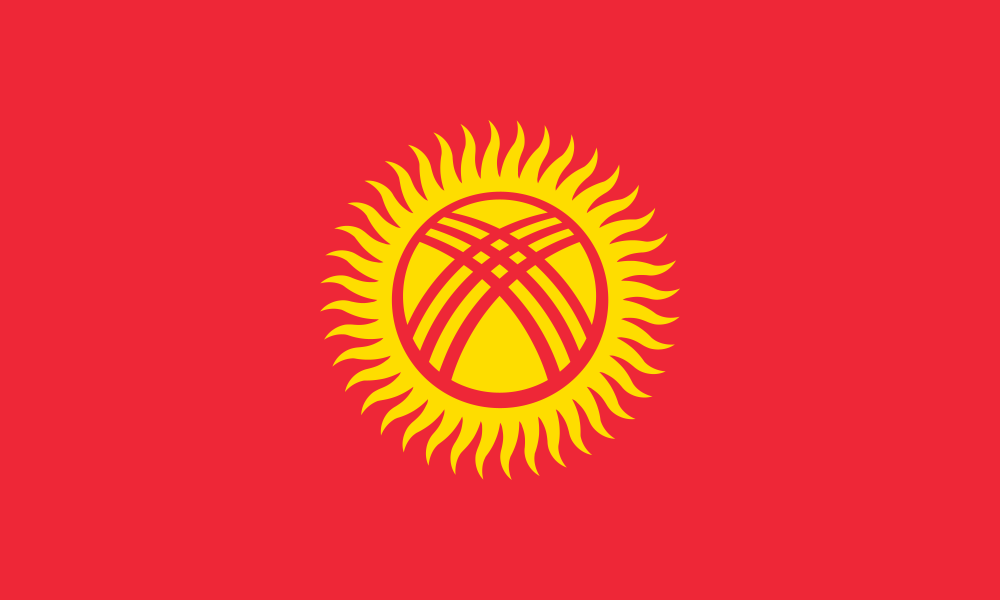
Country
Kyrgyzstan
Top Artists from Kyrgyzstan
Showing 3 of 3 artists


About Kyrgyzstan
Tucked between the Tian Shan mountains and vast highlands, Kyrgyzstan is a country where landscape and sound are inseparable. For music enthusiasts, its culture offers a rare blend of ancient nomadic heritage and contemporary experimentation, a place where enslaved rhythms of history meet the energy of today’s youth.
Traditional Kyrgyz music centers on the komuz, a slender three-string lute whose bright, pinging tones weave through even the quietest village evenings. Echoes of the epic Manas—told and sung for generations—still color modern performances, as Ashu-style storytellers chant long, sweeping narratives that rise and fall with ornamented melodies. These roots give Kyrgyz music a tactile sense of movement, as if the strings themselves were pulled along the wind-swept valleys.
In recent decades, Kyrgyz musicians have embraced fusion with Western pop, rock, hip-hop, and electronic textures, creating a vibrant scene that remains deeply rooted in tradition. Contemporary artists and ensembles often explore cross-cultural collages, drawing on regional influences from neighboring Central Asian styles as well as Russian and Turkish musical languages. This openness has helped produce a generation of performers who tour regionally and abroad, carrying the distinctive timbre of Kyrgyz melodies with them.
Key venues and institutions anchor the musical life of the country. Bishkek’s State Opera and Ballet Theater is a historic stage for grand productions, while the Kyrgyz National Philharmonic Orchestra presents concert cycles that celebrate classical repertoire alongside new commissions inspired by the country’s sonic identity. The Kyrgyz National Conservatoire trains a steady stream of young composers, singers, and instrumentalists who bring fresh perspectives to both traditional and contemporary forms. On smaller scales, intimate floor-and-stage concerts, street performances, and open-air gatherings illuminate the country’s towns and valleys during warm months, inviting locals and visitors to experience music as part of everyday life.
Notable events and moments punctuate Kyrgyz music every year. The World Nomad Games, first held in 2014, mix sport, culture, and music in a showcase that honors nomadic traditions while inviting modern collaborations. In urban centers, summer festival seasons offer diverse programs—from folk ensembles revisiting ancestral tunes to modern bands experimenting with synthetic textures and field-recorded sounds. These events underscore how Kyrgyz music travels across borders, absorbing global ideas without losing its distinctive character.
The country’s musical influence extends beyond its borders through its people and stories. The rugged beauty of Kyrgyzstan’s landscapes has inspired composers and poets; its oral traditions provide a well of material for writers and performers who explore identity, memory, and place. For music lovers, Kyrgyzstan offers more than a listening experience; it offers an invitation to hear a living culture in motion—one that honors its epic past while leaning into the possibilities of tomorrow.
Today, Kyrgyzstan is home to roughly seven million people, a population poised at a cultural crossroads. Its music reflects that dynamism: rooted, resonant, and continually evolving. If you crave a sound that folds nomadic history into contemporary edge, Kyrgyzstan’s sonic landscape is a compelling destination.
Traditional Kyrgyz music centers on the komuz, a slender three-string lute whose bright, pinging tones weave through even the quietest village evenings. Echoes of the epic Manas—told and sung for generations—still color modern performances, as Ashu-style storytellers chant long, sweeping narratives that rise and fall with ornamented melodies. These roots give Kyrgyz music a tactile sense of movement, as if the strings themselves were pulled along the wind-swept valleys.
In recent decades, Kyrgyz musicians have embraced fusion with Western pop, rock, hip-hop, and electronic textures, creating a vibrant scene that remains deeply rooted in tradition. Contemporary artists and ensembles often explore cross-cultural collages, drawing on regional influences from neighboring Central Asian styles as well as Russian and Turkish musical languages. This openness has helped produce a generation of performers who tour regionally and abroad, carrying the distinctive timbre of Kyrgyz melodies with them.
Key venues and institutions anchor the musical life of the country. Bishkek’s State Opera and Ballet Theater is a historic stage for grand productions, while the Kyrgyz National Philharmonic Orchestra presents concert cycles that celebrate classical repertoire alongside new commissions inspired by the country’s sonic identity. The Kyrgyz National Conservatoire trains a steady stream of young composers, singers, and instrumentalists who bring fresh perspectives to both traditional and contemporary forms. On smaller scales, intimate floor-and-stage concerts, street performances, and open-air gatherings illuminate the country’s towns and valleys during warm months, inviting locals and visitors to experience music as part of everyday life.
Notable events and moments punctuate Kyrgyz music every year. The World Nomad Games, first held in 2014, mix sport, culture, and music in a showcase that honors nomadic traditions while inviting modern collaborations. In urban centers, summer festival seasons offer diverse programs—from folk ensembles revisiting ancestral tunes to modern bands experimenting with synthetic textures and field-recorded sounds. These events underscore how Kyrgyz music travels across borders, absorbing global ideas without losing its distinctive character.
The country’s musical influence extends beyond its borders through its people and stories. The rugged beauty of Kyrgyzstan’s landscapes has inspired composers and poets; its oral traditions provide a well of material for writers and performers who explore identity, memory, and place. For music lovers, Kyrgyzstan offers more than a listening experience; it offers an invitation to hear a living culture in motion—one that honors its epic past while leaning into the possibilities of tomorrow.
Today, Kyrgyzstan is home to roughly seven million people, a population poised at a cultural crossroads. Its music reflects that dynamism: rooted, resonant, and continually evolving. If you crave a sound that folds nomadic history into contemporary edge, Kyrgyzstan’s sonic landscape is a compelling destination.