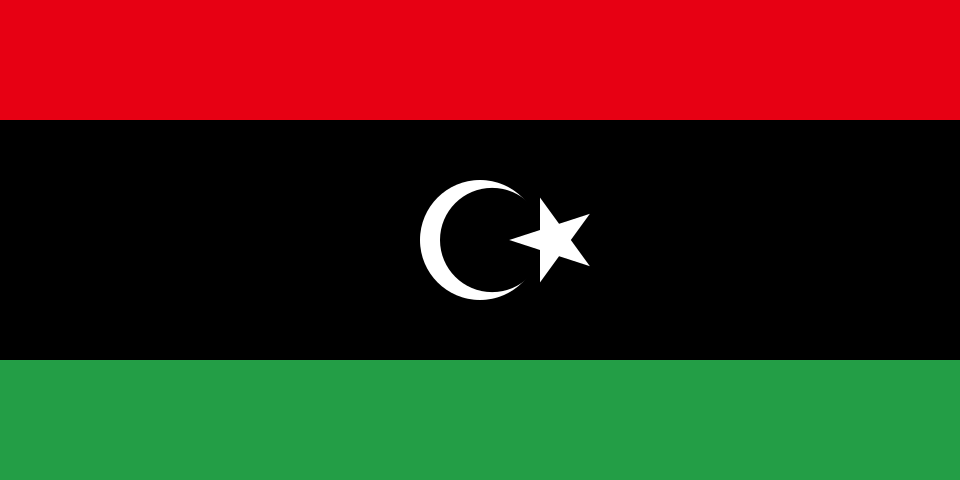
Country
Libyan Arab Jamahiriya
Top Artists from Libyan Arab Jamahiriya
Showing 6 of 6 artists




About Libyan Arab Jamahiriya
Libyan Arab Jamahiriya, a North African country perched along the Mediterranean, is home to roughly seven million people. For music enthusiasts, its soundscape is a rich tapestry built from deep Arab and Berber roots, a storied Andalusian influence, and the energy of modern North African pop. The era when the country was officially known as the Libyan Arab Jamahiriya (1977–2011) is often referenced in cultural histories as a time when music and arts carried a nationalist thread, though the everyday sounds of Libyan life long before and after that period reveal a society that loves rhythm, lyric, and communal performance.
Traditional currents run strongest in the Malouf and Andalusian-influenced repertoire that has endured in coastal cities like Tripoli and Misrata. Malouf, with its singable melodies, intricate modal structures, and ornate instrumental color, has long been a cultural beacon for Libyans who seek a direct link to Mediterranean music across national borders. Instruments such as the oud, the qanun, the violin, the ney, and the darbuka (drum) color these performances, while singers weave poetry that balances nostalgia, celebration, and social commentary. This repertoire sits alongside regional folk songs that draw on desert and oasis life, creating a sonic map of Libya’s diverse landscapes.
In contemporary scenes, Libyan musicians often blend traditional modes with global currents. You’ll hear elements of Arabic pop, hip-hop, electronic beats, and cross-genre collaborations that connect Libyan artists with neighbors in North Africa, the Arab world, and Europe. The result is a music that respects lineage while embracing experimentation, a mode that suits both intimate gatherings and larger stages where audiences expect lively fusion and storytelling.
Important venues and spaces—both historical and emergent—have helped shape Libya’s music culture. Festivals, radio broadcasts, and university concerts have long served as launching pads for local talent, while weddings and family celebrations remain pivotal venues for live Libyan music. In major cities, cultural centers and performance spaces host Malouf ensembles, modern Arabic singers, and adventurous duos that fuse traditional instruments with contemporary production. Even during periods of political upheaval, informal gatherings, local clubs, and diaspora-hosted events in Europe and the Middle East kept Libyan musical voices active, underscoring the resilience and adaptability of Libyan musical life.
The music of Libyan Arab Jamahiriya has also influenced neighboring scenes through shared Mediterranean rhythms and Libyan storytelling sensibilities. Libyan musicians in the diaspora have collaborated with Tunisian, Egyptian, Moroccan, and European artists, helping spread the country’s melodic signatures and rhythmic fluencies beyond its shores. Conversely, Libyan audiences remain deeply connected to traditional forms that anchor their musical identity, even as they welcome contemporary sounds that reflect urban life and global soundscapes.
In sum, Libya’s musical story is one of continuity and change. Traditional Malouf and Andalusian-influenced music provide a cultural compass, while modern pop, fusion, and diaspora-driven collaborations push Libyan sound into new territories. For music lovers exploring the Maghreb and the broader Arab world, Libyan music offers a compelling blend of reverence for tradition and fearless experimentation, nestled in a country whose population of around seven million continues to carry its songs forward.
Traditional currents run strongest in the Malouf and Andalusian-influenced repertoire that has endured in coastal cities like Tripoli and Misrata. Malouf, with its singable melodies, intricate modal structures, and ornate instrumental color, has long been a cultural beacon for Libyans who seek a direct link to Mediterranean music across national borders. Instruments such as the oud, the qanun, the violin, the ney, and the darbuka (drum) color these performances, while singers weave poetry that balances nostalgia, celebration, and social commentary. This repertoire sits alongside regional folk songs that draw on desert and oasis life, creating a sonic map of Libya’s diverse landscapes.
In contemporary scenes, Libyan musicians often blend traditional modes with global currents. You’ll hear elements of Arabic pop, hip-hop, electronic beats, and cross-genre collaborations that connect Libyan artists with neighbors in North Africa, the Arab world, and Europe. The result is a music that respects lineage while embracing experimentation, a mode that suits both intimate gatherings and larger stages where audiences expect lively fusion and storytelling.
Important venues and spaces—both historical and emergent—have helped shape Libya’s music culture. Festivals, radio broadcasts, and university concerts have long served as launching pads for local talent, while weddings and family celebrations remain pivotal venues for live Libyan music. In major cities, cultural centers and performance spaces host Malouf ensembles, modern Arabic singers, and adventurous duos that fuse traditional instruments with contemporary production. Even during periods of political upheaval, informal gatherings, local clubs, and diaspora-hosted events in Europe and the Middle East kept Libyan musical voices active, underscoring the resilience and adaptability of Libyan musical life.
The music of Libyan Arab Jamahiriya has also influenced neighboring scenes through shared Mediterranean rhythms and Libyan storytelling sensibilities. Libyan musicians in the diaspora have collaborated with Tunisian, Egyptian, Moroccan, and European artists, helping spread the country’s melodic signatures and rhythmic fluencies beyond its shores. Conversely, Libyan audiences remain deeply connected to traditional forms that anchor their musical identity, even as they welcome contemporary sounds that reflect urban life and global soundscapes.
In sum, Libya’s musical story is one of continuity and change. Traditional Malouf and Andalusian-influenced music provide a cultural compass, while modern pop, fusion, and diaspora-driven collaborations push Libyan sound into new territories. For music lovers exploring the Maghreb and the broader Arab world, Libyan music offers a compelling blend of reverence for tradition and fearless experimentation, nestled in a country whose population of around seven million continues to carry its songs forward.