Country
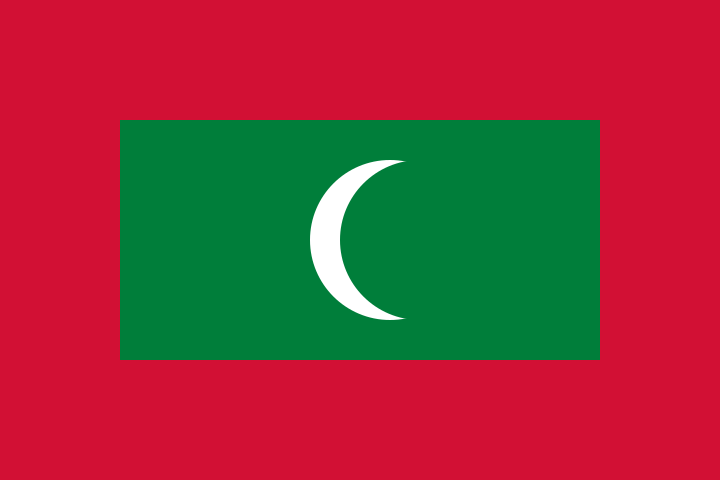
Maldives
Top Artists from Maldives

About Maldives
Stretching across the aquamarine sea, the Maldives is a nation of 26 atolls and a population of roughly 530,000 people. Its allure to travelers is matched by a surprisingly rich musical life that rises from coral islands to the stages of Male and the glittering resorts that ring the archipelago. The heartbeat of Maldivian music is traditional, communal, and infectious.
Traditional forms such as Boduberu, a drumming ensemble with chants and dance, and Bodu Beru, a lighter, more vocal dance music, are deeply woven into island life. Boduberu performances begin with a trance-like drumroll, followed by call-and-response singing and intricate hand claps that invite everyone to move. These performances often anchor weddings, feasts, and public celebrations, turning a night into a shared ritual. The rhythms travel by boat and by radio, and they influence contemporary songwriting, film scores, and resort stage programming alike.
In recent decades the Maldivian soundscape has grown broader and more cosmopolitan. The resort circuit—on many islands—hosts regular concerts that mix local Dhivehi lyrics with Indian, Sri Lankan, and Western melodies, creating a distinct fusion that travels well on streaming platforms and social media. Young Maldivian artists blend pop, rock, R&B, and electronic dance music with traditional motifs, crafting songs that feel both intimate and cinematic. This cross-pollination has helped Maldivian music reach audiences across South Asia and the Indian Ocean, while still rooted in island memory and language.
Among the notable features of the scene are the voices that speak of island life, coral reefs, monsoon winds, and the daily rhythm of fishermen and hotel staff alike. The country’s music is widely documented on local radio, television, and digital streaming services, ensuring that new songs by Maldivian artists are quickly heard in Male’ coffee shops, lagoonfront towns, and resort lounges. Live performances range from intimate acoustic evenings in boutique venues to large beachside concerts that draw crowds from multiple atolls. The venues—whether cultural centers in the capital, outdoor stages near the water, or private island resorts—offer something for every listener, from traditional ballads to club-ready sets.
For music enthusiasts, the Maldives offers a rare combination: the oral tradition of Boduberu and the global language of contemporary pop and electronic sound. It is a place where the next Maldivian singer, producer, or band could be discovered in a resort lounge one night and heard on a festival stage the next, proving that a small island nation can have a big, resonant voice in global music.
Across Male’ and every inhabited atoll, schools and youth clubs host workshops, jam sessions, and talent showcases that feed new generations of musicians. Festivals and cultural nights organized by cultural centers, island councils, and resort groups bring together traditional ensembles and modern bands, often culminating in beachside finales under a canopy of stars. Studios and producers operate across the archipelago, turning field recordings into polished tracks that gain traction on local radio, television, and streaming platforms. The result is a living, evolving music culture supported by a resilient community of listeners who celebrate both heritage and innovation.
Traditional forms such as Boduberu, a drumming ensemble with chants and dance, and Bodu Beru, a lighter, more vocal dance music, are deeply woven into island life. Boduberu performances begin with a trance-like drumroll, followed by call-and-response singing and intricate hand claps that invite everyone to move. These performances often anchor weddings, feasts, and public celebrations, turning a night into a shared ritual. The rhythms travel by boat and by radio, and they influence contemporary songwriting, film scores, and resort stage programming alike.
In recent decades the Maldivian soundscape has grown broader and more cosmopolitan. The resort circuit—on many islands—hosts regular concerts that mix local Dhivehi lyrics with Indian, Sri Lankan, and Western melodies, creating a distinct fusion that travels well on streaming platforms and social media. Young Maldivian artists blend pop, rock, R&B, and electronic dance music with traditional motifs, crafting songs that feel both intimate and cinematic. This cross-pollination has helped Maldivian music reach audiences across South Asia and the Indian Ocean, while still rooted in island memory and language.
Among the notable features of the scene are the voices that speak of island life, coral reefs, monsoon winds, and the daily rhythm of fishermen and hotel staff alike. The country’s music is widely documented on local radio, television, and digital streaming services, ensuring that new songs by Maldivian artists are quickly heard in Male’ coffee shops, lagoonfront towns, and resort lounges. Live performances range from intimate acoustic evenings in boutique venues to large beachside concerts that draw crowds from multiple atolls. The venues—whether cultural centers in the capital, outdoor stages near the water, or private island resorts—offer something for every listener, from traditional ballads to club-ready sets.
For music enthusiasts, the Maldives offers a rare combination: the oral tradition of Boduberu and the global language of contemporary pop and electronic sound. It is a place where the next Maldivian singer, producer, or band could be discovered in a resort lounge one night and heard on a festival stage the next, proving that a small island nation can have a big, resonant voice in global music.
Across Male’ and every inhabited atoll, schools and youth clubs host workshops, jam sessions, and talent showcases that feed new generations of musicians. Festivals and cultural nights organized by cultural centers, island councils, and resort groups bring together traditional ensembles and modern bands, often culminating in beachside finales under a canopy of stars. Studios and producers operate across the archipelago, turning field recordings into polished tracks that gain traction on local radio, television, and streaming platforms. The result is a living, evolving music culture supported by a resilient community of listeners who celebrate both heritage and innovation.