Country
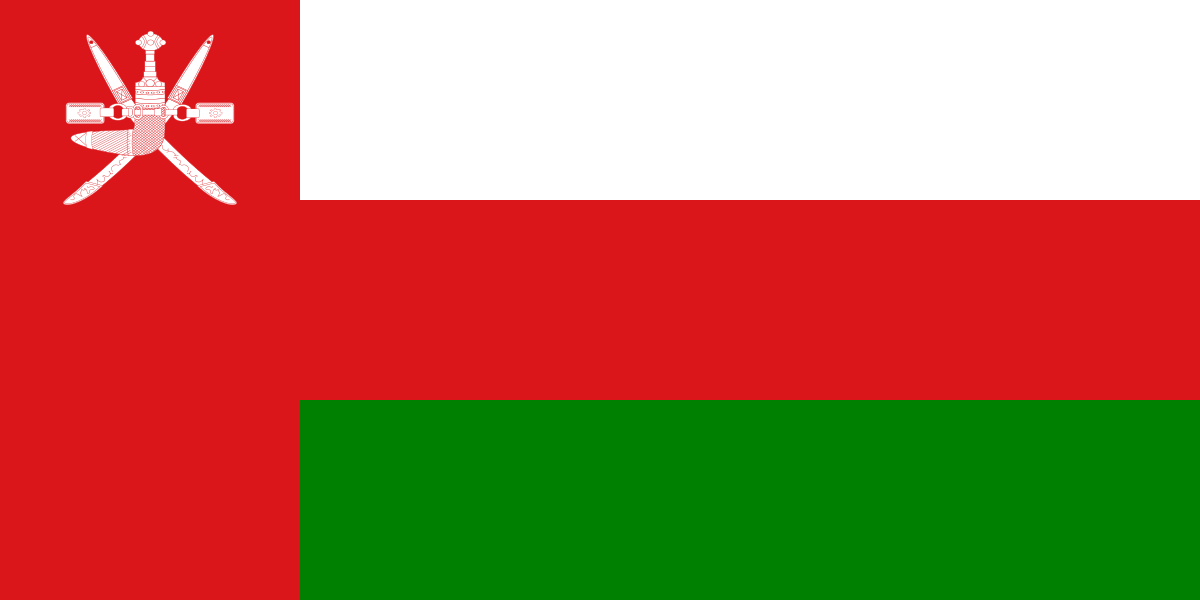
Oman
Top Artists from Oman

About Oman
Oman sits on the southeastern corner of the Arabian Peninsula, bordered by the Arabian Sea and the Gulf of Oman. Its geography—rugged mountains, sunlit coastlines, and a long history of seafaring—has shaped a musical culture as diverse as its landscapes. Today, Oman remains a living workshop where ancient traditions meet contemporary energy, making it a compelling destination for music enthusiasts.
The old soundscape is anchored by coastal and desert forms. Fijiri, a sea-people chant tradition centered on intricate call-and-response singing, and Liwa, a festive ritual that uses drums, wind instruments, and dancers in colorful attire, still echo along Muscat’s old harbors and along the southern coast. The mizmar, an end-blown reed, and the oud sit beside percussion that keeps time for weddings, harvests, and Ramadan nights. These sounds reflect Oman’s long history of trade and cross-cultural exchange across the Persian Gulf, the Indian Ocean, and North Africa.
In the modern era, Oman’s music scene has grown more cosmopolitan without losing its identity. In cities like Muscat and Salalah, studios buzz with the energy of emerging artists who blend traditional modes with pop, electronic, hip-hop, and indie rock. The country’s youth often study music in local conservatories and private schools, while digital platforms help international audiences discover Oman’s new voices. The result is a dynamic fusion: maqam-inspired melodies wrapped in contemporary arrangements, and collaborations that pair seasoned teachers with aspiring performers. Notable Omani acts include traditional performers who sustain Liwa and Fijiri at festival stages, alongside a rising generation of producers blending Oman’s musical vocabulary with pop and electronic sounds.
A cornerstone for music on the national stage is the Royal Opera House Muscat, one of the Middle East’s premier venues for performance. Since opening in 2011, it has presented opera, ballet, orchestral concerts, and world music, drawing visitors from across the region and beyond. The ROHM stands as a symbol of Oman’s commitment to high-caliber live music and to cultural exchange. Outside its doors, festival seasons and city concerts bring a wide mix of styles—from classical chamber programs to contemporary percussion, from traditional ensemble pieces to cross-genre collaborations.
Popular events that draw local and international attention include Muscat’s festival calendar, which often features large-scale concerts, street performances, and artist workshops, as well as Salalah’s cultural gatherings during the monsoon season. These occasions are complemented by intimate gigs in cafés and hotels where instrumentalists and vocalists experiment with new textures and languages.
Population-wise, Oman is home to approximately 5 million people, a sizeable expatriate community included. The country’s population reflects its role as a regional crossroads, where people and ideas mingle, creating a fertile ground for musical innovation.
For music lovers, Oman offers a rare combination: a resilient traditional repertoire that survives alongside a rising contemporary scene, presented by venues like ROHM and supported by festivals that celebrate both heritage and invention. If you crave music that travels—from the desert to the sea and beyond—Oman rewards attentive listening and curious ears.
Visitors typically find entry points through ROHM’s programming, but the true flavor is in spillover performances—dining halls, hotel lounges, and seaside stages where musicians invite you to listen in on a living conversation between land and sea. If you travel during festival seasons, you’ll hear everything from intimate acoustic sets to grand orchestral works, echoing Oman’s generous hospitality and its long tradition of storytelling through sound.
The old soundscape is anchored by coastal and desert forms. Fijiri, a sea-people chant tradition centered on intricate call-and-response singing, and Liwa, a festive ritual that uses drums, wind instruments, and dancers in colorful attire, still echo along Muscat’s old harbors and along the southern coast. The mizmar, an end-blown reed, and the oud sit beside percussion that keeps time for weddings, harvests, and Ramadan nights. These sounds reflect Oman’s long history of trade and cross-cultural exchange across the Persian Gulf, the Indian Ocean, and North Africa.
In the modern era, Oman’s music scene has grown more cosmopolitan without losing its identity. In cities like Muscat and Salalah, studios buzz with the energy of emerging artists who blend traditional modes with pop, electronic, hip-hop, and indie rock. The country’s youth often study music in local conservatories and private schools, while digital platforms help international audiences discover Oman’s new voices. The result is a dynamic fusion: maqam-inspired melodies wrapped in contemporary arrangements, and collaborations that pair seasoned teachers with aspiring performers. Notable Omani acts include traditional performers who sustain Liwa and Fijiri at festival stages, alongside a rising generation of producers blending Oman’s musical vocabulary with pop and electronic sounds.
A cornerstone for music on the national stage is the Royal Opera House Muscat, one of the Middle East’s premier venues for performance. Since opening in 2011, it has presented opera, ballet, orchestral concerts, and world music, drawing visitors from across the region and beyond. The ROHM stands as a symbol of Oman’s commitment to high-caliber live music and to cultural exchange. Outside its doors, festival seasons and city concerts bring a wide mix of styles—from classical chamber programs to contemporary percussion, from traditional ensemble pieces to cross-genre collaborations.
Popular events that draw local and international attention include Muscat’s festival calendar, which often features large-scale concerts, street performances, and artist workshops, as well as Salalah’s cultural gatherings during the monsoon season. These occasions are complemented by intimate gigs in cafés and hotels where instrumentalists and vocalists experiment with new textures and languages.
Population-wise, Oman is home to approximately 5 million people, a sizeable expatriate community included. The country’s population reflects its role as a regional crossroads, where people and ideas mingle, creating a fertile ground for musical innovation.
For music lovers, Oman offers a rare combination: a resilient traditional repertoire that survives alongside a rising contemporary scene, presented by venues like ROHM and supported by festivals that celebrate both heritage and invention. If you crave music that travels—from the desert to the sea and beyond—Oman rewards attentive listening and curious ears.
Visitors typically find entry points through ROHM’s programming, but the true flavor is in spillover performances—dining halls, hotel lounges, and seaside stages where musicians invite you to listen in on a living conversation between land and sea. If you travel during festival seasons, you’ll hear everything from intimate acoustic sets to grand orchestral works, echoing Oman’s generous hospitality and its long tradition of storytelling through sound.