Country
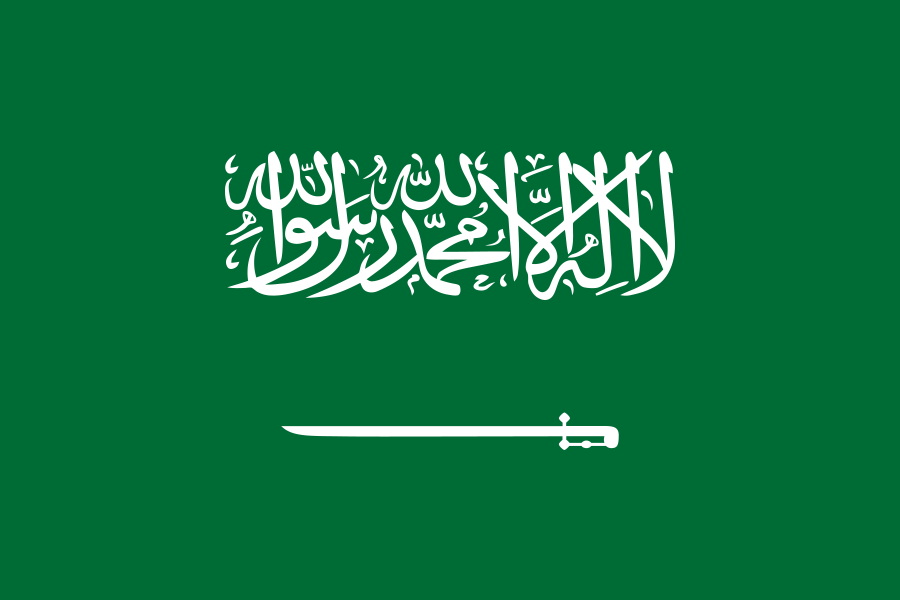
Saudi Arabia
Top Artists from Saudi Arabia
Showing 10 of 10 artists





About Saudi Arabia
For music enthusiasts, Saudi Arabia offers a surprising and rapidly evolving soundscape that blends deep-rooted tradition with bold, modern experimentation. Today the kingdom is home to about 36 million people, and its music scene reflects a country in the midst of cultural renewal. From intimate, centuries‑old folk forms to high‑octane international festival stages, Saudi music invites both curiosity and immersion.
Tradition runs through the veins of Saudi sound. In regional gatherings, you’ll still hear the pulse of Ardah, the sword-dance that features drums, poetry, and call-and-response singing. Hijazi and Najdi musical styles contribute melodic flavors that echo the desert, the sea, and old caravan routes. This heritage provides a foundation for contemporary artists to fuse traditional modes with global pop, hip‑hop, and electronic music, creating a Gulf‑centered sound that resonates across the Arab world.
The modern Saudi pop world features established names that have become regional icons. Mohammed Abdu, a towering figure in Gulf music, has shaped generations of listeners with his polished vocals and reflective repertoire. Rashed AlMajed is another widely recognized Saudi artist whose pop and ballad catalog has sustained a broad audience throughout the Gulf. In addition to these veterans, the country has nurtured a new generation of artists who perform in the growing live‑music circuits and digital platforms, helping Saudi voices reach international audiences while staying rooted in local sensibilities.
Saudi Arabia’s push to diversify entertainment is driven by Vision 2030 and the General Entertainment Authority, which opened doors for large‑scale live music and international collaborations. This shift has transformed what a music scene can look like in the desert and the coast: more concerts, more versatile venues, and more cross‑border collaborations. The result is a vibrant ecosystem where local musicians gain exposure, writers and producers collaborate across borders, and audiences experience a broader-scoped cultural calendar.
Major events and venues have helped put Saudi music on a global map. The MDLBEAST festival in Riyadh, with its SoundStorm arena, has become one of the Gulf’s premier music celebrations, attracting world‑class DJs, open‑air stages, and immersive experiences that echo the energy of major European and North American festivals. In addition, AlUla’s Winter at Tantora festival has drawn international stars, including performances by artists such as Andrea Bocelli, turning the ancient desert into a contemporary concert hall. Jeddah and Riyadh now host a steady stream of concerts and pop‑up gigs, while venues like the Ithra cultural center in Dhahran have cultivated a listening culture by presenting concerts, residencies, and artist talks in a dedicated, architecturally striking space.
The Saudi music scene also highlights venues and institutions that support live culture beyond the arena. Ithra, the King Abdulaziz Centre for World Culture, has become a landmark for concerts, exhibitions, and performances, while universities, cultural districts, and private organizers increasingly stage intimate nights that showcase emerging Saudi talent.
For listeners, the result is a country where the familiar sounds of Gulf melody meet contemporary electronic rhythm, where traditional ensembles share the day with global DJs, and where a new generation of artists, producers, and organizers collaborates to shape a distinctive Middle Eastern music narrative. The population of around 36 million contributes a diverse audience and a growing market, ensuring that Saudi Arabia remains a compelling point of connection for music lovers everywhere.
Tradition runs through the veins of Saudi sound. In regional gatherings, you’ll still hear the pulse of Ardah, the sword-dance that features drums, poetry, and call-and-response singing. Hijazi and Najdi musical styles contribute melodic flavors that echo the desert, the sea, and old caravan routes. This heritage provides a foundation for contemporary artists to fuse traditional modes with global pop, hip‑hop, and electronic music, creating a Gulf‑centered sound that resonates across the Arab world.
The modern Saudi pop world features established names that have become regional icons. Mohammed Abdu, a towering figure in Gulf music, has shaped generations of listeners with his polished vocals and reflective repertoire. Rashed AlMajed is another widely recognized Saudi artist whose pop and ballad catalog has sustained a broad audience throughout the Gulf. In addition to these veterans, the country has nurtured a new generation of artists who perform in the growing live‑music circuits and digital platforms, helping Saudi voices reach international audiences while staying rooted in local sensibilities.
Saudi Arabia’s push to diversify entertainment is driven by Vision 2030 and the General Entertainment Authority, which opened doors for large‑scale live music and international collaborations. This shift has transformed what a music scene can look like in the desert and the coast: more concerts, more versatile venues, and more cross‑border collaborations. The result is a vibrant ecosystem where local musicians gain exposure, writers and producers collaborate across borders, and audiences experience a broader-scoped cultural calendar.
Major events and venues have helped put Saudi music on a global map. The MDLBEAST festival in Riyadh, with its SoundStorm arena, has become one of the Gulf’s premier music celebrations, attracting world‑class DJs, open‑air stages, and immersive experiences that echo the energy of major European and North American festivals. In addition, AlUla’s Winter at Tantora festival has drawn international stars, including performances by artists such as Andrea Bocelli, turning the ancient desert into a contemporary concert hall. Jeddah and Riyadh now host a steady stream of concerts and pop‑up gigs, while venues like the Ithra cultural center in Dhahran have cultivated a listening culture by presenting concerts, residencies, and artist talks in a dedicated, architecturally striking space.
The Saudi music scene also highlights venues and institutions that support live culture beyond the arena. Ithra, the King Abdulaziz Centre for World Culture, has become a landmark for concerts, exhibitions, and performances, while universities, cultural districts, and private organizers increasingly stage intimate nights that showcase emerging Saudi talent.
For listeners, the result is a country where the familiar sounds of Gulf melody meet contemporary electronic rhythm, where traditional ensembles share the day with global DJs, and where a new generation of artists, producers, and organizers collaborates to shape a distinctive Middle Eastern music narrative. The population of around 36 million contributes a diverse audience and a growing market, ensuring that Saudi Arabia remains a compelling point of connection for music lovers everywhere.