Genre
afro-cuban percussion
Top Afro-cuban percussion Artists
Showing 6 of 6 artists


About Afro-cuban percussion
Afro-Cuban percussion is the rhythmic heartbeat of Afro-Cuban music, a living conversation between African diasporic drumming traditions and Cuban urban sound. Rooted in the rhythms carried by enslaved Africans on Cuban soil, it crystalized as a distinct percussive language in the 19th and early 20th centuries, blending ceremonial patterns from Congo, Yoruba, and other West African cultures with the European-influenced suite of Cuban genres. What musicians and enthusiasts often call Afro-Cuban percussion today is the shared toolkit of congas, bongos, timbales, claves, güiros, and cowbells, orchestrated to create polyrhythmic conversations that drive both dance floor and listening room.
The core of Afro-Cuban percussion lies in rhythm as social dialogue. The clave pattern—two interlocking grooves that can be 3-2 or 2-3—acts as a unifying axis, giving ensembles a common time feel even as the rhythms spin in complex subdivisions. From the call-and-response of rumba to the tighter, syncopated groove of son and the explosive energy of mambo, percussion supports melody, horn lines, and vocalese while simultaneously steering the tempo and mood. Congas and bongos offer a tree of voices: deep, rumbling tumbaos, snappy dedos, and tumbling fills; timbales provide sharp accents and a bridge to jazz sensibilities; the güiro and cowbell lace the texture with bright, tactile textures.
Born out of Cuba’s late-19th and early-20th century social and musical ferment, Afro-Cuban percussion expanded dramatically through the cross-pollination with North American jazz in the 1940s and 1950s. Chano Pozo’s imaginative partnership with Dizzy Gillespie in 1947 is a critical milestone, introducing Afro-Cuban percussion vocabulary to a broader jazz audience and birthing Afro-Cuban jazz—a fusion that would ripple through the Latin jazz movement for decades. From there, the genre splintered into salsa in the 1960s and 70s, mambo and cha-cha-cha in popular culture, and the ongoing global interest in Latin percussion-as-virtuosity.
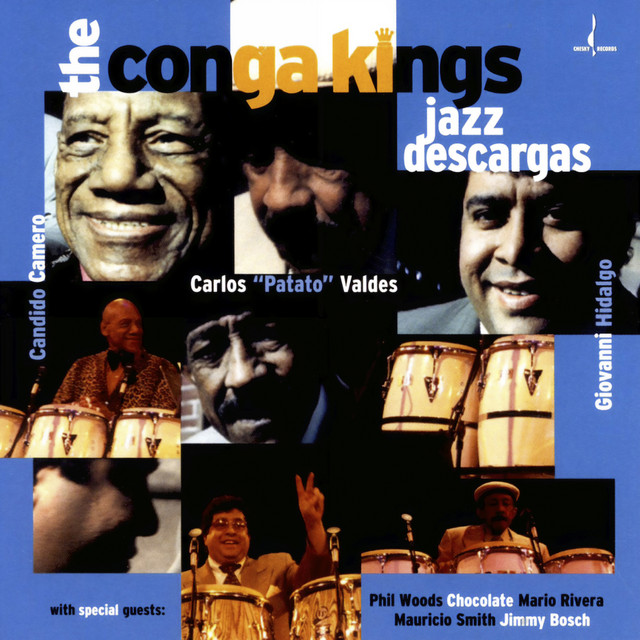
Among the ambassadors of Afro-Cuban percussion, a few names loom large. Chano Pozo remains celebrated as a catalyst for Afro-Cuban jazz; Mongo Santamaría popularized the conga-driven groove with tracks like “Watermelon Man” and countless sessions that fused Latin rhythms with American jazz. Tito Puente, the “King of Latin Jazz,” demonstrated how Afro-Cuban percussion could lead a big band and a dance floor with equal authority. Candido Camero and Armando Peraza expanded tactile percussive vocabulary and technique, while Giovanni Hidalgo’s astonishing conga technique set new benchmarks for speed, clarity, and precision. These artists helped export Afro-Cuban percussion far beyond Havana and New York, turning it into a global language.
Popular in Cuba as the source culture, Afro-Cuban percussion has resonated especially in the United States, where New York’s Latin jazz and salsa scenes, Los Angeles’ Afro-Latin ensembles, and Puerto Rican and Cuban diasporas foster ongoing experimentation. It has also found receptive audiences in Europe—Spain, the United Kingdom, Germany, and France—with workshops, festivals, and recordings that celebrate its complexity. Today, contemporary artists fuse traditional percussion with electronic production, jazz improvisation, and world music textures, proving that Afro-Cuban percussion remains a dynamic, outward-looking tradition rather than a fixed archive. For listeners, diving into this genre reveals a rich, multi-layered ecosystem where rhythm is both a heritage and a horizon.
The core of Afro-Cuban percussion lies in rhythm as social dialogue. The clave pattern—two interlocking grooves that can be 3-2 or 2-3—acts as a unifying axis, giving ensembles a common time feel even as the rhythms spin in complex subdivisions. From the call-and-response of rumba to the tighter, syncopated groove of son and the explosive energy of mambo, percussion supports melody, horn lines, and vocalese while simultaneously steering the tempo and mood. Congas and bongos offer a tree of voices: deep, rumbling tumbaos, snappy dedos, and tumbling fills; timbales provide sharp accents and a bridge to jazz sensibilities; the güiro and cowbell lace the texture with bright, tactile textures.
Born out of Cuba’s late-19th and early-20th century social and musical ferment, Afro-Cuban percussion expanded dramatically through the cross-pollination with North American jazz in the 1940s and 1950s. Chano Pozo’s imaginative partnership with Dizzy Gillespie in 1947 is a critical milestone, introducing Afro-Cuban percussion vocabulary to a broader jazz audience and birthing Afro-Cuban jazz—a fusion that would ripple through the Latin jazz movement for decades. From there, the genre splintered into salsa in the 1960s and 70s, mambo and cha-cha-cha in popular culture, and the ongoing global interest in Latin percussion-as-virtuosity.
Among the ambassadors of Afro-Cuban percussion, a few names loom large. Chano Pozo remains celebrated as a catalyst for Afro-Cuban jazz; Mongo Santamaría popularized the conga-driven groove with tracks like “Watermelon Man” and countless sessions that fused Latin rhythms with American jazz. Tito Puente, the “King of Latin Jazz,” demonstrated how Afro-Cuban percussion could lead a big band and a dance floor with equal authority. Candido Camero and Armando Peraza expanded tactile percussive vocabulary and technique, while Giovanni Hidalgo’s astonishing conga technique set new benchmarks for speed, clarity, and precision. These artists helped export Afro-Cuban percussion far beyond Havana and New York, turning it into a global language.
Popular in Cuba as the source culture, Afro-Cuban percussion has resonated especially in the United States, where New York’s Latin jazz and salsa scenes, Los Angeles’ Afro-Latin ensembles, and Puerto Rican and Cuban diasporas foster ongoing experimentation. It has also found receptive audiences in Europe—Spain, the United Kingdom, Germany, and France—with workshops, festivals, and recordings that celebrate its complexity. Today, contemporary artists fuse traditional percussion with electronic production, jazz improvisation, and world music textures, proving that Afro-Cuban percussion remains a dynamic, outward-looking tradition rather than a fixed archive. For listeners, diving into this genre reveals a rich, multi-layered ecosystem where rhythm is both a heritage and a horizon.