Genre
american folk revival
Top American folk revival Artists
Showing 11 of 11 artists


About American folk revival
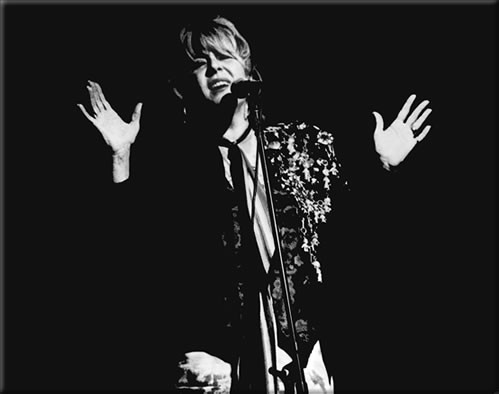
American folk revival refers to a mid-20th-century movement that reanimated traditional American songs and fused them with contemporary storytelling, yielding an acoustic, lyric-driven sound that could be intimate in coffeehouses and expansive at festival stages. Its roots lie in the older folk repertoire—Appalachian ballads, Southern work songs, urban ballads, and the blues, all kept alive by field recordings and archivists like Alan Lomax—and in a postwar appetite for authenticity. The revival gained momentum in the late 1950s as college campuses and New York's Greenwich Village clubs became incubators for new writers and performers who treated folklore not as museum piece but as a living voice for contemporary life. Song collectors, radio programs, and the soon-to-be iconic Newport Folk Festival (established in 1959) helped propel the movement from regional novelty to a national phenomenon.
Sonic identity in this scene was marked by sparsely arranged, guitar- and banjo-led textures, close vocal harmonies, and an emphasis on clear, narrative lyrics. Performances prized storytelling over virtuosity, while the repertoire ranged from traditional lullabies and protest songs to newly penned anthems that sounded timeless yet immediately of the moment. The genre also fostered a sense of solidarity, whether addressing labor rights, civil rights, anti-war sentiment, or personal introspection. It spawned a parallel “American acoustic” aesthetic that would influence folk-rock in the mid to late 1960s and seed the later era of the singer-songwriter.
Among its most influential figures are the ambassadors who carried the sound beyond club parlors into mainstream consciousness. The Weavers, led by Pete Seeger, helped spark the revival in the late 1940s and early 1950s with a spirited, harmonized repertory before facing political backlash during the McCarthy era. Woody Guthrie’s legacy provided a living archive of American storytelling and social critique that younger artists later reinterpreted. Bob Dylan emerged as the movement’s most transformative songwriter, bridging folk tradition with contemporary concern through songs like Blowin’ in the Wind and The Times They Are a-Changin’. Joan Baez became its sheroic voice—steel-true in delivery and relentless in advocacy—while Peter, Paul and Mary brought tightly arranged folk-pop to a mass audience. Arlo Guthrie, Buffy Sainte‑Marie, Odetta and others expanded the palette with powerful, persona-driven performances that connected folk to broader social currents. The Kingston Trio helped popularize accessible, tight three‑part harmonies that drew casual listeners into the scene.
Geographically, the revival bloomed strongest in the United States and Canada, where it drew on shared North American histories. Its influence spread across Western Europe, inspiring a generation of listeners and, in some cases, local re‑interpretations of traditional material. Even as the movement gradually yielded to the electric experiments of folk-rock and the more intimate, introspective singer-songwriting that dominated the late 1960s and 1970s, the American folk revival left an enduring legacy: a songwriting ethic rooted in storytelling, a reverence for traditional material, and a sustainable, instrumentally simple approach that continues to resonate with modern enthusiasts.
Sonic identity in this scene was marked by sparsely arranged, guitar- and banjo-led textures, close vocal harmonies, and an emphasis on clear, narrative lyrics. Performances prized storytelling over virtuosity, while the repertoire ranged from traditional lullabies and protest songs to newly penned anthems that sounded timeless yet immediately of the moment. The genre also fostered a sense of solidarity, whether addressing labor rights, civil rights, anti-war sentiment, or personal introspection. It spawned a parallel “American acoustic” aesthetic that would influence folk-rock in the mid to late 1960s and seed the later era of the singer-songwriter.
Among its most influential figures are the ambassadors who carried the sound beyond club parlors into mainstream consciousness. The Weavers, led by Pete Seeger, helped spark the revival in the late 1940s and early 1950s with a spirited, harmonized repertory before facing political backlash during the McCarthy era. Woody Guthrie’s legacy provided a living archive of American storytelling and social critique that younger artists later reinterpreted. Bob Dylan emerged as the movement’s most transformative songwriter, bridging folk tradition with contemporary concern through songs like Blowin’ in the Wind and The Times They Are a-Changin’. Joan Baez became its sheroic voice—steel-true in delivery and relentless in advocacy—while Peter, Paul and Mary brought tightly arranged folk-pop to a mass audience. Arlo Guthrie, Buffy Sainte‑Marie, Odetta and others expanded the palette with powerful, persona-driven performances that connected folk to broader social currents. The Kingston Trio helped popularize accessible, tight three‑part harmonies that drew casual listeners into the scene.
Geographically, the revival bloomed strongest in the United States and Canada, where it drew on shared North American histories. Its influence spread across Western Europe, inspiring a generation of listeners and, in some cases, local re‑interpretations of traditional material. Even as the movement gradually yielded to the electric experiments of folk-rock and the more intimate, introspective singer-songwriting that dominated the late 1960s and 1970s, the American folk revival left an enduring legacy: a songwriting ethic rooted in storytelling, a reverence for traditional material, and a sustainable, instrumentally simple approach that continues to resonate with modern enthusiasts.