Genre
austrian contemporary classical
Top Austrian contemporary classical Artists
Showing 16 of 16 artists



About Austrian contemporary classical
Austrian contemporary classical is a living, restless field that grows out of Vienna’s long legacy of musical experimentation while stretching beyond its borders. It is not a single school or a fixed style, but a continuum of vibrant practices that emerged in the postwar era and have kept evolving through the 21st century. At its core lies a deep curiosity about sound as a material—how timbre, space, rhythm, and silence carve meaning—rather than a fixed tonal idiom. It often blends rigorous, even austere formal ideas with tactile, sensuous textures, and it routinely crosses boundaries into electronics, theater, and installation art.
Historically, Austrian modernism began to crystallize in the early 20th century with the Second Viennese School—Schoenberg, Berg, and Webern—whose atonal and later serial languages became a touchstone for later generations. After World War II, Austrian composers absorbed and reinterpreted those innovations, contributing to international currents such as spectral music, minimalist and process-oriented approaches, and electroacoustic experimentation. From the late 20th century into the present, a new wave of Austrian composers and ensembles has pushed these threads forward with a distinctly local sensibility—often lush with color, sometimes austere, and frequently reflective of Austria’s landscapes, histories, and cultural institutions.
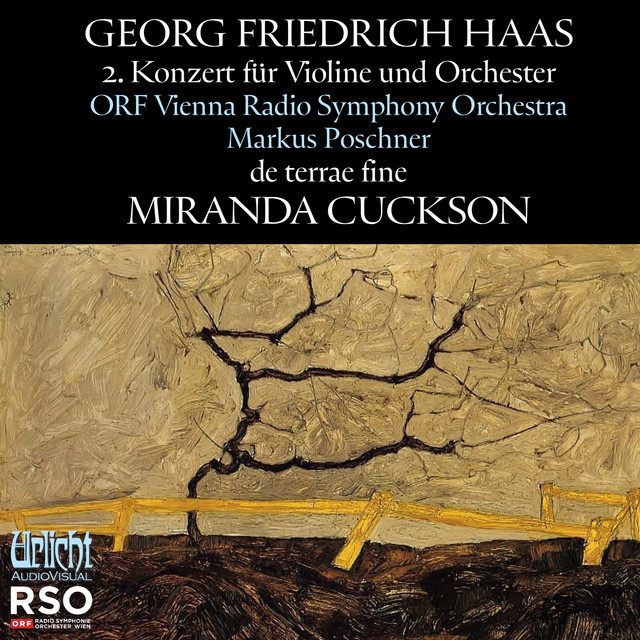
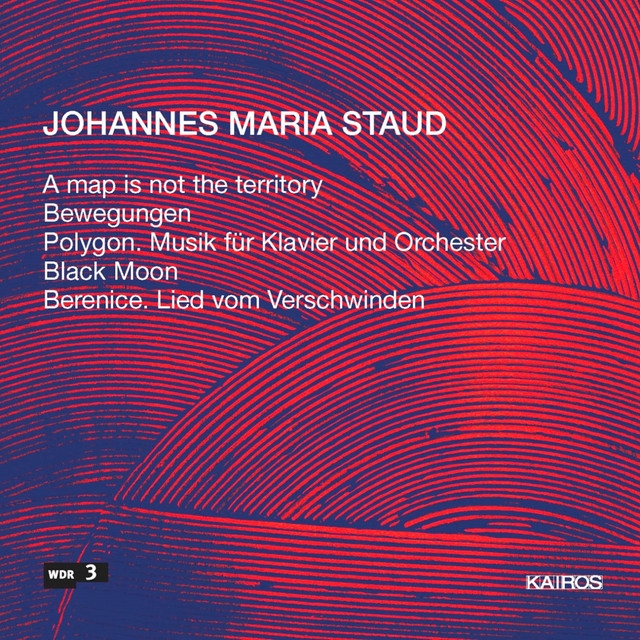
Key artists and ambassadors of the genre include Georg Friedrich Haas, Beat Furrer, Olga Neuwirth, Johannes Maria Staud, Peter Ablinger, and Thomas Larcher. Haas is renowned for his microtonal tuning systems, dramatic orchestration, and immersive sonic atmospheres that make the wall between performer and listener porous. Furrer’s works blend breath and timbre in a tactile, intensely lyrical language, while Neuwirth’s stage works and instrumental pieces fuse multimedia, folklore-inflected sonorities, and bold dramaturgy. Staud’s music often traverses intimate chamber textures and cinematic large-scale structures; Ablinger is famed for his explorations of silence, noise, and the piano’s possibilities in radically intimate pieces. Larcher combines strong melodic lines with a refined, contemporary orchestral palette. Together, they illustrate a spectrum from the sensorially generous to the conceptually austere.
ensembles such as Klangforum Wien have become ambassadors of this scene, premiering and touring new Austrian works and helping integrate them into a broader European and global circuit. Austrian contemporary classical music is especially well supported within Austria’s cultural infrastructure—state subsidies, festivals, and university programs foster new commissions and performances, with Vienna, Graz, Innsbruck, and Salzburg acting as active hubs.
Where is it most popular? In Austria itself, naturally, but the reach extends to neighboring German-speaking regions and beyond to Central and Northern Europe, with audiences in Germany, Switzerland, and the Netherlands particularly engaged. In recent decades, interest has also grown in the United States, the United Kingdom, Italy, and Japan, where festivals and contemporary music series have welcomed Austrian composers and ensembles. The genre’s global footprint is cumulative rather than uniform: niche, attentive audiences seek out these concerts for the nuanced, tactile listening experience they offer.
For music enthusiasts, Austrian contemporary classical is a highly crafted, exploratory landscape—one where rigorous thinking, vivid imagination, and a sense of place converge to produce sound worlds that reward repeated listening and live discovery.
Historically, Austrian modernism began to crystallize in the early 20th century with the Second Viennese School—Schoenberg, Berg, and Webern—whose atonal and later serial languages became a touchstone for later generations. After World War II, Austrian composers absorbed and reinterpreted those innovations, contributing to international currents such as spectral music, minimalist and process-oriented approaches, and electroacoustic experimentation. From the late 20th century into the present, a new wave of Austrian composers and ensembles has pushed these threads forward with a distinctly local sensibility—often lush with color, sometimes austere, and frequently reflective of Austria’s landscapes, histories, and cultural institutions.
Key artists and ambassadors of the genre include Georg Friedrich Haas, Beat Furrer, Olga Neuwirth, Johannes Maria Staud, Peter Ablinger, and Thomas Larcher. Haas is renowned for his microtonal tuning systems, dramatic orchestration, and immersive sonic atmospheres that make the wall between performer and listener porous. Furrer’s works blend breath and timbre in a tactile, intensely lyrical language, while Neuwirth’s stage works and instrumental pieces fuse multimedia, folklore-inflected sonorities, and bold dramaturgy. Staud’s music often traverses intimate chamber textures and cinematic large-scale structures; Ablinger is famed for his explorations of silence, noise, and the piano’s possibilities in radically intimate pieces. Larcher combines strong melodic lines with a refined, contemporary orchestral palette. Together, they illustrate a spectrum from the sensorially generous to the conceptually austere.
ensembles such as Klangforum Wien have become ambassadors of this scene, premiering and touring new Austrian works and helping integrate them into a broader European and global circuit. Austrian contemporary classical music is especially well supported within Austria’s cultural infrastructure—state subsidies, festivals, and university programs foster new commissions and performances, with Vienna, Graz, Innsbruck, and Salzburg acting as active hubs.
Where is it most popular? In Austria itself, naturally, but the reach extends to neighboring German-speaking regions and beyond to Central and Northern Europe, with audiences in Germany, Switzerland, and the Netherlands particularly engaged. In recent decades, interest has also grown in the United States, the United Kingdom, Italy, and Japan, where festivals and contemporary music series have welcomed Austrian composers and ensembles. The genre’s global footprint is cumulative rather than uniform: niche, attentive audiences seek out these concerts for the nuanced, tactile listening experience they offer.
For music enthusiasts, Austrian contemporary classical is a highly crafted, exploratory landscape—one where rigorous thinking, vivid imagination, and a sense of place converge to produce sound worlds that reward repeated listening and live discovery.